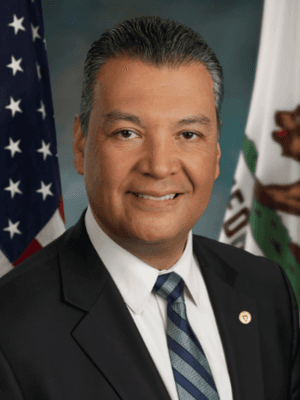
SynBioBeta Speaker
Alex Padilla
United States Senate
U.S. Senator for CA
Senator Alex Padilla, a progressive problem-solver, is the first Latino elected to represent California in the U.S. Senate. The son of immigrants, Padilla grew up in the San Fernando Valley and studied Mechanical Engineering at the Massachusetts Institute of Technology. He was drawn to politics in response to California’s anti-immigrant Proposition 187. Padilla was elected to the Los Angeles City Council in 1999 and the State Senate in 2006. As California’s Secretary of State, he oversaw a historic expansion of voting rights and voter participation. As United States Senator, Padilla has taken action to cut costs for families, combat the climate crisis, and help thousands of Californians secure millions of dollars owed to them by federal agencies. Padilla is the Ranking Member of the Senate’s Committee on Rules and Administration. He also serves as Ranking Member of the Senate Judiciary Subcommittee on Border Security and Immigration. Padilla is a member of the Senate Committees on Budget; Environment and Public Works; Energy and Natural Resources; Judiciary; and Rules. Alex and his wife, Angela, have three sons: Roman, Alex, and Diego.