SynBioBeta Speaker
Alex Rives
CZI Biohub
Head of Science
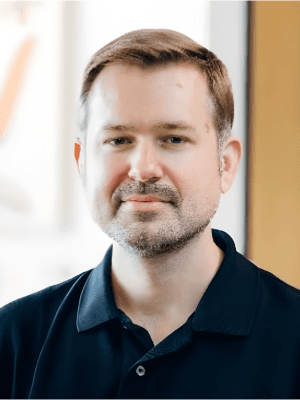
Alex Rives is head of science at the Chan Zuckerberg Initiative, leading its work at the intersection of artificial intelligence and biology. Alex was a founder and chief scientist at EvolutionaryScale, a public-benefit company developing AI to accelerate scientific discovery in biology, and delivering transformative AI systems and applications to benefit the global scientific community. Rives is a core institute member at the Broad Institute, and an assistant professor in the Department of Electrical Engineering and Computer Science at MIT. He will continue to be affiliated with Broad Institute and MIT.As a scientist, Rives has done pioneering work in artificial intelligence for biology. He started and led the Evolutionary Scale Modeling, or ESM, project at Meta’s fundamental AI research lab, which developed the first large-scale transformer language models for proteins. The ESM models are widely recognized as a breakthrough in artificial intelligence for biology, and opened the field of language modeling in biology. These models are used by scientists worldwide, enabling applications including designing therapeutic proteins such as antibodies, predicting the effects of mutations in the human genome, illuminating evolutionary history, discovering new proteins, and creating models of the cell. Rives earned a bachelor’s degree in philosophy and biology from Yale University and a doctorate in computer science from New York University.