Γ

SynBioBeta Speaker

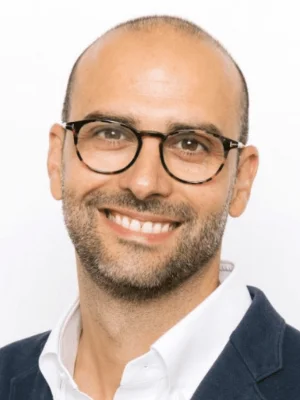
Justin Eyquem

UCSF

Associate Professor

Justin Eyquem, PhD, is an Associate Professor of Medicine at the University of California, San Francisco, and an Investigator at the Gladstone–UCSF Institute of Genomic Immunology and the Parker Institute for Cancer Immunotherapy. He earned his PhD in molecular biology from Université Paris VII and completed postdoctoral training with Michel Sadelain at Memorial Sloan Kettering Cancer Center. He joined UCSF in 2019 as a Parker Fellow and became an Assistant Professor in 2021. His research focuses on precisely engineering T cells to improve cancer immunotherapy and enable new treatments for immune and genetic diseases. His laboratory has pioneered genome-editing strategies for CAR-T cells, including site-specific integration and multiplex editing, and has developed platforms to reprogram T cell function both ex vivo and directly in vivo. His work spans fundamental discovery through clinical translation, with a strong emphasis on scalable, next-generation cell therapy manufacturing. He also directs a dedicated preclinical team at UCSF that systematically benchmarks engineered T cell designs to accelerate their advancement into first-in-human trials. This includes an investigator-initiated CAR-T trial for multiple myeloma launching in early 2026.

SynBioBeta 2026 Tickets are Live

Confirmed Speakers

Sessions Featuring

Justin

This Year

Breakout Session

3:30 PM

-

4:15 PM

Human Health

Programmable T Cells: Engineering Living Immune Systems

T cells are evolving from targeted killers into fully programmable cellular systems. Advances in synthetic biology, AI-driven receptor design, and genome-scale datasets are enabling immune cells that not only recognize disease, but sense context, compute signals, adapt over time, and execute coordinated responses inside the body. This session brings together leaders across academia and industry to explore how next-generation CAR and TCR design, structural modeling, and large biological foundation models are reshaping immune engineering. Beyond receptor optimization, we will examine logic circuits, combinatorial sensing systems, control layers, and in vivo reprogramming strategies that transform T cells into dynamic therapeutic platforms. As immune cell engineering moves toward off-the-shelf products and in vivo editing approaches, we will address the deeper architectural questions: How do we design cells that avoid exhaustion, function within hostile tumor microenvironments, and maintain safety over time? What does it mean to treat T cells as living software systems? And how do we build programmable immune therapies that are scalable, durable, and globally accessible?

Purchase Pass

Breakout Session

3:30 PM

-

4:15 PM

Human Health

Programmable T Cells: Engineering Living Immune Systems

T cells are evolving from targeted killers into fully programmable cellular systems. Advances in synthetic biology, AI-driven receptor design, and genome-scale datasets are enabling immune cells that not only recognize disease, but sense context, compute signals, adapt over time, and execute coordinated responses inside the body. This session brings together leaders across academia and industry to explore how next-generation CAR and TCR design, structural modeling, and large biological foundation models are reshaping immune engineering. Beyond receptor optimization, we will examine logic circuits, combinatorial sensing systems, control layers, and in vivo reprogramming strategies that transform T cells into dynamic therapeutic platforms. As immune cell engineering moves toward off-the-shelf products and in vivo editing approaches, we will address the deeper architectural questions: How do we design cells that avoid exhaustion, function within hostile tumor microenvironments, and maintain safety over time? What does it mean to treat T cells as living software systems? And how do we build programmable immune therapies that are scalable, durable, and globally accessible?

Purchase Pass

TBD

Session lineup still growing

Purchase Pass

Featuring

Speaker Coming Soon

Fireside Chat

12:00 AM

-

8:30 AM

Human Health

From Cells to Patients: Solving the Scale Mismatch in Virtual Biology

Drug discovery often measures biology at the cell level while interventions work at the tissue, organ, or whole-patient scale. This mismatch can make accurate cell-level predictions irrelevant in the clinic. This session dives into strategies to bridge that gap: multiscale modeling that nests single-cell dynamics within organ-level simulations, spatial transcriptomics that preserve context, and surrogate models that translate cell-level outputs into clinical biomarkers. Speakers will ask: how do we ensure virtual biology reflects not just what cells do in isolation, but how biology behaves in the real complexity of patients?

Purchase Pass

Featuring

Speaker Coming Soon

Previous Speakers Include