Γ

SynBioBeta Speaker

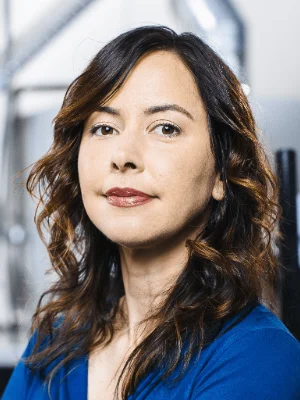
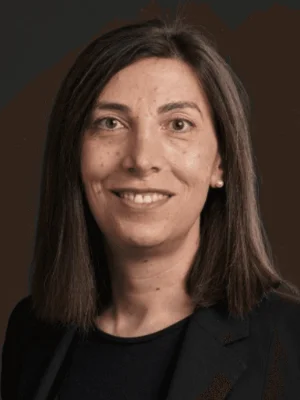
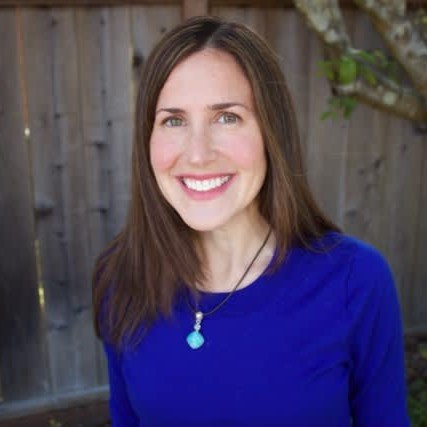
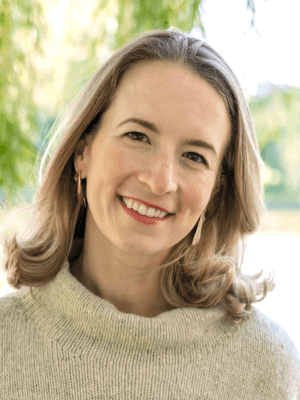
Anna Marie Wagner

Transfyr

Co-founder & CEO

Anna Marie Wagner is the co-founder and CEO of Transfyr, a stealth startup building the world’s first models that capture and operationalize tacit scientific knowledge. These insights are leveraged to drive scientific robustness, interpretability, and transferability, improving the commercial potential of new innovations and allowing for more seamless collaboration and systems integration across the ecosystem.  


Anna Marie's career has spanned investing and operating roles in both hypergrowth and mature companies. Previously, she was on the executive team at Ginkgo Bioworks (NYSE:DNA), where over the years she built the AI team and oversaw all major strategic transactions, including Ginkgo’s public offering in 2021, raising $1.6 billion in what is still the largest-ever go-public raise in biotech.  


Before Ginkgo, Anna Marie spent nearly a decade at Bain Capital Private Equity, where she invested in companies across industries and geographies, ultimately focusing on vertical software and internet / digital media businesses, where her realized investments averaged over a 60% IRR. 


Anna Marie has served as an advisor or board member to a number of organizations across the public, private, and nonprofit sectors, including DARPA, Owkin/Bioptimus, Bold Eagle, Turbine AI, Potato AI, Digital Biology, Verge Genomics, MassChallenge, and the Boston Museum of Science. She is also an Executive Fellow at Harvard Business School, where she co-teaches an elective course on failure (and loves the irony!) and supports the entrepreneurship group.

Sessions Featuring

Anna Marie

This Year

Breakout Session

4:30 PM

-

5:15 PM

Tools & Tech

AI Co-Scientists: From Pipettes to Protocols

Biology is entering an era where AI agents don’t just analyze data — they co-design, plan, and execute experiments. Multi-agent systems like CRISPR-GPT demonstrate how AI can act as a true lab co-pilot: decomposing complex genome editing projects into stepwise workflows, selecting tools, troubleshooting, and even drafting protocols that allow junior researchers to perform sophisticated edits on their first attempt . Beyond CRISPR, new systems like BioMARS integrate reasoning agents with robotics, while biotech companies are testing “AI lab assistants” that monitor and adjust experiments in real time. This session explores how multi-agent copilots are making biology more reproducible, democratizing complex workflows, and pushing the boundaries of lab autonomy. The central question: when AI can plan, troubleshoot, and validate experiments end-to-end, how should scientists and institutions govern this new power?

Breakout Session

4:30 PM

-

5:15 PM

Tools & Tech

AI Co-Scientists: From Pipettes to Protocols

Biology is entering an era where AI agents don’t just analyze data — they co-design, plan, and execute experiments. Multi-agent systems like CRISPR-GPT demonstrate how AI can act as a true lab co-pilot: decomposing complex genome editing projects into stepwise workflows, selecting tools, troubleshooting, and even drafting protocols that allow junior researchers to perform sophisticated edits on their first attempt . Beyond CRISPR, new systems like BioMARS integrate reasoning agents with robotics, while biotech companies are testing “AI lab assistants” that monitor and adjust experiments in real time. This session explores how multi-agent copilots are making biology more reproducible, democratizing complex workflows, and pushing the boundaries of lab autonomy. The central question: when AI can plan, troubleshoot, and validate experiments end-to-end, how should scientists and institutions govern this new power?

TBD

Session lineup still growing

Featuring

Speaker Coming Soon

Fireside Chat

12:00 AM

-

8:30 AM

Human Health

From Cells to Patients: Solving the Scale Mismatch in Virtual Biology

Drug discovery often measures biology at the cell level while interventions work at the tissue, organ, or whole-patient scale. This mismatch can make accurate cell-level predictions irrelevant in the clinic. This session dives into strategies to bridge that gap: multiscale modeling that nests single-cell dynamics within organ-level simulations, spatial transcriptomics that preserve context, and surrogate models that translate cell-level outputs into clinical biomarkers. Speakers will ask: how do we ensure virtual biology reflects not just what cells do in isolation, but how biology behaves in the real complexity of patients?

Featuring

Speaker Coming Soon

Previous Speakers Include