Γ

SynBioBeta Speaker

Paul Bielewicz

W. L. Gore & Associates

Dir. of Innov. & Venture Dev.

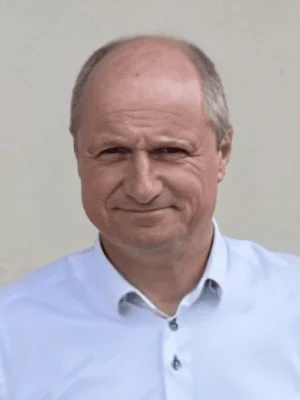
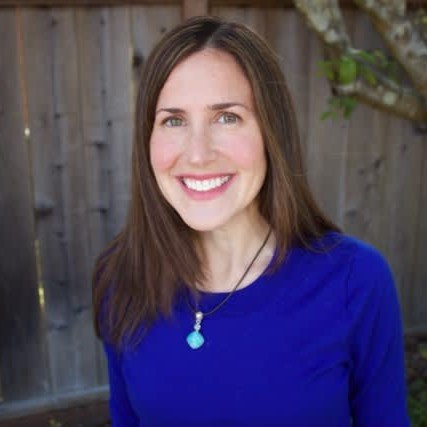
Paul A. Bielewicz is a Product Specialist in the Incubator at W. L. Gore & Associates, where he works at the front end of innovation—helping transform advanced materials concepts into credible, scalable product opportunities. In this role, Paul operates at the intersection of materials science, product strategy, and business relevance, supporting early‑stage technologies as they move from exploration toward real‑world impact.Paul brings a pragmatic, execution‑focused perspective to innovation, grounded in deep technical understanding and cross‑functional collaboration. His work centers on clarifying value propositions, assessing technical and commercialization risk, and guiding teams through the ambiguity that defines incubation environments. He partners closely with R&D, manufacturing, and commercial stakeholders to ensure that innovation efforts remain both technically rigorous and strategically aligned.Over the course of his career at Gore, Paul has had the opportunity to contribute to innovation efforts across a wide range of industries, including medical products, energy storage and batteries, and consumer apparel, among others. This breadth has shaped his systems‑level view of materials innovation—highlighting how core technologies can be adapted, scaled, and differentiated across vastly different markets and regulatory landscapes.On panels, Paul offers an insider’s view on building effective incubation pipelines inside established organizations, balancing exploration with discipline, and accelerating the path from promising materials science to meaningful customer and business outcomes.

SynBioBeta 2026 Tickets are Live

Confirmed Speakers

Sessions Featuring

Paul

This Year

Fireside Chat

11:05 AM

-

11:25 AM

Tools & Tech

From AI protein design to real-world commercial impact: powering the next wave of everyday products

For more than a century, everyday products - from detergents and shampoos to textiles and packaging - have relied on petrochemicals and harsh industrial processes. Today, AI-driven protein design is opening a radically different path: creating custom enzymes and biomolecules that outperform traditional chemistry while reducing environmental impact. This session explores how advances in computational protein design and machine learning enable the rational creation of enzymes tailored for home care, personal care, and next-generation materials—moving beyond incremental discovery to purpose-built performance under real industrial conditions. Critically, this highlights how AI-driven design is being translated into commercially deployed products at scale with partners and customers.


Get a Ticket

Fireside Chat

11:05 AM

-

11:25 AM

Tools & Tech

From AI protein design to real-world commercial impact: powering the next wave of everyday products

For more than a century, everyday products - from detergents and shampoos to textiles and packaging - have relied on petrochemicals and harsh industrial processes. Today, AI-driven protein design is opening a radically different path: creating custom enzymes and biomolecules that outperform traditional chemistry while reducing environmental impact. This session explores how advances in computational protein design and machine learning enable the rational creation of enzymes tailored for home care, personal care, and next-generation materials—moving beyond incremental discovery to purpose-built performance under real industrial conditions. Critically, this highlights how AI-driven design is being translated into commercially deployed products at scale with partners and customers.

Get a Ticket

TBD

Session lineup still growing

Get a Ticket

Featuring

Speaker Coming Soon

Fireside Chat

12:00 AM

-

8:30 AM

Human Health

From Cells to Patients: Solving the Scale Mismatch in Virtual Biology

Drug discovery often measures biology at the cell level while interventions work at the tissue, organ, or whole-patient scale. This mismatch can make accurate cell-level predictions irrelevant in the clinic. This session dives into strategies to bridge that gap: multiscale modeling that nests single-cell dynamics within organ-level simulations, spatial transcriptomics that preserve context, and surrogate models that translate cell-level outputs into clinical biomarkers. Speakers will ask: how do we ensure virtual biology reflects not just what cells do in isolation, but how biology behaves in the real complexity of patients?

Get a Ticket

Featuring

Speaker Coming Soon

Previous Speakers Include