
“THE BASIS OF LIFE IS THE CELL — NOT THE CHIP. NOTHING IS MORE REMARKABLE THAN CELLS.”
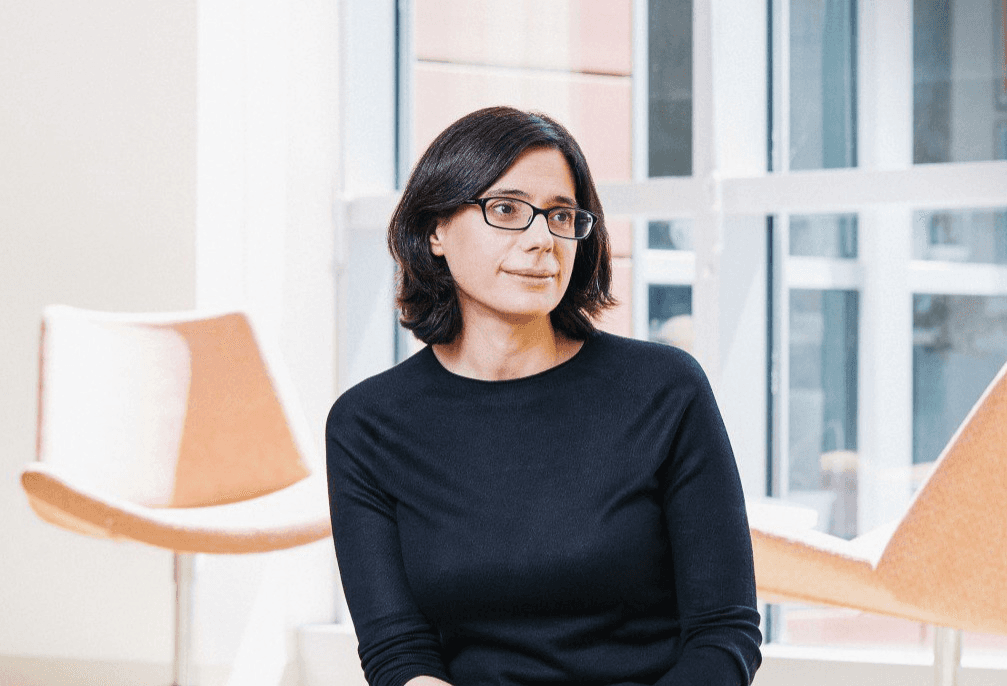
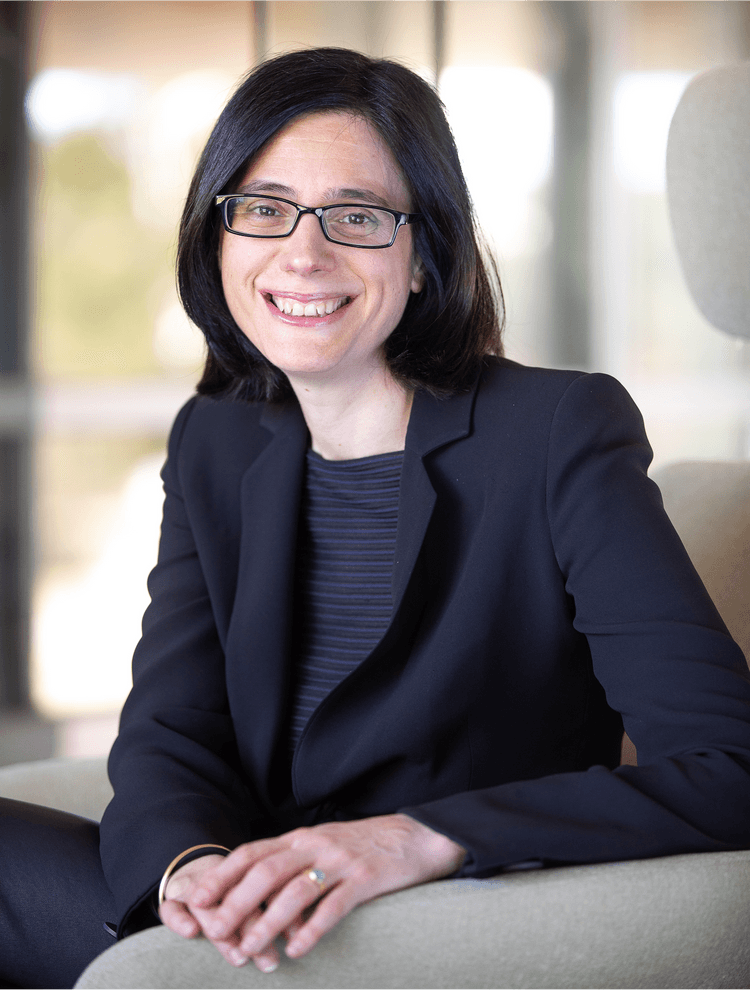
As one of the world’s foremost computational biologists, Aviv Regev is reimagining how we discover medicines. From her early breakthroughs in single-cell genomics to her current role as Head of Research and Early Development at Genentech, Regev has consistently pushed biology into the realm of engineering. Today, she is at the forefront of applying artificial intelligence to unravel cellular complexity and accelerate drug discovery.
For Regev, the cell—not the chip—is life’s most powerful computer. Each of us is made of 37 trillion cells, each executing molecular “programs” dictated by our DNA. Understanding how those cellular circuits function, break down, and can be rewired with medicines is her life’s work. And she believes that AI—paired with experimental innovation—will make that possible at scale.
Regev’s journey began with the creation of technologies like Drop-seq, which transformed how scientists study thousands of cells at once, shifting biology from “fruit smoothies” to detailed “fruit salads” of single-cell data. Those efforts seeded the Human Cell Atlas, a global initiative to map every cell type in the human body. By combining massive datasets with algorithms that see patterns beyond human intuition, she showed how quantity becomes quality in biology.
At Genentech, Regev has scaled this philosophy into a new paradigm: the lab-in-the-loop. By cycling between high-throughput experiments and AI models—where algorithms propose the next experiments and data continuously refine the models—her team builds “self-driving labs.” These loops can decode regulatory circuits, predict gene expression from DNA sequences, and identify therapeutic targets with unprecedented precision.
This approach is no longer theoretical. Under Regev’s leadership, Genentech is deploying AI to design small molecules, therapeutic antibodies, and even personalized cancer vaccines. Collaborations with companies like Recursion leverage phenomics data at scale, while partnerships with NVIDIA power the compute infrastructure for training generative biological models. The results: faster hit discovery, more accurate target selection, and medicines that can be tailored to individual patients.
Regev’s influence extends beyond Genentech. Her frameworks are shaping the broader ecosystem of AI-driven drug discovery, from oncology and neurology to infectious disease and autoimmune disorders. She emphasizes that models are only as good as the data that feed them, and champions global efforts to ensure datasets are diverse and inclusive—so medicines work for all populations.
In an industry where 90% of drug candidates still fail, Regev is working to flip the odds. By uniting AI with deep biological insight, she envisions a future where we not only treat disease, but anticipate and prevent it—building wiring diagrams of life itself.
This is more than incremental progress; it’s the dawn of a programmable biology. For Aviv Regev, the mission is clear: bring the precision of computation into the messiness of biology, and deliver better medicines to patients faster than ever before.