Γ

SynBioBeta Speaker

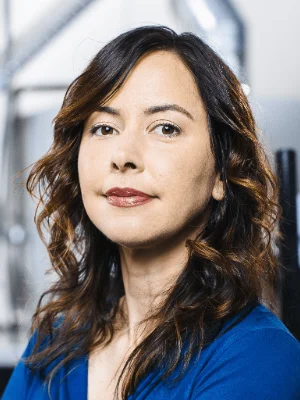
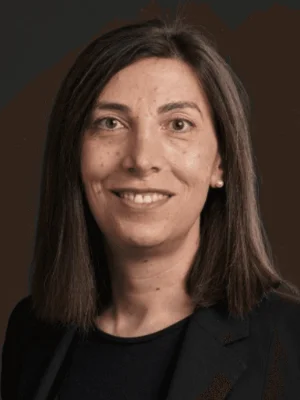
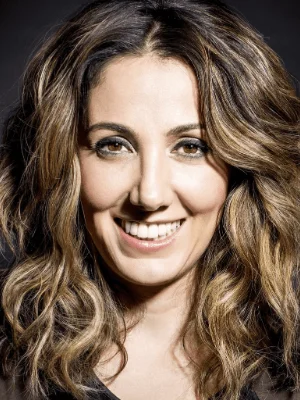
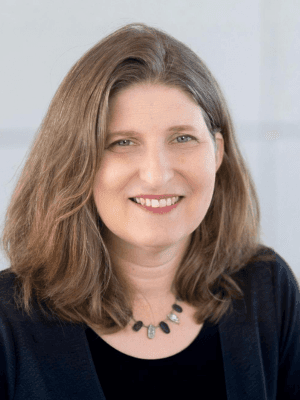
Aina Cohen

SLAC National Accelerator Laboratory

Senior Staff Scientist

My research aims to transform how we understand and engineer biological systems by advancing macromolecular X‑ray crystallography at synchrotron and X‑ray free‑electron laser (XFEL) sources. Through the development of next‑generation experimental techniques, specialized instrumentation, and powerful computational algorithms, my work seeks to reveal how protein structure gives rise to biological function and dynamics. I focus on building highly automated, high‑throughput platforms for biomolecular structure determination and compound screening, accelerating the translation of structural insights into biomedical advances and molecular design. In parallel, I develop new automation that extends crystallography and cryo‑electron microscopy (cryoEM) to capture protein dynamics, with the long‑term goal of making dynamic, functional structural biology a routine tool for discovery and innovation.

Sessions Featuring

Aina

This Year

Lunch & Learn

12:15 PM

-

1:00 PM

Tools & Tech

Building SLAC BioLabs: Your Partner for Structure, Dynamics and Discovery

Join leaders from SLAC National Accelerator Laboratory and partners for a working lunch on what is already possible today—and what we are building next. We will survey real, on-site capabilities across the Linac Coherent Light Source (LCLS) and LCLS-II, the Stanford Synchrotron Radiation Lightsource (SSRL), and Stanford–SLAC cryo-EM and cryo-ET (S2C2 and SCSC): how they reveal molecular interactions and dynamics from time-resolved and equilibrium structure to in-cell context, and the large, rich datasets that connect experiments to models. We will also share our ambition to scale “BioLabs” so that teams in synthetic biology and AI4BIO can treat SLAC as a one-stop environment to design campaigns across modalities, from atoms to cells, and from data acquisition to AI-ready pipelines—in open science and, where policy allows, proprietary partnerships. Whether you are building strains, platforms, or computation on top of structural and imaging data, come discuss how to plug into existing user pathways and help shape the next generation of industry-facing programs. Who should attend: founders, R&D leaders, and investors in synbio, biopharma, tools, and AI who care about defensible data, throughput, and cross-scale biology.

Lunch & Learn

12:15 PM

-

1:00 PM

Tools & Tech

Building SLAC BioLabs: Your Partner for Structure, Dynamics and Discovery

Join leaders from SLAC National Accelerator Laboratory and partners for a working lunch on what is already possible today—and what we are building next. We will survey real, on-site capabilities across the Linac Coherent Light Source (LCLS) and LCLS-II, the Stanford Synchrotron Radiation Lightsource (SSRL), and Stanford–SLAC cryo-EM and cryo-ET (S2C2 and SCSC): how they reveal molecular interactions and dynamics from time-resolved and equilibrium structure to in-cell context, and the large, rich datasets that connect experiments to models. We will also share our ambition to scale “BioLabs” so that teams in synthetic biology and AI4BIO can treat SLAC as a one-stop environment to design campaigns across modalities, from atoms to cells, and from data acquisition to AI-ready pipelines—in open science and, where policy allows, proprietary partnerships. Whether you are building strains, platforms, or computation on top of structural and imaging data, come discuss how to plug into existing user pathways and help shape the next generation of industry-facing programs. Who should attend: founders, R&D leaders, and investors in synbio, biopharma, tools, and AI who care about defensible data, throughput, and cross-scale biology.

TBD

Session lineup still growing

Featuring

Speaker Coming Soon

Fireside Chat

12:00 AM

-

8:30 AM

Human Health

From Cells to Patients: Solving the Scale Mismatch in Virtual Biology

Drug discovery often measures biology at the cell level while interventions work at the tissue, organ, or whole-patient scale. This mismatch can make accurate cell-level predictions irrelevant in the clinic. This session dives into strategies to bridge that gap: multiscale modeling that nests single-cell dynamics within organ-level simulations, spatial transcriptomics that preserve context, and surrogate models that translate cell-level outputs into clinical biomarkers. Speakers will ask: how do we ensure virtual biology reflects not just what cells do in isolation, but how biology behaves in the real complexity of patients?

Featuring

Speaker Coming Soon

Previous Speakers Include