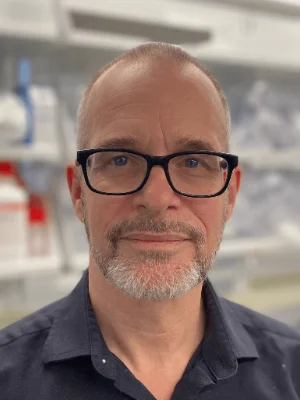
SynBioBeta Speaker
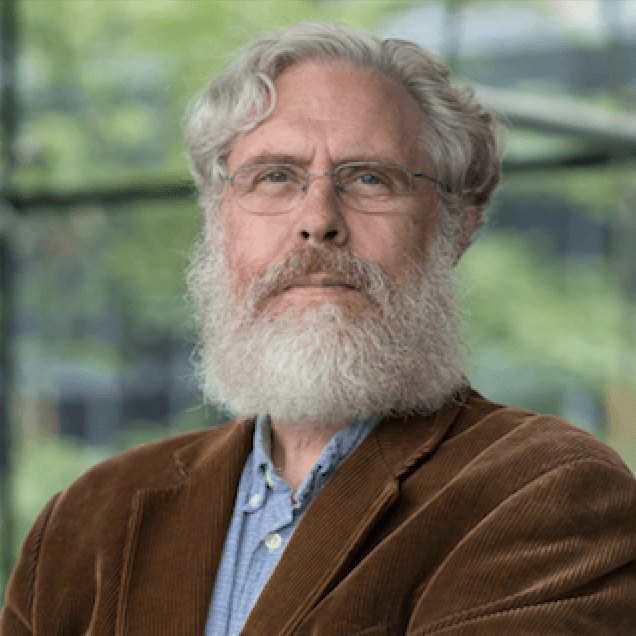
Andrew Hessel
Human Genome Project
Chairman
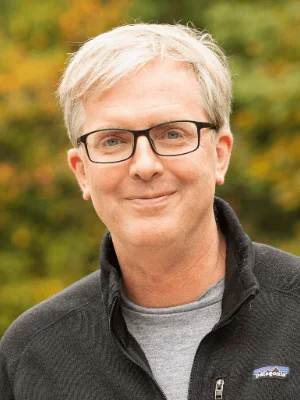
Andrew Hessel is a scientist and entrepreneur exploring the near-term future of biology and biotechnology, with a focus on synthetic genome engineering and next-generation DNA synthesis technologies. He is the co-founder and chairman of the Center of Excellence for Engineering Biology and the Human Genome Project-write, an international scientific effort to design and build entire genomes, including the human genome. He also co-founded Humane Genomics, a company developing precision artificial viruses that target cancer. Hessel aims to be cloned after his death. His book, The Genesis Machine: Our Quest to Rewrite Life in the Age of Synthetic Biology, co-authored with Amy Webb, was published in February 2022.


Sessions Featuring
Andrew
This Year
•
-
Tools & Tech
Genome as a Canvas: Composing Life at Scale
Reading, writing, and editing DNA were just the prelude. The next frontier is composition, designing complex genetic systems and large DNA architectures from first principles using AI-driven models and scalable synthesis technologies. As datasets grow and design tools mature, biology is shifting from incremental editing toward intentional genome-scale engineering. This new paradigm treats DNA not simply as a sequence to modify but as a programmable substrate where genes, regulatory elements, and entire genomic regions can be composed, tested, and iterated like engineered systems. Advances in generative design, large-scale DNA assembly, and precision integration technologies are enabling researchers to construct increasingly complex genetic structures with higher predictability and functional intent. From next-generation recombinases and genome restructuring platforms to AI-guided design workflows that bridge computation and physical DNA construction, the emerging toolkit is redefining how biological complexity is created. The session explores how compositional genome engineering could unlock new capabilities across therapeutics, industrial biology, and synthetic life design.
Featuring
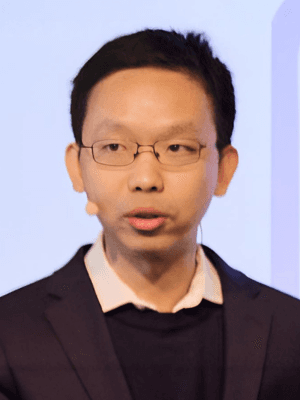
Xiaojing Gao
Stanford University
Assistant Professor
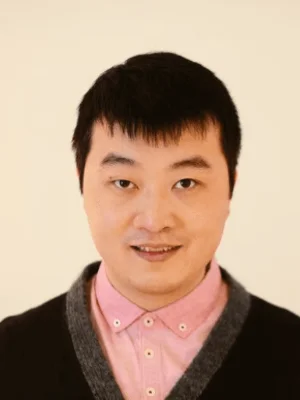
Kaihang Wang
Caltech
Assistant Professor
Building synthetic genomes to create new life forms.

Samuel King
Stanford University
BioEng Doctoral Candidate
Genome language models designing new bacteriophages
Andrew Hessel
Human Genome Project
Chairman
Genome-writing pioneer, Singularity University visionary
•
-
Tools & Tech
Genome as a Canvas: Composing Life at Scale
Reading, writing, and editing DNA were just the prelude. The next frontier is composition, designing complex genetic systems and large DNA architectures from first principles using AI-driven models and scalable synthesis technologies. As datasets grow and design tools mature, biology is shifting from incremental editing toward intentional genome-scale engineering. This new paradigm treats DNA not simply as a sequence to modify but as a programmable substrate where genes, regulatory elements, and entire genomic regions can be composed, tested, and iterated like engineered systems. Advances in generative design, large-scale DNA assembly, and precision integration technologies are enabling researchers to construct increasingly complex genetic structures with higher predictability and functional intent. From next-generation recombinases and genome restructuring platforms to AI-guided design workflows that bridge computation and physical DNA construction, the emerging toolkit is redefining how biological complexity is created. The session explores how compositional genome engineering could unlock new capabilities across therapeutics, industrial biology, and synthetic life design.
Featuring
Xiaojing Gao
Stanford University
Assistant Professor
Kaihang Wang
Caltech
Assistant Professor
Building synthetic genomes to create new life forms.
Samuel King
Stanford University
BioEng Doctoral Candidate
Genome language models designing new bacteriophages
Andrew Hessel
Human Genome Project
Chairman
Genome-writing pioneer, Singularity University visionary
•
-
Tools & Tech
The Physics of Life: Scaling Biology from Molecules to Cells
Cells are often described as bags of chemistry—but they are better understood as finely tuned physical systems. Within each one, DNA is packed into nanoscopic volumes, enzymes race at turnover rates rivaling jet engines, and molecular collisions happen billions of times per second. This session explores the cell as a physical object—its limits of size, speed, and efficiency. How fast can information move from genome to protein? How does diffusion constrain cell size and shape? How do energy flows through metabolism define what life can and cannot do? By examining the physics that underpins biology, this session challenges us to see cells not as mysterious black boxes, but as programmable systems operating under universal rules. This perspective may hold the key to engineering biology with the same rigor as physics and computer science.
Featuring
Andrew Hessel
Human Genome Project
Chairman
Genome-writing pioneer, Singularity University visionary
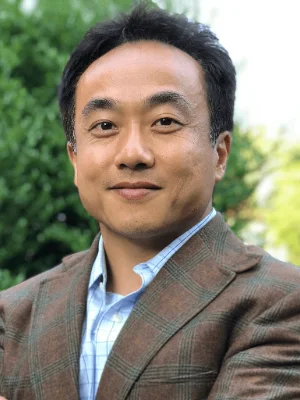
Huafeng Xu
Fathom
Founder & CEO
Computational drug-design pioneer behind FEP+ and DESMOND software platforms.
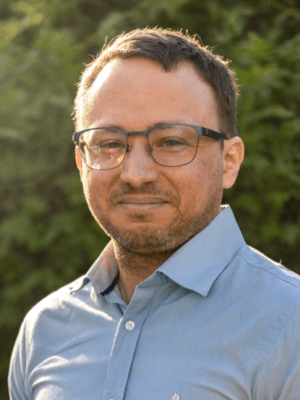
Damien Michelon
iMEAN
Scientific BD
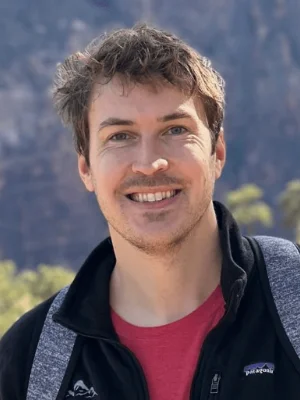
Niko McCarty
Astera Institute
Founding Editor
Life Science Journalist and futurist
•
-
Tools & Tech
The Physics of Life: Scaling Biology from Molecules to Cells
Cells are often described as bags of chemistry—but they are better understood as finely tuned physical systems. Within each one, DNA is packed into nanoscopic volumes, enzymes race at turnover rates rivaling jet engines, and molecular collisions happen billions of times per second. This session explores the cell as a physical object—its limits of size, speed, and efficiency. How fast can information move from genome to protein? How does diffusion constrain cell size and shape? How do energy flows through metabolism define what life can and cannot do? By examining the physics that underpins biology, this session challenges us to see cells not as mysterious black boxes, but as programmable systems operating under universal rules. This perspective may hold the key to engineering biology with the same rigor as physics and computer science.
Featuring
Andrew Hessel
Human Genome Project
Chairman
Genome-writing pioneer, Singularity University visionary
Huafeng Xu
Fathom
Founder & CEO
Computational drug-design pioneer behind FEP+ and DESMOND software platforms.
Damien Michelon
iMEAN
Scientific BD
Niko McCarty
Astera Institute
Founding Editor
Life Science Journalist and futurist
Session lineup still growing
Featuring
Speaker Coming Soon
•
-
Human Health
From Cells to Patients: Solving the Scale Mismatch in Virtual Biology
Drug discovery often measures biology at the cell level while interventions work at the tissue, organ, or whole-patient scale. This mismatch can make accurate cell-level predictions irrelevant in the clinic. This session dives into strategies to bridge that gap: multiscale modeling that nests single-cell dynamics within organ-level simulations, spatial transcriptomics that preserve context, and surrogate models that translate cell-level outputs into clinical biomarkers. Speakers will ask: how do we ensure virtual biology reflects not just what cells do in isolation, but how biology behaves in the real complexity of patients?
Featuring
Speaker Coming Soon