Γ

SynBioBeta Speaker

Eduardo Abeliuk

TeselaGen

Founder & CEO

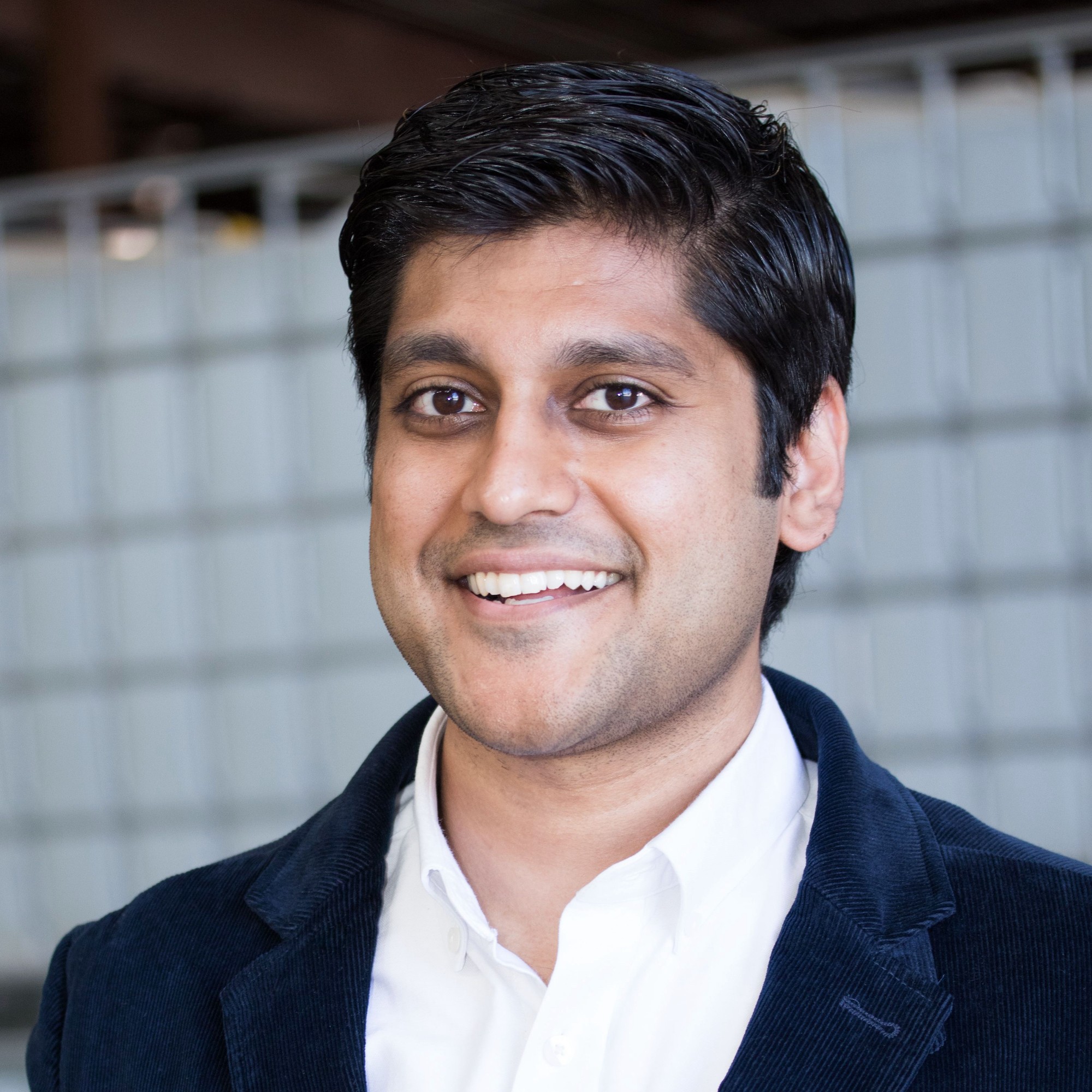
Eduardo Abeliuk is the Founder and CEO of TeselaGen Biotechnology, a company building an AI-powered operating system for biological R&D. His work focuses on applying machine learning and agentic AI to accelerate the Design-Build-Test-Learn (DBTL) cycle, enabling scientists to design, execute, and optimize biological systems more efficiently.His expertise sits at the intersection of synthetic biology, computational biology, and artificial intelligence. He has led the development of platforms that integrate DNA design, laboratory automation, and data-driven modeling to improve pathway engineering, strain optimization, and biomanufacturing workflows. His current focus is on deploying autonomous AI agents that can design experiments, analyze results, and recommend next steps, shifting from passive tools to systems that actively execute scientific work.Eduardo has worked closely with leading biofoundries, national laboratories, and industrial biotech organizations, contributing to large-scale efforts in sustainable chemicals, biofuels, and next-generation biomanufacturing. He is also an advisor to the Agile BioFoundry and has been involved in initiatives aligned with the U.S. Department of Energy’s efforts to advance bioindustrial innovation.His research has been published in scientific journals, holds multiple U.S. patents in computational biology and artificial intelligence, has co-founded and advised several technology companies . Eduardo is particularly interested in how AI, especially agentic systems, can transform scientific discovery and product development from a largely manual, iterative process into a more autonomous, scalable, and predictive discipline, enabling faster innovation across academia, biopharma, and industrial biotechnology. He holds an M.S. in Bioengineering and a Ph.D. in Electrical Engineering from Stanford University.

Sessions Featuring

Eduardo

This Year

Fireside Chat

9:40 AM

-

10:00 AM

AIxBIO

Programmable Metabolism: From Predictive Models to Agentic AI in Metabolic Engineering

Metabolic engineering is entering a new phase of programmability, evolving from mechanistic models toward AI-driven systems that can design, test, and refine biology with increasing autonomy. Early efforts to combine genome-scale modeling with machine learning began to improve genotype to phenotype prediction, hinting at a more predictive and designable biology. Today, that paradigm is advancing into a new layer. Agentic AI systems are beginning to orchestrate the full design, build, test, learn cycle. These platforms integrate experimental data, automation, and decision-making into continuous closed loop workflows, enabling faster iteration and more intelligent exploration of biological space. This session explores the next frontier of metabolic engineering, examining long standing bottlenecks such as limited data, combinatorial design complexity, and slow iteration cycles, and how AI native, end to end platforms are transforming pathway design, strain optimization, and scalable biomanufacturing.

Fireside Chat

9:40 AM

-

10:00 AM

AIxBIO

Programmable Metabolism: From Predictive Models to Agentic AI in Metabolic Engineering

Metabolic engineering is entering a new phase of programmability, evolving from mechanistic models toward AI-driven systems that can design, test, and refine biology with increasing autonomy. Early efforts to combine genome-scale modeling with machine learning began to improve genotype to phenotype prediction, hinting at a more predictive and designable biology. Today, that paradigm is advancing into a new layer. Agentic AI systems are beginning to orchestrate the full design, build, test, learn cycle. These platforms integrate experimental data, automation, and decision-making into continuous closed loop workflows, enabling faster iteration and more intelligent exploration of biological space. This session explores the next frontier of metabolic engineering, examining long standing bottlenecks such as limited data, combinatorial design complexity, and slow iteration cycles, and how AI native, end to end platforms are transforming pathway design, strain optimization, and scalable biomanufacturing.

TBD

Session lineup still growing

Featuring

Speaker Coming Soon

Fireside Chat

12:00 AM

-

8:30 AM

Human Health

From Cells to Patients: Solving the Scale Mismatch in Virtual Biology

Drug discovery often measures biology at the cell level while interventions work at the tissue, organ, or whole-patient scale. This mismatch can make accurate cell-level predictions irrelevant in the clinic. This session dives into strategies to bridge that gap: multiscale modeling that nests single-cell dynamics within organ-level simulations, spatial transcriptomics that preserve context, and surrogate models that translate cell-level outputs into clinical biomarkers. Speakers will ask: how do we ensure virtual biology reflects not just what cells do in isolation, but how biology behaves in the real complexity of patients?

Featuring

Speaker Coming Soon

Previous Speakers Include