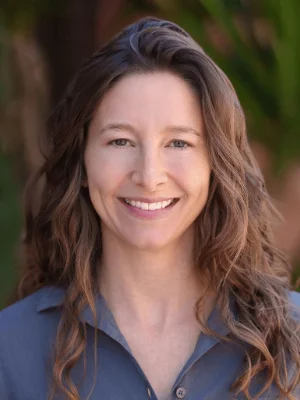
SynBioBeta Speaker
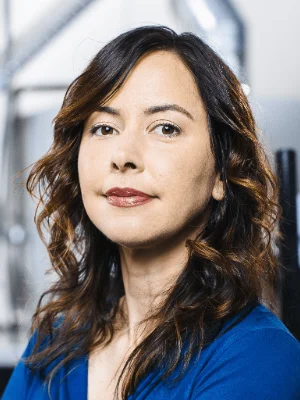
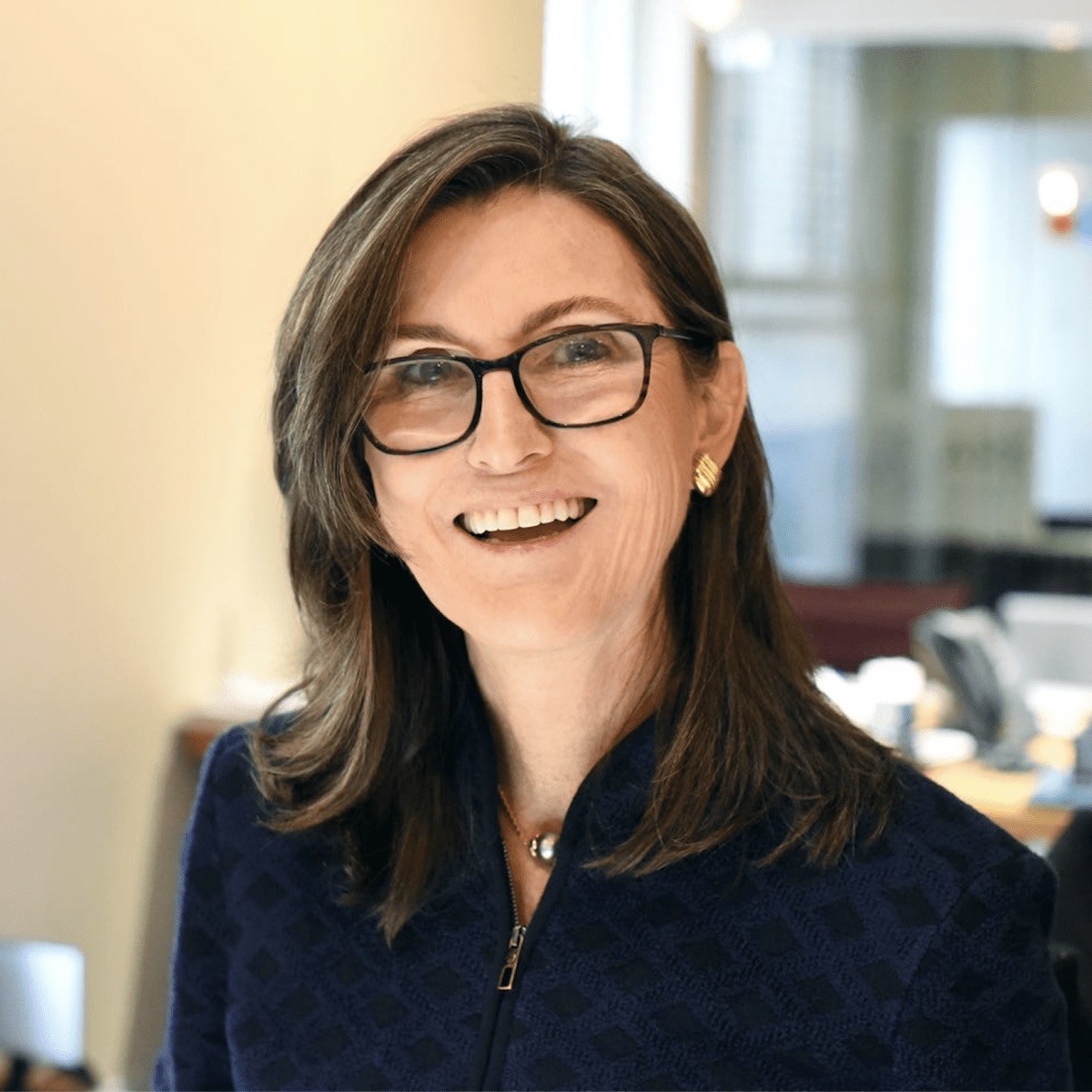
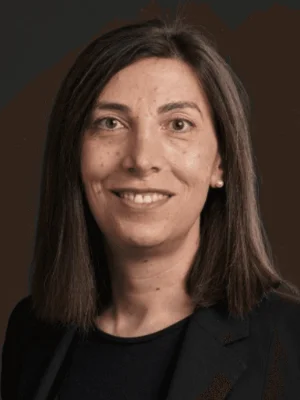
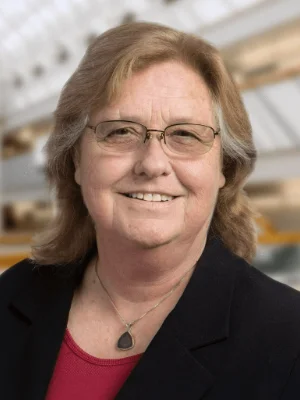
Emily Hatas
Revive & Restore
Vice President
Emily is a plant biologist with deep expertise in plant and animal genomics and advanced breeding technologies, and a career spent bridging cutting-edge biotechnology with real-world impact. She has held leadership roles in business development, commercial strategy, and operations at early-stage and mission-driven organizations in the ag and biotech sectors.As Vice President of Revive & Restore, the leading organization dedicated to conservation biotechnology, Emily helps shape the vision for how genomic tools can enhance biodiversity and restore ecosystems amid rapid environmental change. Revive & Restore is building a Genetic Rescue Toolkit to help threatened species adapt and recover, with projects spanning iconic wildlife restoration and marine ecosystem health. Emily oversees strategic planning, partnerships, and operations, as part of a dynamic team united by the belief that biotechnology can be a powerful force for conservation.She brings to this panel a perspective that spans agricultural science and conservation biology, and a deep interest in how the synthetic biology tools being developed for crop resilience can serve the broader living world. Emily holds a BS in Plant Biology from the University of Wisconsin-Madison and an MBA from the University of Nebraska-Lincoln.
SynBioBeta 2026 Tickets are Live
Confirmed Speakers
Sessions Featuring
Emily
This Year
•
-
Planetary Health
Rooted in Resilience: Speeding Up SynBio Plant Adaptation in a Rapidly Changing Climate
Climate volatility is reshaping the future of food, demanding plants that can withstand heat, drought, and disease. Synthetic biology offers powerful tools to accelerate adaptation—engineering plants with traits that once took decades to breed. This session explores how innovators are designing resilient plants, building platforms for rapid trait development, and forging collaborations across agtech, biotech, multinationals, and policy. Join us to hear how synbio is moving beyond the lab to the field, reshaping agriculture for resilience, and ensuring farmers worldwide can thrive in the face of climate uncertainty.
Featuring

Lyle Ralston
Bayer Crop Science
CE Platform Lead
Engineering Crops for global food security

Joshua Armstrong
Corteva
Discovery & Bioprocess Leader

Emily Hatas
Revive & Restore
Vice President

Bruce Schnicker
Pivot Bio
VP, Product Dev
Sowing the seeds for Biology's future

Michael Ferrari
Moby
VP, Head of Research
Data/AI “world-models” researcher bridging synbio to real markets.

Joshua Geilhufe
Rhiza Bio Cons.
Principal
First-market strategist for synbio agriculture and fermentation.
•
-
Planetary Health
Rooted in Resilience: Speeding Up SynBio Plant Adaptation in a Rapidly Changing Climate
Climate volatility is reshaping the future of food, demanding plants that can withstand heat, drought, and disease. Synthetic biology offers powerful tools to accelerate adaptation—engineering plants with traits that once took decades to breed. This session explores how innovators are designing resilient plants, building platforms for rapid trait development, and forging collaborations across agtech, biotech, multinationals, and policy. Join us to hear how synbio is moving beyond the lab to the field, reshaping agriculture for resilience, and ensuring farmers worldwide can thrive in the face of climate uncertainty.
Featuring

Lyle Ralston
Bayer Crop Science
CE Platform Lead
Engineering Crops for global food security

Joshua Armstrong
Corteva
Discovery & Bioprocess Leader

Emily Hatas
Revive & Restore
Vice President

Bruce Schnicker
Pivot Bio
VP, Product Dev
Sowing the seeds for Biology's future

Michael Ferrari
Moby
VP, Head of Research
Data/AI “world-models” researcher bridging synbio to real markets.

Joshua Geilhufe
Rhiza Bio Cons.
Principal
First-market strategist for synbio agriculture and fermentation.
Session lineup still growing
Featuring
Speaker Coming Soon
•
-
Human Health
From Cells to Patients: Solving the Scale Mismatch in Virtual Biology
Drug discovery often measures biology at the cell level while interventions work at the tissue, organ, or whole-patient scale. This mismatch can make accurate cell-level predictions irrelevant in the clinic. This session dives into strategies to bridge that gap: multiscale modeling that nests single-cell dynamics within organ-level simulations, spatial transcriptomics that preserve context, and surrogate models that translate cell-level outputs into clinical biomarkers. Speakers will ask: how do we ensure virtual biology reflects not just what cells do in isolation, but how biology behaves in the real complexity of patients?
Featuring
Speaker Coming Soon