SynBioBeta Speaker
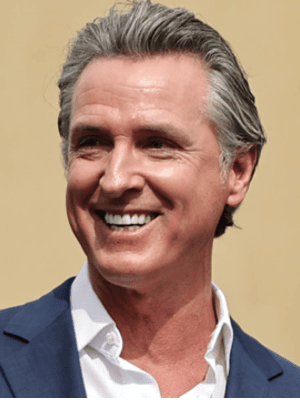
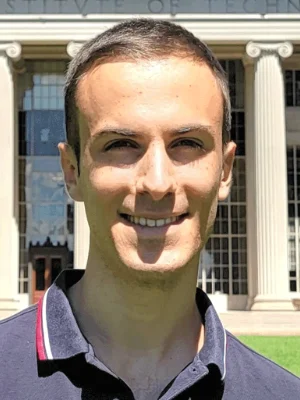
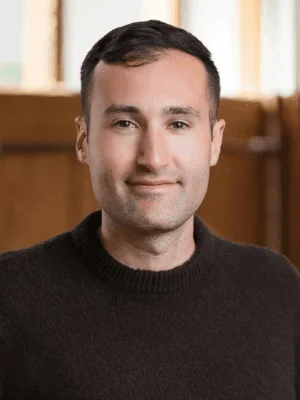
Gabriele Corso
Boltz
CEO
Gabriele received his PhD from MIT CSAIL where his research focused on developing novel ML frameworks to tackle challenging problems in drug discovery and he led the development of popular models in the space including DiffDock, Boltz-1 and Boltz-2.


Sessions Featuring
Gabriele
This Year
•
-
AIxBIO
Beyond Static Predictions — AI for Protein Dynamics and Multi-Cell Models
The next frontier of biology isn’t in predicting a single static protein structure, but in capturing how proteins move, fold, and interact across time and environments. This session explores how AI can illuminate protein conformations and dynamics, and extend those insights into virtual multi-cellular or tissue models. Experts will discuss the challenge of integrating heterogeneous datasets and instruments, and how breakthroughs in dynamic modeling could reshape drug design, disease understanding, and biomanufacturing. Can we build models that reflect the living, breathing complexity of biology—not just snapshots, but motion?
Featuring
Gabriele Corso
Boltz
CEO
Built DiffDock and the Boltz open-source models reshaping drug discovery.
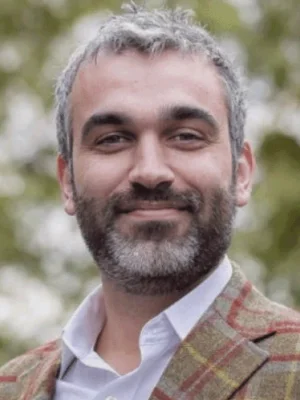
Peter Clark
Novo Nordisk
VP, CDD
Computational drug-design leader, shipped candidates from CAR-T to peptides.
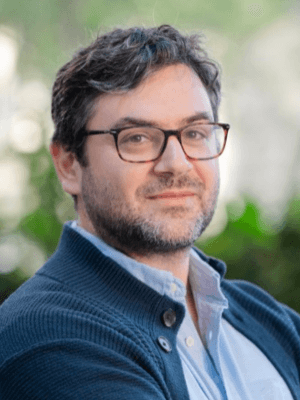
Theofanis Karaletsos
Achira
Co-founder
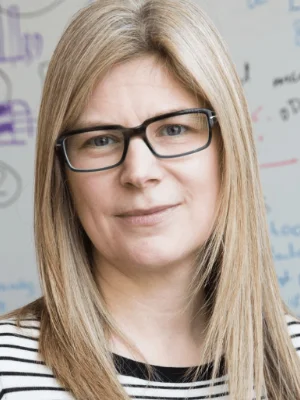
Tanja Kortemme
UCSF
Vice Dean of Research
De novo protein-design pioneer; NIH Pioneer Award winner.
Elliot Hershberg
Amplify Partners
Partner, Author
Driving the Century of Biology
•
-
AIxBIO
Beyond Static Predictions — AI for Protein Dynamics and Multi-Cell Models
The next frontier of biology isn’t in predicting a single static protein structure, but in capturing how proteins move, fold, and interact across time and environments. This session explores how AI can illuminate protein conformations and dynamics, and extend those insights into virtual multi-cellular or tissue models. Experts will discuss the challenge of integrating heterogeneous datasets and instruments, and how breakthroughs in dynamic modeling could reshape drug design, disease understanding, and biomanufacturing. Can we build models that reflect the living, breathing complexity of biology—not just snapshots, but motion?
Featuring
Gabriele Corso
Boltz
CEO
Built DiffDock and the Boltz open-source models reshaping drug discovery.
Peter Clark
Novo Nordisk
VP, CDD
Computational drug-design leader, shipped candidates from CAR-T to peptides.
Theofanis Karaletsos
Achira
Co-founder
Tanja Kortemme
UCSF
Vice Dean of Research
De novo protein-design pioneer; NIH Pioneer Award winner.
Elliot Hershberg
Amplify Partners
Partner, Author
Driving the Century of Biology
•
-
AIxBIO
AIxBio Masterclass: With Boltz Model Creator Gabriele Corso
Join Boltz co-founder Gabriele Corso for an interactive, hands-on masterclass exploring how next-generation AI models are transforming molecular design, protein engineering, and therapeutic development. In this live workshop, attendees will step inside the Boltz platform to learn how structure-based generative modeling pipelines can be applied to real-world design challenges. Participants will see how AI-driven predictions are reshaping the drug discovery workflow — from identifying high-value molecular hits to optimizing binders, and therapeutic candidates. This session is designed for scientists, founders, and R&D leaders looking to understand how to actually use cutting-edge AI to accelerate biological innovation.
Featuring
Gabriele Corso
Boltz
CEO
Built DiffDock and the Boltz open-source models reshaping drug discovery.
•
-
AIxBIO
AIxBio Masterclass: With Boltz Model Creator Gabriele Corso
Join Boltz co-founder Gabriele Corso for an interactive, hands-on masterclass exploring how next-generation AI models are transforming molecular design, protein engineering, and therapeutic development. In this live workshop, attendees will step inside the Boltz platform to learn how structure-based generative modeling pipelines can be applied to real-world design challenges. Participants will see how AI-driven predictions are reshaping the drug discovery workflow — from identifying high-value molecular hits to optimizing binders, and therapeutic candidates. This session is designed for scientists, founders, and R&D leaders looking to understand how to actually use cutting-edge AI to accelerate biological innovation.
Featuring
Gabriele Corso
Boltz
CEO
Built DiffDock and the Boltz open-source models reshaping drug discovery.
Session lineup still growing
Featuring
Speaker Coming Soon
•
-
Human Health
From Cells to Patients: Solving the Scale Mismatch in Virtual Biology
Drug discovery often measures biology at the cell level while interventions work at the tissue, organ, or whole-patient scale. This mismatch can make accurate cell-level predictions irrelevant in the clinic. This session dives into strategies to bridge that gap: multiscale modeling that nests single-cell dynamics within organ-level simulations, spatial transcriptomics that preserve context, and surrogate models that translate cell-level outputs into clinical biomarkers. Speakers will ask: how do we ensure virtual biology reflects not just what cells do in isolation, but how biology behaves in the real complexity of patients?
Featuring
Speaker Coming Soon