SynBioBeta Speaker
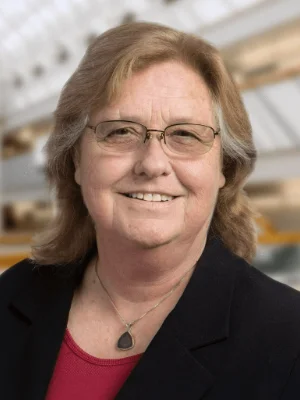
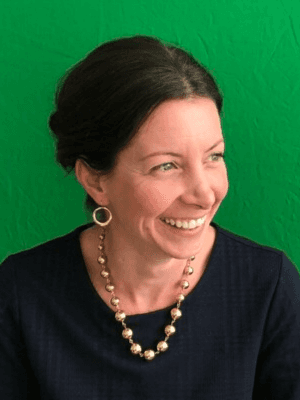
Julianna LeMieux
GEN
Deputy Editor in Chief
Julianna LeMieux is a science writer and editor whose work focuses on genomics, biotechnology, infectious disease, synthetic biology, and translational medicine. Her articles often translate technical research into accessible narratives, highlighting both scientific breakthroughs and industry trends. She also conducts in-depth interviews with leading scientists and helps shape editorial content that puts complex subjects into context for readers across academia and industry. Her work also includes reporting from major scientific meetings and moderating panels and interviews on stage. She earned her Ph.D. in Molecular Biology and Microbiology from Tufts University School of Medicine and completed postdoctoral research at MIT, where she trained in host pathogen interactions. She lives in NYC with her husband and three children.


Sessions Featuring
Julianna
This Year
•
-
Tools & Tech
Engineering Resilient Pharma Supply Chains with Biology
For decades, pharmaceutical supply chains were optimized for cost and scale, stretching across continents to source critical active ingredients. But fragility has made resilience a strategic imperative. Synthetic biology offers a new model: onshoring the production of essential APIs by programming cells to manufacture small molecules, peptides, and novel amino acids with precision and scalability. Instead of relying on distant chemical supply networks, biology becomes the factory—flexible, distributed, and programmable. This session explores how engineered microbes and directed evolution platforms are rebuilding pharma supply chains from the molecular level up, enabling secure, responsive, and locally anchored production of the medicines the world depends on.
Featuring
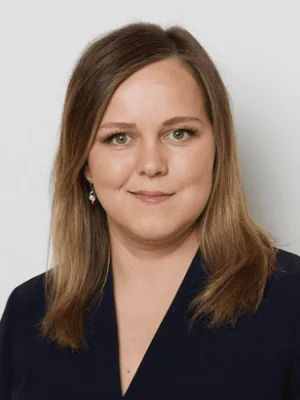
Ola Wlodek
Constructive Bio
CEO
Leader in Non-Canonical Amino Acids and genome design
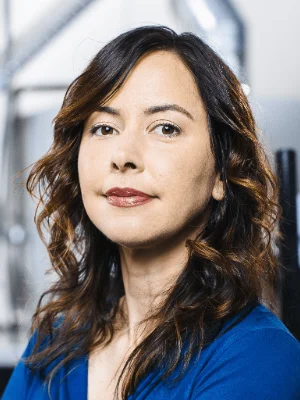
Christina Smolke
Antheia
CEO & Co-Founder
Synthetic-biology pioneer decoupling medicines from fragile supply chains.
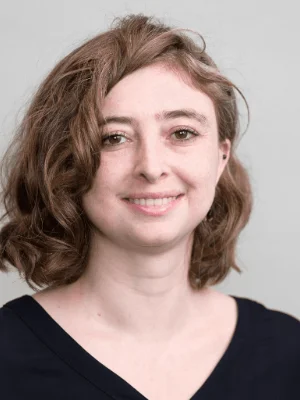
Tina Boville
Aralez Bio
Co-founder & CEO
Enzyme engineer expanding peptide chemistry’s noncanonical frontier.
Julianna LeMieux
GEN
Deputy Editor in Chief
•
-
Tools & Tech
Engineering Resilient Pharma Supply Chains with Biology
For decades, pharmaceutical supply chains were optimized for cost and scale, stretching across continents to source critical active ingredients. But fragility has made resilience a strategic imperative. Synthetic biology offers a new model: onshoring the production of essential APIs by programming cells to manufacture small molecules, peptides, and novel amino acids with precision and scalability. Instead of relying on distant chemical supply networks, biology becomes the factory—flexible, distributed, and programmable. This session explores how engineered microbes and directed evolution platforms are rebuilding pharma supply chains from the molecular level up, enabling secure, responsive, and locally anchored production of the medicines the world depends on.
Featuring
Ola Wlodek
Constructive Bio
CEO
Leader in Non-Canonical Amino Acids and genome design
Christina Smolke
Antheia
CEO & Co-Founder
Synthetic-biology pioneer decoupling medicines from fragile supply chains.
Tina Boville
Aralez Bio
Co-founder & CEO
Enzyme engineer expanding peptide chemistry’s noncanonical frontier.
Julianna LeMieux
GEN
Deputy Editor in Chief
•
-
Human Health
Synthetic Evolution: Reprogramming Genomes to Accelerate Biological Discovery
For billions of years, evolution has been biology’s most powerful search engine. Now researchers are beginning to redesign that engine itself. From orthogonal replication systems like OrthoRep to synthetic genomes, programmable mutation systems, and continuous evolution platforms, new tools are making it possible to evolve biological function with unprecedented speed, control, and scale. This session explores how synthetic evolution is becoming a core technology of programmable biology. Speakers will examine how engineered replication, genome-scale design, and AI-informed selection strategies are expanding the range of molecules, pathways, and phenotypes that can be discovered in the lab. By moving from passively observing evolution to actively directing it, scientists are opening a new frontier where genomes are not just edited, but built and evolved as programmable systems.
Featuring
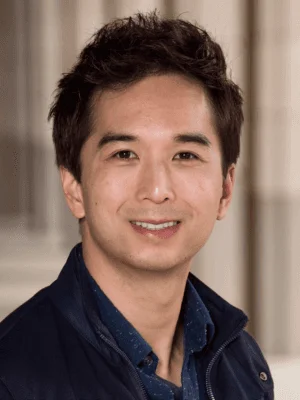
Eric Nguyen
Radical Numerics
Co-founder & CEO
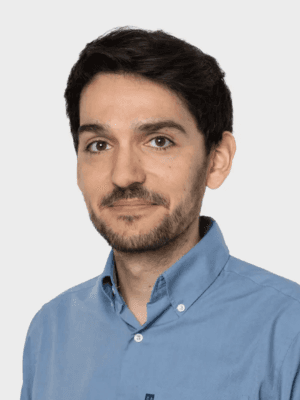
Daniel de la Torre
Constructive Bio
VP of R&D
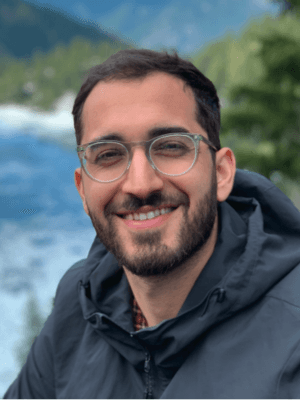
Ali Madani
Profluent
CEO
Julianna LeMieux
GEN
Deputy Editor in Chief
•
-
Human Health
Synthetic Evolution: Reprogramming Genomes to Accelerate Biological Discovery
For billions of years, evolution has been biology’s most powerful search engine. Now researchers are beginning to redesign that engine itself. From orthogonal replication systems like OrthoRep to synthetic genomes, programmable mutation systems, and continuous evolution platforms, new tools are making it possible to evolve biological function with unprecedented speed, control, and scale. This session explores how synthetic evolution is becoming a core technology of programmable biology. Speakers will examine how engineered replication, genome-scale design, and AI-informed selection strategies are expanding the range of molecules, pathways, and phenotypes that can be discovered in the lab. By moving from passively observing evolution to actively directing it, scientists are opening a new frontier where genomes are not just edited, but built and evolved as programmable systems.
Featuring
Eric Nguyen
Radical Numerics
Co-founder & CEO
Daniel de la Torre
Constructive Bio
VP of R&D
Ali Madani
Profluent
CEO
Julianna LeMieux
GEN
Deputy Editor in Chief
Session lineup still growing
Featuring
Speaker Coming Soon
•
-
Human Health
From Cells to Patients: Solving the Scale Mismatch in Virtual Biology
Drug discovery often measures biology at the cell level while interventions work at the tissue, organ, or whole-patient scale. This mismatch can make accurate cell-level predictions irrelevant in the clinic. This session dives into strategies to bridge that gap: multiscale modeling that nests single-cell dynamics within organ-level simulations, spatial transcriptomics that preserve context, and surrogate models that translate cell-level outputs into clinical biomarkers. Speakers will ask: how do we ensure virtual biology reflects not just what cells do in isolation, but how biology behaves in the real complexity of patients?
Featuring
Speaker Coming Soon