SynBioBeta Speaker

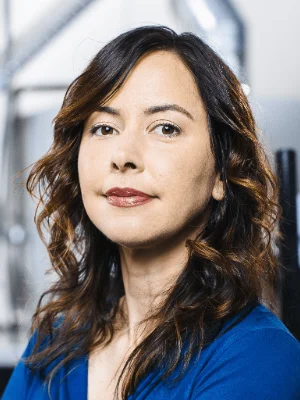
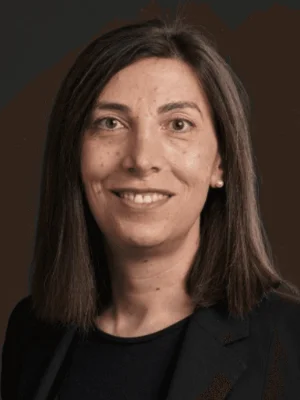
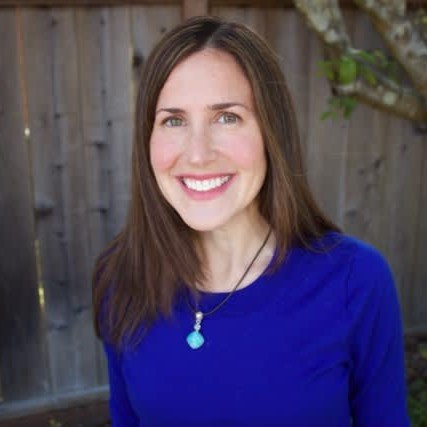
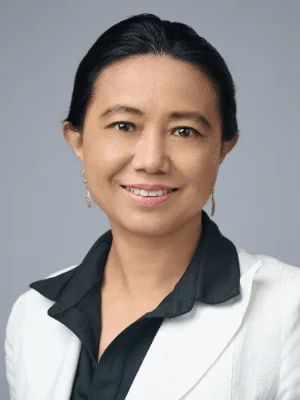
Michelle Chen

Form Bio

President, CEO and Board Member

Michelle Chen, Ph.D. is a biotech executive and industry leader with extensive experience in strategy, business and corporate development, M&A, investor relations, ventures, fundraising, and R&D. She currently serves as President, CEO and Board Member of Form Bio, the first spin-off from Colossal Biosciences, where she leads company’s efforts to harness AI for genetic medicine design and genome engineering applications.Prior to Form Bio, Michelle served as Chief Business Officer at Insilico Medicine, where she drove the company’s growth by translating cutting-edge AI technologies into high-value drug discovery and platform partnerships—unlocking billions in potential revenue.Throughout her career, Michelle has built a strong cross-functional track record spanning R&D, product management, operations, and commercial leadership. She has held key positions at Roche, Merck, BioMarin, and Agilent Technologies, and has also served as an advisor to venture capital firms and startups. Michelle has led new company formations, executed numerous M&A transactions across the U.S., Europe, and Asia, and helped deliver a five-fold increase in the market capitalization of a public company within three years.Michelle earned her Ph.D. in Biochemistry from the University of Washington, conducted postdoctoral research at UC San Francisco, and completed Bioinformatics training at Stanford University.

SynBioBeta 2026 Tickets are Live

Confirmed Speakers

Sessions Featuring

Michelle

This Year

Breakout Session

3:30 PM

-

4:15 PM

AIxBIO

Data Factories: Building the Infrastructure for AI-Ready Biology

Biology is entering an AI-driven era, but most experimental infrastructure still produces data designed for individual experiments, not for learning at scale. As a result, much of today’s data is useful in the moment but poorly suited for training robust, long-lived models. This session will explore what biological data matters most today, what data needs to be generated now to support future models, and how leading teams are closing that gap. Panelists will discuss how automation, metadata discipline, and standardized testing pipelines can turn artisanal lab workflows into continuous experiment-to-learning systems. The focus will be on infrastructure and experimental design, highlighting practical bottlenecks, emerging best practices, and what becomes possible when biology produces abundant, high-quality, model-ready data by default.
Purchase Pass

Breakout Session

3:30 PM

-

4:15 PM

AIxBIO

Data Factories: Building the Infrastructure for AI-Ready Biology

Biology is entering an AI-driven era, but most experimental infrastructure still produces data designed for individual experiments, not for learning at scale. As a result, much of today’s data is useful in the moment but poorly suited for training robust, long-lived models. This session will explore what biological data matters most today, what data needs to be generated now to support future models, and how leading teams are closing that gap. Panelists will discuss how automation, metadata discipline, and standardized testing pipelines can turn artisanal lab workflows into continuous experiment-to-learning systems. The focus will be on infrastructure and experimental design, highlighting practical bottlenecks, emerging best practices, and what becomes possible when biology produces abundant, high-quality, model-ready data by default.

Purchase Pass

TBD

Session lineup still growing

Purchase Pass

Featuring

Speaker Coming Soon

Fireside Chat

12:00 AM

-

8:30 AM

Human Health

From Cells to Patients: Solving the Scale Mismatch in Virtual Biology

Drug discovery often measures biology at the cell level while interventions work at the tissue, organ, or whole-patient scale. This mismatch can make accurate cell-level predictions irrelevant in the clinic. This session dives into strategies to bridge that gap: multiscale modeling that nests single-cell dynamics within organ-level simulations, spatial transcriptomics that preserve context, and surrogate models that translate cell-level outputs into clinical biomarkers. Speakers will ask: how do we ensure virtual biology reflects not just what cells do in isolation, but how biology behaves in the real complexity of patients?

Purchase Pass

Featuring

Speaker Coming Soon

Previous Speakers Include