SynBioBeta Speaker
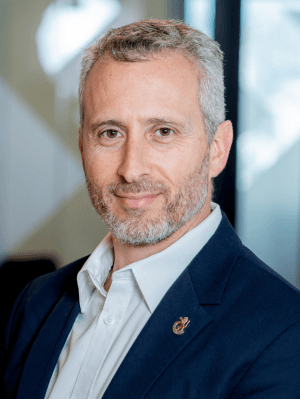
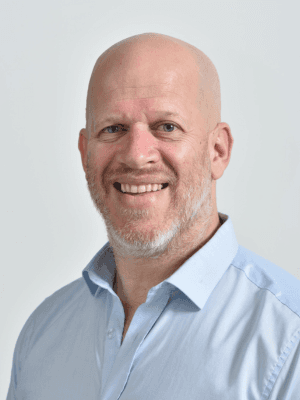
Ariel Blumovich
YDLabs
CEO
Ariel Blumovich is the Founder & CEO of YDLabs, an Agritech & Foodtech fermentation CDMO headquartered in Israel, purpose-built to bridge the gap between synthetic biology innovation and commercial-scale manufacturing. With over 20 years of experience across biopharma and biotech, Ariel has held senior business development, strategy and manufacturing roles at Teva Pharmaceuticals, Sanofi, Samsung Biologics, and Enzymotec, giving him a rare combination of deep scientific industry knowledge and global commercial acumen spanning Israel, South Korea, and the United States.Ariel founded YDLabs to address a critical bottleneck in the Agri/Food-tech sector: the absence of a structured, reliable manufacturing pathway between early fermentation discovery and market-ready scale. Through an integrated infrastructure spanning 80L to 25,000L fermenters and full downstream processing, YDLabs offers clients a step-by-step scale-up pathway for biopesticides, biofertilizers, biostimulants, and industrial biotech, on a fee-for-service, no-equity model that keeps client IP fully protected.Ariel holds an MBA from Dartmouth's Tuck School of Business and a B.Sc. in Mechanical Engineering from the Technion.
SynBioBeta 2026 Tickets are Live
Confirmed Speakers
Sessions Featuring
Ariel
This Year
•
-
Biomanufacturing
Bioconvergence for Biomanufacturing: Closing the Scale Gap in Synthetic Biology
Synthetic biology has entered a new era of capability. AI-driven protein design, advanced cell engineering, and increasingly automated labs are rapidly expanding what is scientifically possible. Yet commercial scale and sustainable economics remain out of reach. The core challenge is no longer whether biology can be engineered, but whether it can be consistently deployed in real-world environments. Moving from lab success to industrial production introduces a new set of constraints, from process robustness and yield to infrastructure, supply chains, and cost. This session focuses on what it actually takes to translate innovation into manufacturing reality. Rather than diagnosing failure points, it highlights the systems, platforms, and partnerships that enable biology to scale. What is working today, where are the key integration bottlenecks, and how do we build a more cohesive path from design to deployment?
•
-
Biomanufacturing
Bioconvergence for Biomanufacturing: Closing the Scale Gap in Synthetic Biology
Synthetic biology has entered a new era of capability. AI-driven protein design, advanced cell engineering, and increasingly automated labs are rapidly expanding what is scientifically possible. Yet commercial scale and sustainable economics remain out of reach. The core challenge is no longer whether biology can be engineered, but whether it can be consistently deployed in real-world environments. Moving from lab success to industrial production introduces a new set of constraints, from process robustness and yield to infrastructure, supply chains, and cost. This session focuses on what it actually takes to translate innovation into manufacturing reality. Rather than diagnosing failure points, it highlights the systems, platforms, and partnerships that enable biology to scale. What is working today, where are the key integration bottlenecks, and how do we build a more cohesive path from design to deployment?
Session lineup still growing
Featuring
Speaker Coming Soon
•
-
Human Health
From Cells to Patients: Solving the Scale Mismatch in Virtual Biology
Drug discovery often measures biology at the cell level while interventions work at the tissue, organ, or whole-patient scale. This mismatch can make accurate cell-level predictions irrelevant in the clinic. This session dives into strategies to bridge that gap: multiscale modeling that nests single-cell dynamics within organ-level simulations, spatial transcriptomics that preserve context, and surrogate models that translate cell-level outputs into clinical biomarkers. Speakers will ask: how do we ensure virtual biology reflects not just what cells do in isolation, but how biology behaves in the real complexity of patients?
Featuring
Speaker Coming Soon