Γ

SynBioBeta Speaker

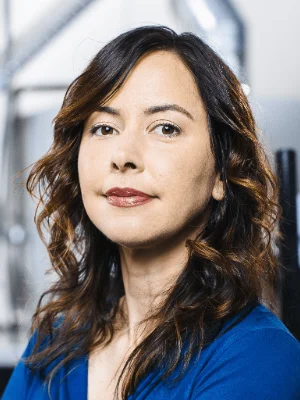
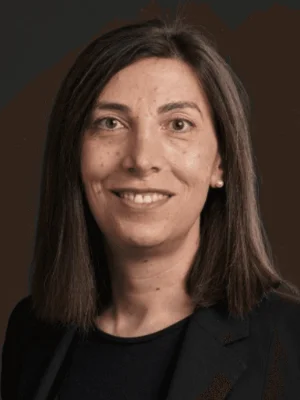
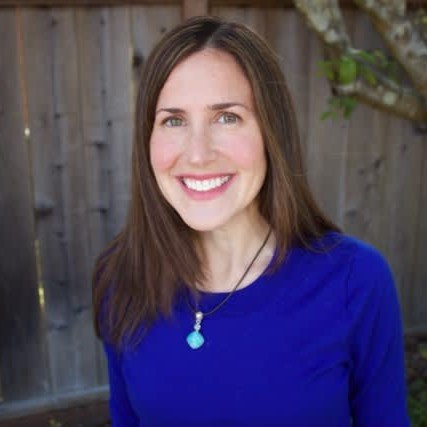
Aristea Grammoustianou

Impli AG

Biosensor Tech Dev Lead

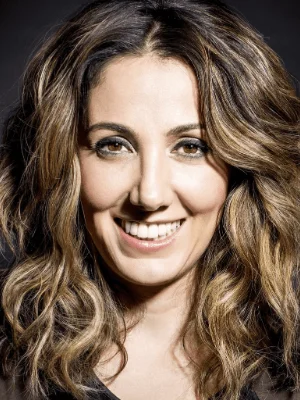
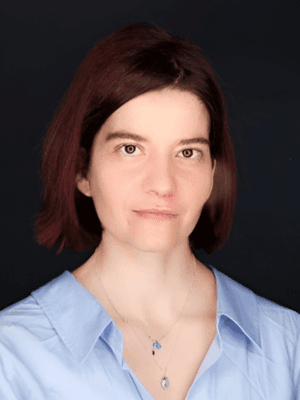
Aristea Grammoustianou, PhD, leads Biosensors at Impli, focusing on innovation in biosensing and diagnostics. With over a decade of experience translating advanced sensing technologies from the lab to real-world applications, she has driven the development of wearable and point-of-care platforms delivering clinically relevant results. Before joining Impli, Aristea co-invented proprietary biosensor technologies, contributed to patent filings, and advanced diagnostic prototypes through rigorous validation in EU-funded research programs recognized by the European Commission. She holds a PhD in Medical Biotechnology and is the author of 9 peer-reviewed publications. Aristea is dedicated to transforming biosensing innovation into scalable healthcare solutions, with a special emphasis on women's health and fertility care.

Sessions Featuring

Aristea

This Year

Femtech

12:00 PM

-

12:45 PM

Human Health

Engineering Reproduction

From AI-powered drug discovery to genomic selection and ovarian longevity — one of the most technically complex and ethically charged frontiers in biotech.The biology of reproduction has always carried the weight of the human story. Now it carries the weight of the possible.Ovarian aging is being mapped at the molecular level. Genomic selection is moving from research settings into clinical practice. AI is accelerating drug discovery for conditions that have been chronically underfunded and chronically misunderstood. The tools exist. The data is accumulating. The ethical frameworks are being written in real time — by the scientists in this room.
Femtech

12:00 PM

-

12:45 PM

Human Health

Engineering Reproduction

From AI-powered drug discovery to genomic selection and ovarian longevity — one of the most technically complex and ethically charged frontiers in biotech.The biology of reproduction has always carried the weight of the human story. Now it carries the weight of the possible.Ovarian aging is being mapped at the molecular level. Genomic selection is moving from research settings into clinical practice. AI is accelerating drug discovery for conditions that have been chronically underfunded and chronically misunderstood. The tools exist. The data is accumulating. The ethical frameworks are being written in real time — by the scientists in this room.

Femtech

12:00 PM

-

12:45 PM

Human Health

Engineering Reproduction

From AI-powered drug discovery to genomic selection and ovarian longevity — one of the most technically complex and ethically charged frontiers in biotech.The biology of reproduction has always carried the weight of the human story. Now it carries the weight of the possible.Ovarian aging is being mapped at the molecular level. Genomic selection is moving from research settings into clinical practice. AI is accelerating drug discovery for conditions that have been chronically underfunded and chronically misunderstood. The tools exist. The data is accumulating. The ethical frameworks are being written in real time — by the scientists in this room.

Femtech

12:00 PM

-

12:45 PM

Human Health

Engineering Reproduction

From AI-powered drug discovery to genomic selection and ovarian longevity — one of the most technically complex and ethically charged frontiers in biotech.The biology of reproduction has always carried the weight of the human story. Now it carries the weight of the possible.Ovarian aging is being mapped at the molecular level. Genomic selection is moving from research settings into clinical practice. AI is accelerating drug discovery for conditions that have been chronically underfunded and chronically misunderstood. The tools exist. The data is accumulating. The ethical frameworks are being written in real time — by the scientists in this room.

TBD

Session lineup still growing

Featuring

Speaker Coming Soon

Fireside Chat

12:00 AM

-

8:30 AM

Human Health

From Cells to Patients: Solving the Scale Mismatch in Virtual Biology

Drug discovery often measures biology at the cell level while interventions work at the tissue, organ, or whole-patient scale. This mismatch can make accurate cell-level predictions irrelevant in the clinic. This session dives into strategies to bridge that gap: multiscale modeling that nests single-cell dynamics within organ-level simulations, spatial transcriptomics that preserve context, and surrogate models that translate cell-level outputs into clinical biomarkers. Speakers will ask: how do we ensure virtual biology reflects not just what cells do in isolation, but how biology behaves in the real complexity of patients?

Featuring

Speaker Coming Soon

Previous Speakers Include