SynBioBeta Speaker
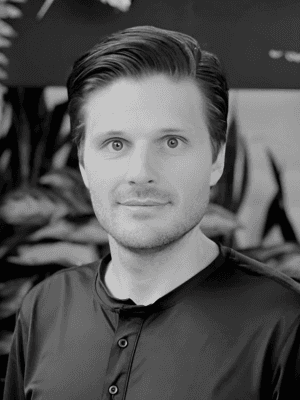
Bingyin (Brian) Wang
LinkZill
Dir. of Life Sciences BU
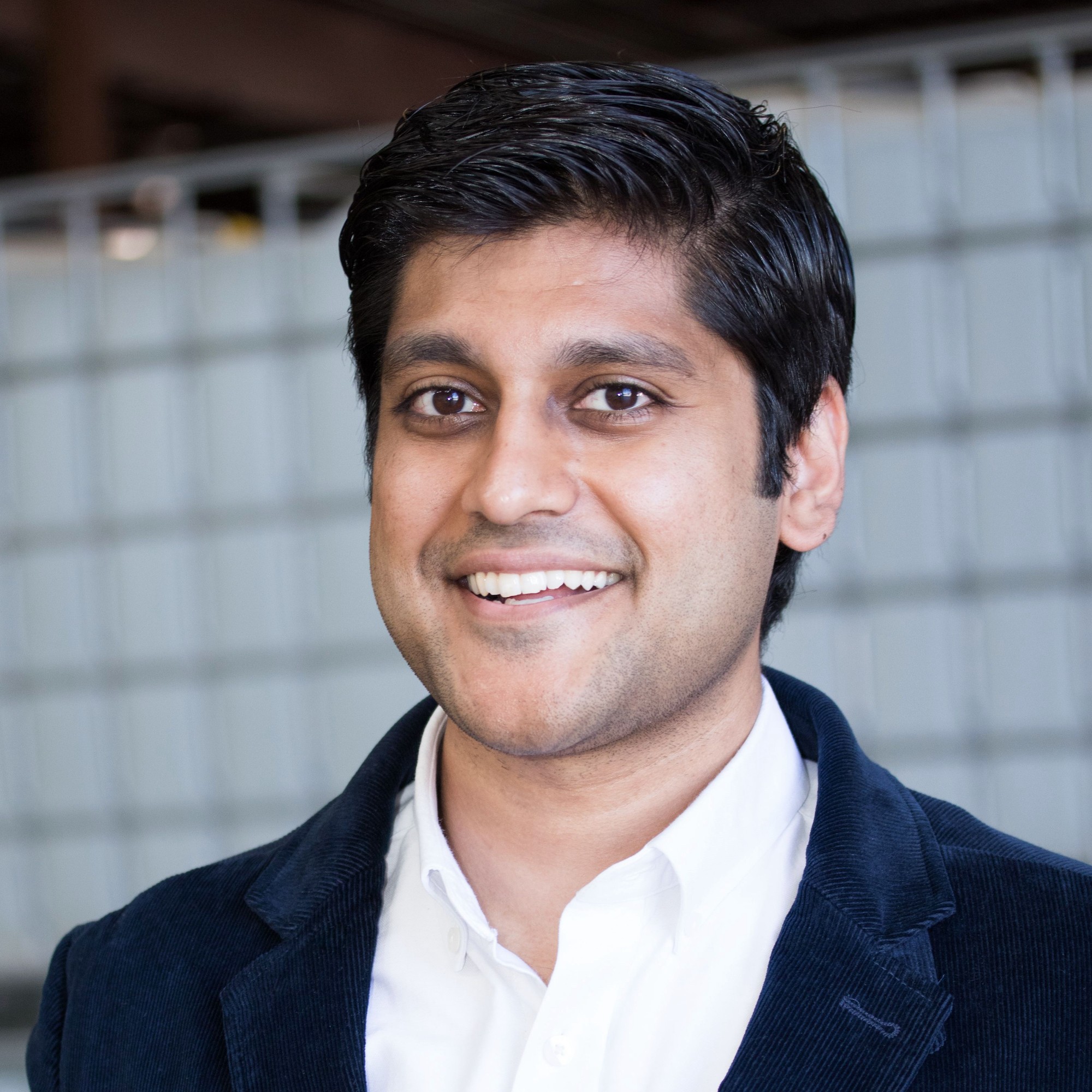
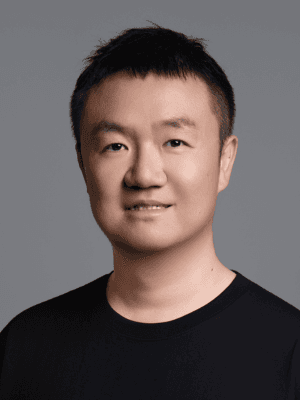
Bingyin (Brian) Wang, Ph.D, is a seasoned subject matter expert with over 15 years of specialized experience in genomics, with a core focus on Synthetic Biology alongside CRISPR genome editing and NGS technologies. Boasting a dual academic and commercial background across the US and China, he has excelled in cross-functional roles spanning sales, business development, product management, and application development, driving global business growth and operational excellence.


Sessions Featuring
Bingyin (Brian)
This Year
•
-
Tools & Tech
Closing the Loop at 10ⁿ Scale: The Autonomous DBTL Stack
The Design–Build–Test–Learn (DBTL) cycle remains the core engine of biological engineering, yet its iteration speed still lags far behind software development. As AI systems begin to design, plan, and execute experiments, a new paradigm is emerging: DBTL as an autonomous, continuously optimizing system. Next-generation platforms combine AI-assisted rational design, high-throughput construction and perturbation, real-time data acquisition, and active learning to close the loop at unprecedented scale. Agent-powered lab-in-a-loop workflows, lab-on-a-chip systems, and advances at the silicon-to-carbon interface are enabling tighter integration between computation and biology, from semiconductor-enabled sensing to real-time feedback and decision-making. This session explores how autonomous DBTL stacks could unlock software-like iteration velocity in biology, redefine experimentation, and reshape the future of programmable discovery.

•
-
Tools & Tech
Closing the Loop at 10ⁿ Scale: The Autonomous DBTL Stack
The Design–Build–Test–Learn (DBTL) cycle remains the core engine of biological engineering, yet its iteration speed still lags far behind software development. As AI systems begin to design, plan, and execute experiments, a new paradigm is emerging: DBTL as an autonomous, continuously optimizing system. Next-generation platforms combine AI-assisted rational design, high-throughput construction and perturbation, real-time data acquisition, and active learning to close the loop at unprecedented scale. Agent-powered lab-in-a-loop workflows, lab-on-a-chip systems, and advances at the silicon-to-carbon interface are enabling tighter integration between computation and biology, from semiconductor-enabled sensing to real-time feedback and decision-making. This session explores how autonomous DBTL stacks could unlock software-like iteration velocity in biology, redefine experimentation, and reshape the future of programmable discovery.
•
-
Tools & Tech
The Democratization of Scale: From Billion-Dollar Facilities to Desktop Biology
For decades, meaningful progress in biotechnology depended on access to million to billion-dollar facilities, specialized infrastructure, and industrial-scale equipment. Today, that paradigm is rapidly shifting. A new generation of tools, from smart shake flasks and modular bioreactors to microfluidic platforms, desktop DNA printers, and compact sequencing devices; is compressing the scale of biological experimentation while expanding who can participate. These technologies are transforming the economics of innovation, enabling startups, academic labs, and distributed research teams to design, build, and test biological systems without massive capital investment. As instrumentation becomes smaller, smarter, and increasingly automated, biology is moving from centralized mega-facilities toward a more distributed model of experimentation. This session explores how advances in lab automation, miniaturized bioreactors, and accessible bioinstrumentation are lowering the barriers to experimentation — and what this shift means for the speed, diversity, and geography of the next wave of bioinnovation.


•
-
Tools & Tech
The Democratization of Scale: From Billion-Dollar Facilities to Desktop Biology
For decades, meaningful progress in biotechnology depended on access to million to billion-dollar facilities, specialized infrastructure, and industrial-scale equipment. Today, that paradigm is rapidly shifting. A new generation of tools, from smart shake flasks and modular bioreactors to microfluidic platforms, desktop DNA printers, and compact sequencing devices; is compressing the scale of biological experimentation while expanding who can participate. These technologies are transforming the economics of innovation, enabling startups, academic labs, and distributed research teams to design, build, and test biological systems without massive capital investment. As instrumentation becomes smaller, smarter, and increasingly automated, biology is moving from centralized mega-facilities toward a more distributed model of experimentation. This session explores how advances in lab automation, miniaturized bioreactors, and accessible bioinstrumentation are lowering the barriers to experimentation — and what this shift means for the speed, diversity, and geography of the next wave of bioinnovation.
Session lineup still growing
Featuring
Speaker Coming Soon
•
-
Human Health
From Cells to Patients: Solving the Scale Mismatch in Virtual Biology
Drug discovery often measures biology at the cell level while interventions work at the tissue, organ, or whole-patient scale. This mismatch can make accurate cell-level predictions irrelevant in the clinic. This session dives into strategies to bridge that gap: multiscale modeling that nests single-cell dynamics within organ-level simulations, spatial transcriptomics that preserve context, and surrogate models that translate cell-level outputs into clinical biomarkers. Speakers will ask: how do we ensure virtual biology reflects not just what cells do in isolation, but how biology behaves in the real complexity of patients?
Featuring
Speaker Coming Soon