Γ

SynBioBeta Speaker

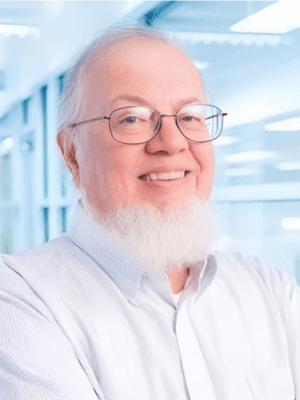
Michael Chen

Nuclera

CEO & Mng. Director

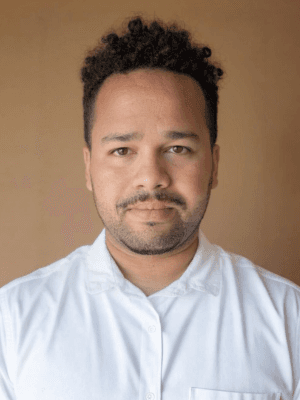
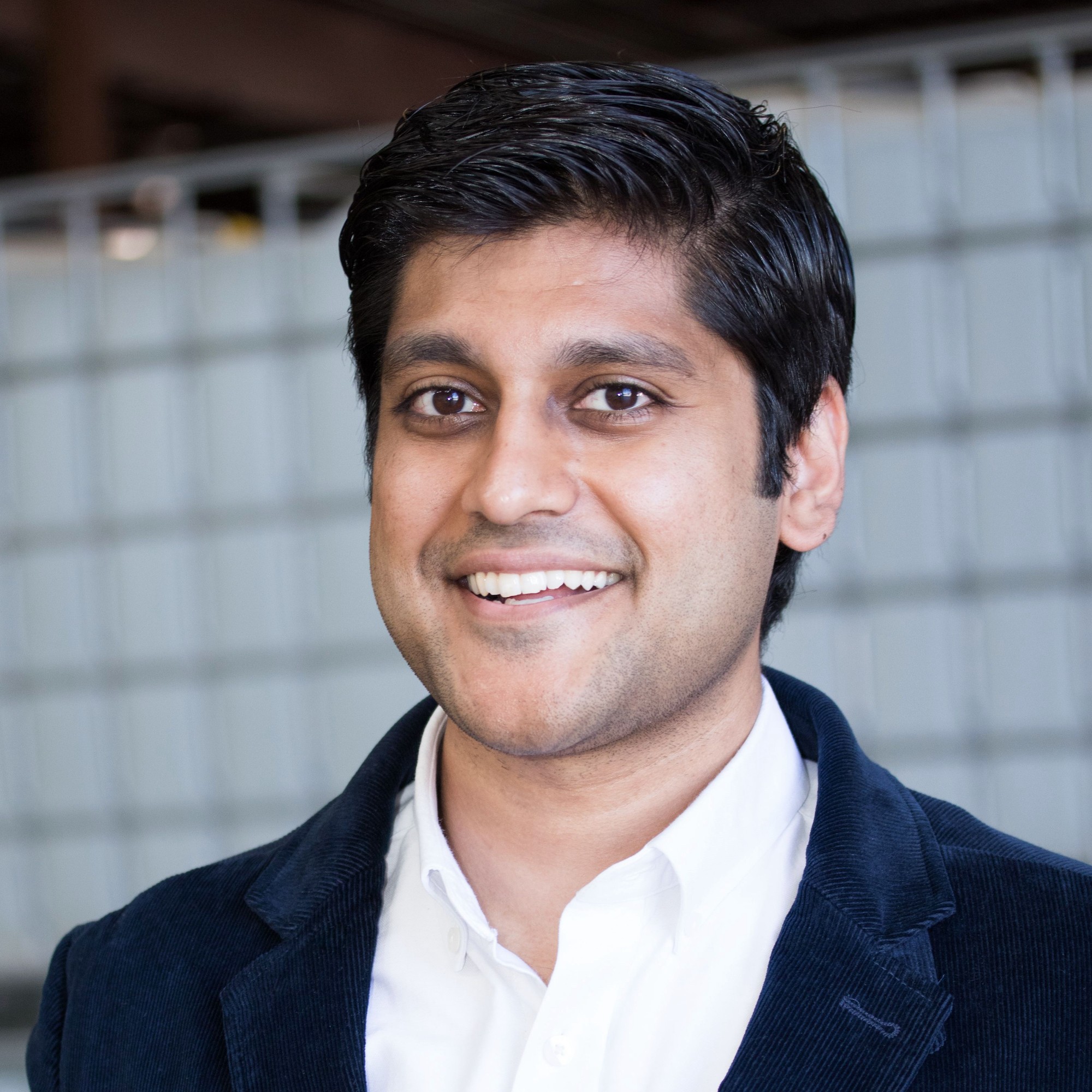
Michael Chen is the co-founder and CEO of Nuclera, a Cambridge UK and Boston US based life science tools company revolutionizing protein accessibility through the eProtein Discovery rapid protein access benchtop platform. With a mission to improve human health, Michael and his classmates founded Nuclera in response to the costly barriers to protein access for research and drug discovery. As CEO, he drives core inventions, sets the company's vision and strategy, and oversees its growth across two continents with over 100 employees.Before Nuclera, Michael was an award-winning structural biologist. His work resulted in numerous high impact publications including Nature. Michael holds a BSc in Chemistry from the Georgia Institute of Technology and a PhD in Structural Biology/Chemistry from the University of Cambridge and the National Institutes of Health.

Sessions Featuring

Michael

This Year

Breakout Session

3:30 PM

-

4:15 PM

Tools & Tech

Closing the Loop at 10ⁿ Scale: The Autonomous DBTL Stack

The Design–Build–Test–Learn (DBTL) cycle remains the core engine of biological engineering, yet its iteration speed still lags far behind software development. As AI systems begin to design, plan, and execute experiments, a new paradigm is emerging: DBTL as an autonomous, continuously optimizing system. Next-generation platforms combine AI-assisted rational design, high-throughput construction and perturbation, real-time data acquisition, and active learning to close the loop at unprecedented scale. Agent-powered lab-in-a-loop workflows, lab-on-a-chip systems, and advances at the silicon-to-carbon interface are enabling tighter integration between computation and biology, from semiconductor-enabled sensing to real-time feedback and decision-making. This session explores how autonomous DBTL stacks could unlock software-like iteration velocity in biology, redefine experimentation, and reshape the future of programmable discovery.

Breakout Session

3:30 PM

-

4:15 PM

Tools & Tech

Closing the Loop at 10ⁿ Scale: The Autonomous DBTL Stack

The Design–Build–Test–Learn (DBTL) cycle remains the core engine of biological engineering, yet its iteration speed still lags far behind software development. As AI systems begin to design, plan, and execute experiments, a new paradigm is emerging: DBTL as an autonomous, continuously optimizing system. Next-generation platforms combine AI-assisted rational design, high-throughput construction and perturbation, real-time data acquisition, and active learning to close the loop at unprecedented scale. Agent-powered lab-in-a-loop workflows, lab-on-a-chip systems, and advances at the silicon-to-carbon interface are enabling tighter integration between computation and biology, from semiconductor-enabled sensing to real-time feedback and decision-making. This session explores how autonomous DBTL stacks could unlock software-like iteration velocity in biology, redefine experimentation, and reshape the future of programmable discovery.

TBD

Session lineup still growing

Featuring

Speaker Coming Soon

Fireside Chat

12:00 AM

-

8:30 AM

Human Health

From Cells to Patients: Solving the Scale Mismatch in Virtual Biology

Drug discovery often measures biology at the cell level while interventions work at the tissue, organ, or whole-patient scale. This mismatch can make accurate cell-level predictions irrelevant in the clinic. This session dives into strategies to bridge that gap: multiscale modeling that nests single-cell dynamics within organ-level simulations, spatial transcriptomics that preserve context, and surrogate models that translate cell-level outputs into clinical biomarkers. Speakers will ask: how do we ensure virtual biology reflects not just what cells do in isolation, but how biology behaves in the real complexity of patients?

Featuring

Speaker Coming Soon

Previous Speakers Include