SynBioBeta Speaker
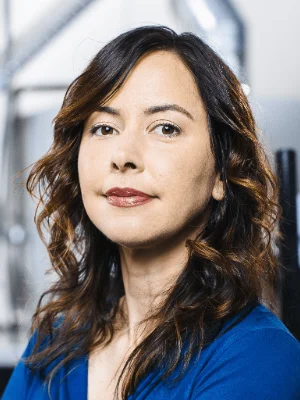
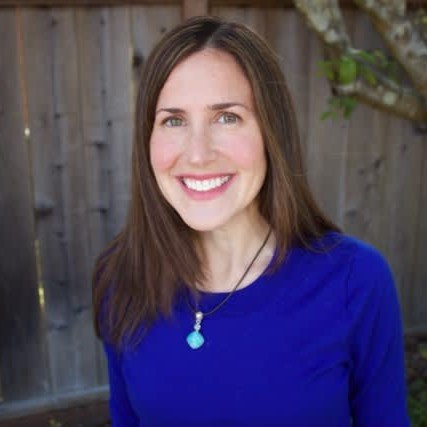
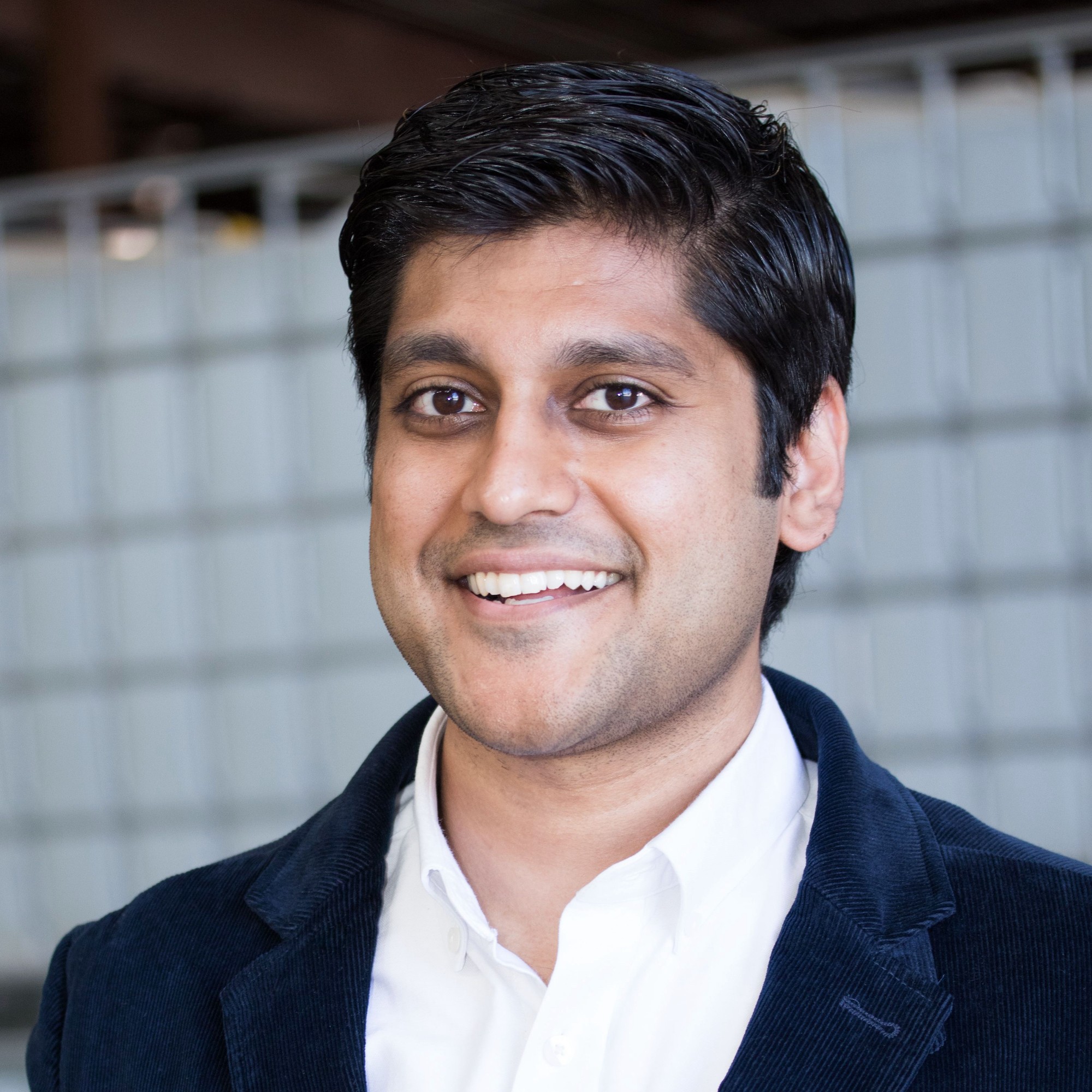
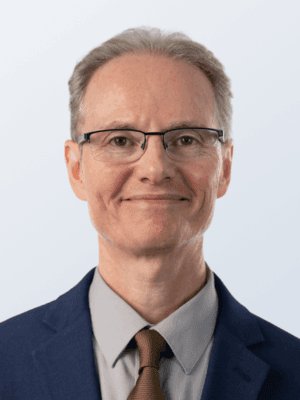
Joy Jiao
OpenAI
Research Lead
Joy leads the life sciences research team at OpenAI. The goal of the team is to accelerate basic research and drug discovery, by operating across the model training stack to improve model capabilities from molecules to organisms. At OpenAI, Joy previously worked on model safety, personalization, search, and representation learning. She holds a PhD in Systems Biology from Harvard, where she studied the in-patient evolution of cancer cells during immunotherapy as well as the evolution of antibiotic resistance.


Sessions Featuring
Joy
This Year
•
-
Tools & Tech
Self-Driving Labs, AI, and Automation: A Practical Guide to Getting Started
AI-enabled, self-driving labs are still emerging, but their foundations are already transforming how teams design, run, and interpret experiments. This session offers a practical guide for scientists and R&D leaders who want to understand what can be done today — from tightening design–test–learn loops to reducing manual error and capturing early benefits of autonomous experimentation. Rather than presenting an unrealized future, speakers will focus on practical, real-world steps that give organizations a competitive edge as SDL capabilities evolve and mature. Speakers will explore what’s working, what’s not, and how autonomous lab systems are reshaping protein engineering, pathway optimization, and therapeutic design.
Featuring
Hector Garcia Martin
LBNL
Staff Scientist
Modelling biology before the age of AI

Roya Amini-Naieni
Trilobio
CEO & Co-founder
Lab-automation founder building a “lab-in-a-box” for biologists.
Frank Poelwijk
Generate:Biomedicines
VP, Head of Prototyping Lab
Piotr Byrski
molecule.one
CEO
Joy Jiao
OpenAI
Research Lead
•
-
Tools & Tech
Self-Driving Labs, AI, and Automation: A Practical Guide to Getting Started
AI-enabled, self-driving labs are still emerging, but their foundations are already transforming how teams design, run, and interpret experiments. This session offers a practical guide for scientists and R&D leaders who want to understand what can be done today — from tightening design–test–learn loops to reducing manual error and capturing early benefits of autonomous experimentation. Rather than presenting an unrealized future, speakers will focus on practical, real-world steps that give organizations a competitive edge as SDL capabilities evolve and mature. Speakers will explore what’s working, what’s not, and how autonomous lab systems are reshaping protein engineering, pathway optimization, and therapeutic design.
Featuring
Hector Garcia Martin
LBNL
Staff Scientist
Modelling biology before the age of AI
Roya Amini-Naieni
Trilobio
CEO & Co-founder
Lab-automation founder building a “lab-in-a-box” for biologists.
Frank Poelwijk
Generate:Biomedicines
VP, Head of Prototyping Lab
Piotr Byrski
molecule.one
CEO
Joy Jiao
OpenAI
Research Lead
•
-
AIxBIO
Biology in Silico: Multi-Agent Simulations of Life
From tissues morphing in development to microbes competing in a bioreactor, biology is inherently emergent. Multi-agent simulations — from platforms like BioDynaMo, CompuCell3D, and BIO-LGCA — are now powerful enough to model billions of interacting agents, capturing diffusion, metabolism, migration, and signaling with physical fidelity. Synthetic biologists are using these frameworks to probe design limits before moving to the lab, asking questions like: How far can diffusion alone carry a signaling molecule? What metabolic bottlenecks emerge in crowded cells? And how do engineered traits play out at population scale? This session will spotlight how agent-based models are becoming essential design environments for synthetic biology, helping teams test hypotheses virtually, anticipate failure modes, and translate biology into an engineering discipline rooted in predictive, quantitative simulation.
Featuring
T.J. Chen
NVIDIA
Product Leader, Bio Sciences
Joy Jiao
OpenAI
Research Lead
Laura Luebbert
FutureHouse
Postdoctoral Fellow
AI infectious-disease genome miner, "gget toolkit" creator.
Yoram Vodovotz
ARPA-H
PM, Resilient Systems
•
-
AIxBIO
Biology in Silico: Multi-Agent Simulations of Life
From tissues morphing in development to microbes competing in a bioreactor, biology is inherently emergent. Multi-agent simulations — from platforms like BioDynaMo, CompuCell3D, and BIO-LGCA — are now powerful enough to model billions of interacting agents, capturing diffusion, metabolism, migration, and signaling with physical fidelity. Synthetic biologists are using these frameworks to probe design limits before moving to the lab, asking questions like: How far can diffusion alone carry a signaling molecule? What metabolic bottlenecks emerge in crowded cells? And how do engineered traits play out at population scale? This session will spotlight how agent-based models are becoming essential design environments for synthetic biology, helping teams test hypotheses virtually, anticipate failure modes, and translate biology into an engineering discipline rooted in predictive, quantitative simulation.
Featuring
T.J. Chen
NVIDIA
Product Leader, Bio Sciences
Joy Jiao
OpenAI
Research Lead
Laura Luebbert
FutureHouse
Postdoctoral Fellow
AI infectious-disease genome miner, "gget toolkit" creator.
Yoram Vodovotz
ARPA-H
PM, Resilient Systems
Session lineup still growing
Featuring
Speaker Coming Soon
•
-
Human Health
From Cells to Patients: Solving the Scale Mismatch in Virtual Biology
Drug discovery often measures biology at the cell level while interventions work at the tissue, organ, or whole-patient scale. This mismatch can make accurate cell-level predictions irrelevant in the clinic. This session dives into strategies to bridge that gap: multiscale modeling that nests single-cell dynamics within organ-level simulations, spatial transcriptomics that preserve context, and surrogate models that translate cell-level outputs into clinical biomarkers. Speakers will ask: how do we ensure virtual biology reflects not just what cells do in isolation, but how biology behaves in the real complexity of patients?
Featuring
Speaker Coming Soon