SynBioBeta Speaker
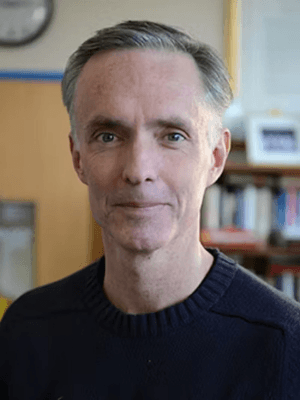
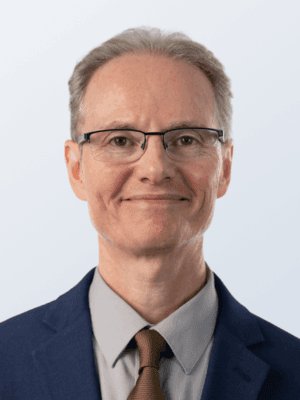
Yoram Vodovotz
ARPA-H
Program Manager
Dr. Yoram Vodovotz joined ARPA-H as a Program Manager in December 2024. He is a Professor of Surgery, Immunology, Computational and Systems Biology, Bioengineering, Clinical and Translational Science, and Communication Science and Disorders at the University of Pittsburgh. His interdisciplinary research has focused on systems biology of inflammation and immunity, with a particular emphasis on critical illness. Dr. Vodovotz also served as the Director of the Center for Inflammation and Regeneration Modeling at the McGowan Institute for Regenerative Medicine and has co-founded and existed Immunetrics, a company based on virtual clinical trials and digital twins. He has published over ~400 manuscripts, including four books, and is also the founding editor-in-chief of Frontiers in Systems Biology. He received his doctorate from Cornell University and carried out postdoctoral training at the National Cancer Institute.
SynBioBeta 2026 Tickets are Live
Confirmed Speakers
Sessions Featuring
Yoram
This Year
•
-
AIxBIO
Biology in Silico: Multi-Agent Simulations of Life
From tissues morphing in development to microbes competing in a bioreactor, biology is inherently emergent. Multi-agent simulations — from platforms like BioDynaMo, CompuCell3D, and BIO-LGCA — are now powerful enough to model billions of interacting agents, capturing diffusion, metabolism, migration, and signaling with physical fidelity. Synthetic biologists are using these frameworks to probe design limits before moving to the lab, asking questions like: How far can diffusion alone carry a signaling molecule? What metabolic bottlenecks emerge in crowded cells? And how do engineered traits play out at population scale? This session will spotlight how agent-based models are becoming essential design environments for synthetic biology, helping teams test hypotheses virtually, anticipate failure modes, and translate biology into an engineering discipline rooted in predictive, quantitative simulation.
•
-
AIxBIO
Biology in Silico: Multi-Agent Simulations of Life
From tissues morphing in development to microbes competing in a bioreactor, biology is inherently emergent. Multi-agent simulations — from platforms like BioDynaMo, CompuCell3D, and BIO-LGCA — are now powerful enough to model billions of interacting agents, capturing diffusion, metabolism, migration, and signaling with physical fidelity. Synthetic biologists are using these frameworks to probe design limits before moving to the lab, asking questions like: How far can diffusion alone carry a signaling molecule? What metabolic bottlenecks emerge in crowded cells? And how do engineered traits play out at population scale? This session will spotlight how agent-based models are becoming essential design environments for synthetic biology, helping teams test hypotheses virtually, anticipate failure modes, and translate biology into an engineering discipline rooted in predictive, quantitative simulation.
Session lineup still growing
Featuring
Speaker Coming Soon
•
-
Human Health
From Cells to Patients: Solving the Scale Mismatch in Virtual Biology
Drug discovery often measures biology at the cell level while interventions work at the tissue, organ, or whole-patient scale. This mismatch can make accurate cell-level predictions irrelevant in the clinic. This session dives into strategies to bridge that gap: multiscale modeling that nests single-cell dynamics within organ-level simulations, spatial transcriptomics that preserve context, and surrogate models that translate cell-level outputs into clinical biomarkers. Speakers will ask: how do we ensure virtual biology reflects not just what cells do in isolation, but how biology behaves in the real complexity of patients?
Featuring
Speaker Coming Soon