SynBioBeta Speaker
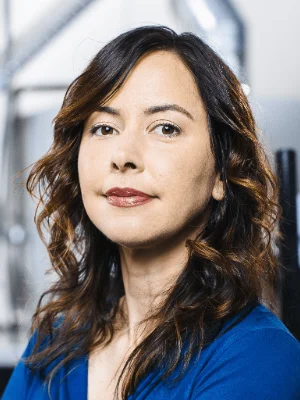
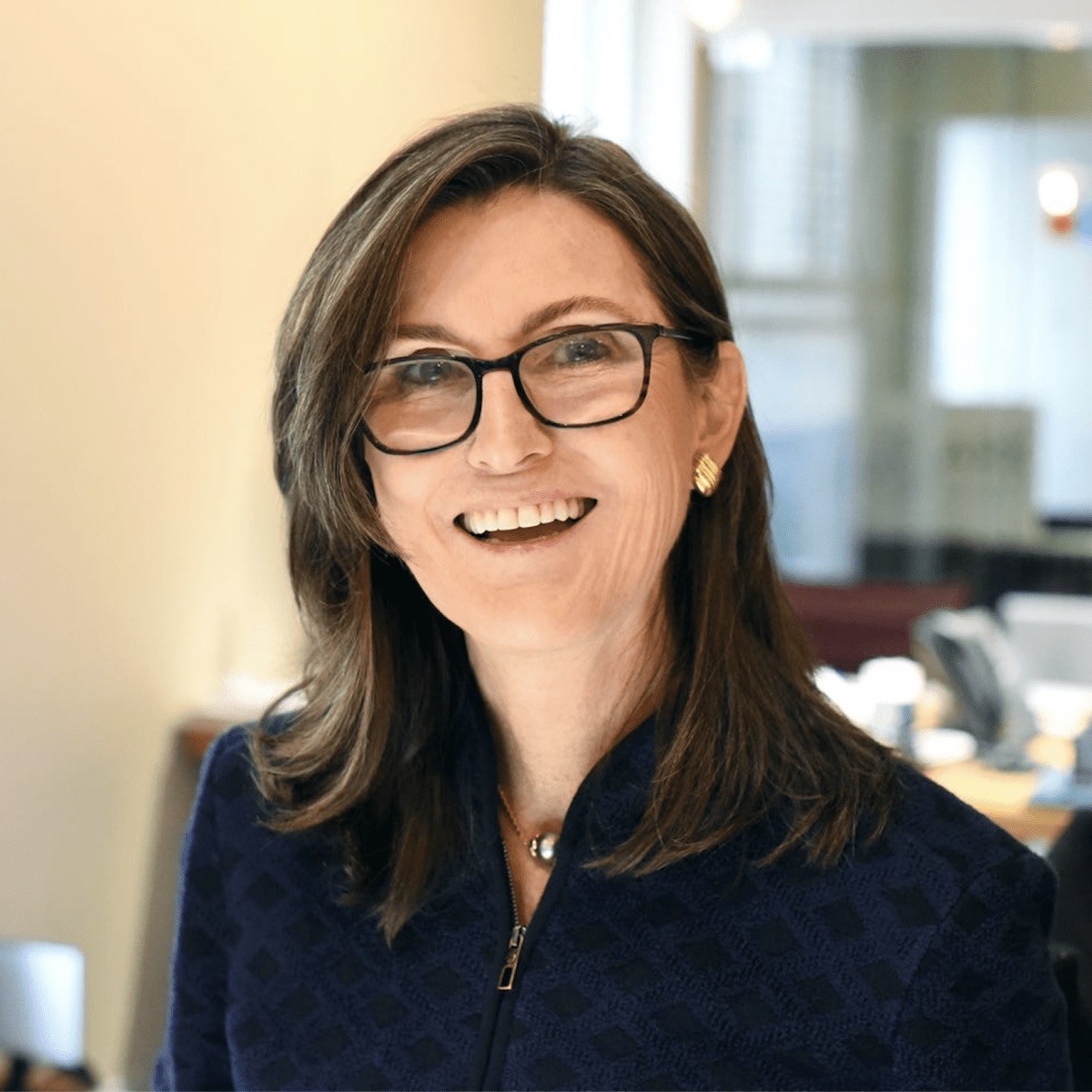
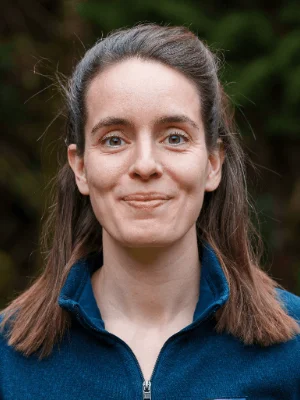
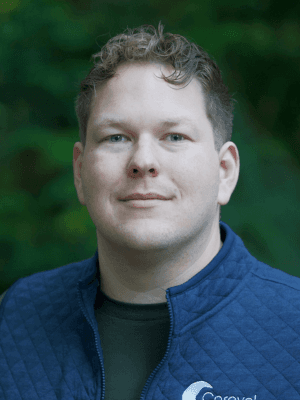
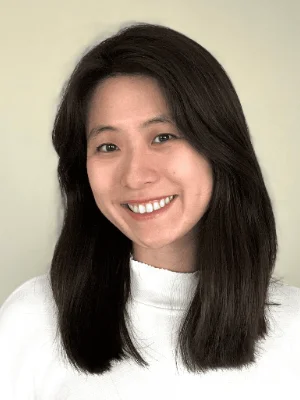
Elise de Reus
Cradle
Co-founder
As co-founder of Cradle, Elise is motivated by the belief that industrial biotechnology holds enormous potential to produce essential products at lower environmental impact. Elise previously worked at Zymergen to develop high-throughput workflows for rapidly generating improved microbial strains, and contributed to strain engineering for microbial production of dairy protein at Perfect Day Foods. She holds an MSc in Life Science & Technology from TU Delft and grew quite fond of fungi during a PhD in fungal synthetic biology at the Technical University of Denmark.


Sessions Featuring
Elise
This Year
•
-
Planetary Health
Bio-Engineering the Future of Surfactant Technologies
Surfactants (the molecules that power cleaning, foaming, emulsifying, and conditioning in everyday products) are entering a new era of innovation. Advances in bio-engineering are enabling the design of next-generation surfactants with enhanced performance and reduced environmental impact. By leveraging biologically derived and bio-inspired approaches, researchers and product developers are rethinking how these essential ingredients are produced and formulated. New pathways in fermentation, enzyme engineering, and green chemistry are opening opportunities to create surfactants that are not only more effective, but also better aligned with circularity and nature-positive design principles. This session will explore how bio-engineered surfactants are reshaping formulation science: from new production platforms to novel functional properties, and what it will take to scale these innovations into the next generation of sustainable consumer products.
•
-
Planetary Health
Bio-Engineering the Future of Surfactant Technologies
Surfactants (the molecules that power cleaning, foaming, emulsifying, and conditioning in everyday products) are entering a new era of innovation. Advances in bio-engineering are enabling the design of next-generation surfactants with enhanced performance and reduced environmental impact. By leveraging biologically derived and bio-inspired approaches, researchers and product developers are rethinking how these essential ingredients are produced and formulated. New pathways in fermentation, enzyme engineering, and green chemistry are opening opportunities to create surfactants that are not only more effective, but also better aligned with circularity and nature-positive design principles. This session will explore how bio-engineered surfactants are reshaping formulation science: from new production platforms to novel functional properties, and what it will take to scale these innovations into the next generation of sustainable consumer products.
•
-
AIxBIO
The Programmable Protein Era: How AI Rewrites the Rules of Biomolecules
Biologics and engineered proteins have traditionally evolved through cycles of intuition, screening, and incremental optimization. Today, AI is transforming proteins into programmable systems; governed by learnable patterns across activity, stability, expression, specificity, manufacturability, and environmental performance. This shift is unlocking a new generation of biomolecules, from next-generation therapeutics to sustainable enzymes and functional biological systems, that would have been impossible to design by hand. In this session, leaders from biopharma, industrial biotech, machine learning, and protein engineering will explore how multiparameter optimization, generative modeling, and closed-loop experimental validation are reshaping biomolecular design across domains. From clinical biologics to planetary-scale applications, we examine the shift from trial-and-error to predictive, constraint-driven design, and what it means for R&D timelines, scalability, and real-world impact.
Featuring
Elise de Reus
Cradle
Co-founder
Making proteins an engineering discipline

Peter Clark
Novo Nordisk
VP, CDD
Computational drug-design leader, shipped candidates from CAR-T to peptides.
Jose Carlos Garcia-Garcia
Procter & Gamble
Sr. Dir., Research Fellow
Builds biotech “from microbes to marketplace” at consumer scale.
Luis Cascão Pereira
IFF Health & Biosciences
Head of R&D Ventures & Digital Biology
Fay Lin
GEN
Sr Editor, Technology
•
-
AIxBIO
The Programmable Protein Era: How AI Rewrites the Rules of Biomolecules
Biologics and engineered proteins have traditionally evolved through cycles of intuition, screening, and incremental optimization. Today, AI is transforming proteins into programmable systems; governed by learnable patterns across activity, stability, expression, specificity, manufacturability, and environmental performance. This shift is unlocking a new generation of biomolecules, from next-generation therapeutics to sustainable enzymes and functional biological systems, that would have been impossible to design by hand. In this session, leaders from biopharma, industrial biotech, machine learning, and protein engineering will explore how multiparameter optimization, generative modeling, and closed-loop experimental validation are reshaping biomolecular design across domains. From clinical biologics to planetary-scale applications, we examine the shift from trial-and-error to predictive, constraint-driven design, and what it means for R&D timelines, scalability, and real-world impact.
Featuring
Elise de Reus
Cradle
Co-founder
Making proteins an engineering discipline
Peter Clark
Novo Nordisk
VP, CDD
Computational drug-design leader, shipped candidates from CAR-T to peptides.
Jose Carlos Garcia-Garcia
Procter & Gamble
Sr. Dir., Research Fellow
Builds biotech “from microbes to marketplace” at consumer scale.
Luis Cascão Pereira
IFF Health & Biosciences
Head of R&D Ventures & Digital Biology
Fay Lin
GEN
Sr Editor, Technology
•
-
AIxBIO
The New Computational Biology Stack: Models, Compute, and Experimental Feedback
AI is transforming biology into a fully integrated computational discipline, where discovery depends on the seamless interaction between models, compute infrastructure, and experimental systems. As foundation models for proteins, genomes, and cellular systems mature, the challenge is no longer prediction alone. It is building a unified stack that connects generative design, large-scale computation, and rapid experimental feedback into continuous learning loops. This session explores how the next generation of computational biology platforms is emerging at the intersection of cloud computing, GPU-accelerated modeling, advanced simulation, and high-throughput experimental infrastructure. Leaders across AI, biotech, and technology will discuss how tightly integrated design-build-test-learn cycles are reshaping therapeutic discovery, enabling adaptive model refinement, and accelerating the transition from in silico hypotheses to real-world biological outcomes.



•
-
AIxBIO
The New Computational Biology Stack: Models, Compute, and Experimental Feedback
AI is transforming biology into a fully integrated computational discipline, where discovery depends on the seamless interaction between models, compute infrastructure, and experimental systems. As foundation models for proteins, genomes, and cellular systems mature, the challenge is no longer prediction alone. It is building a unified stack that connects generative design, large-scale computation, and rapid experimental feedback into continuous learning loops. This session explores how the next generation of computational biology platforms is emerging at the intersection of cloud computing, GPU-accelerated modeling, advanced simulation, and high-throughput experimental infrastructure. Leaders across AI, biotech, and technology will discuss how tightly integrated design-build-test-learn cycles are reshaping therapeutic discovery, enabling adaptive model refinement, and accelerating the transition from in silico hypotheses to real-world biological outcomes.
Session lineup still growing
Featuring
Speaker Coming Soon
•
-
Human Health
From Cells to Patients: Solving the Scale Mismatch in Virtual Biology
Drug discovery often measures biology at the cell level while interventions work at the tissue, organ, or whole-patient scale. This mismatch can make accurate cell-level predictions irrelevant in the clinic. This session dives into strategies to bridge that gap: multiscale modeling that nests single-cell dynamics within organ-level simulations, spatial transcriptomics that preserve context, and surrogate models that translate cell-level outputs into clinical biomarkers. Speakers will ask: how do we ensure virtual biology reflects not just what cells do in isolation, but how biology behaves in the real complexity of patients?
Featuring
Speaker Coming Soon