Γ

SynBioBeta Speaker

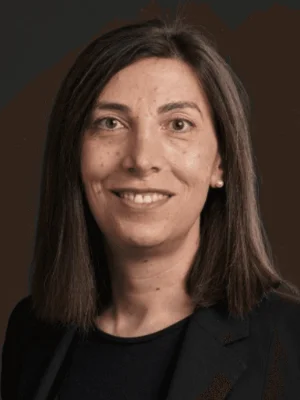
Rodrigo Ledesma-Amaro

Imperial College London

Professor & Director

Rodrigo Ledesma-Amaro is a Professor at Imperial College London, where he leads a research group working on Engineering Biology and sustainability. He is the director of the Bezos Centre for Sustainable Proteins and the Microbial Food Hub. His research focuses on the use of microorganisms to convert renewable feedstocks into valuable products (such as food ingredients). He has published over 200 articles, most on topics related to microbial bioproduction (precision, biomass and traditional fermentation).Rodrigo obtained his PhD at the University of Salamanca (Spain). Before joining Imperial, he carried out his postdoctoral research at the National Research Institute for Agriculture, Food and the Environment (INRAE, France). He has been a visiting researcher at Chalmers University of Technology (Sweden) and AIST (Japan).

Sessions Featuring

Rodrigo

This Year

Lunch & Learn

12:15 PM

-

1:00 PM

Planetary Health

FoodTech Investing: Lessons Learned and the Road Ahead

The FoodTech sector has moved beyond its first wave of hype into a period of recalibration. Investors and founders alike are reassessing assumptions around cost, scale, and market adoption. In this closed-door luncheon, leading investors and industry operators will share hard-earned lessons from the past cycle and explore how those insights are shaping future investment strategies. From platform bets to capital-efficient models, the discussion will focus on what it takes to build durable FoodTech companies in today’s environment. Expect a candid focused on strategic clarity and actionable insight.

Lunch & Learn

12:15 PM

-

1:00 PM

Planetary Health

FoodTech Investing: Lessons Learned and the Road Ahead

The FoodTech sector has moved beyond its first wave of hype into a period of recalibration. Investors and founders alike are reassessing assumptions around cost, scale, and market adoption. In this closed-door luncheon, leading investors and industry operators will share hard-earned lessons from the past cycle and explore how those insights are shaping future investment strategies. From platform bets to capital-efficient models, the discussion will focus on what it takes to build durable FoodTech companies in today’s environment. Expect a candid focused on strategic clarity and actionable insight.

Breakout Session

3:30 PM

-

4:15 PM

Human Health

Food Tech Salon - Visionary Talks

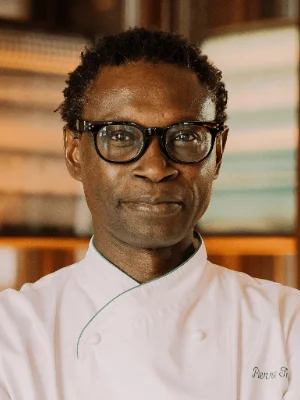
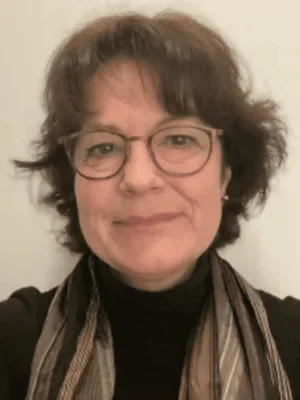
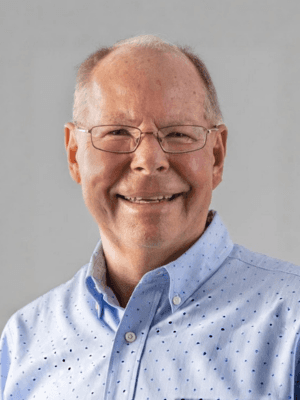
1. Ancient Grain, Engineered by Evolution: The Science and Future of Fonio by Pierre Thiam (Yolélé) 2. New Frontiers in Functional Food – matching Consumer Needs to Biotech Solutions by Alexandra Boelrijk (Kerry) 3. The Era of Precision Nutrition Powered by Precision Fermentation by Jim Flatt (DMC Biotech) 4. Harnessing the Power of Engineering Biology for the Sustainable Production of Functional Foods and Ingredients by Rodrigo Ledesma-Amaro (Imperial)

Breakout Session

3:30 PM

-

4:15 PM

Human Health

Food Tech Salon - Visionary Talks

1. Ancient Grain, Engineered by Evolution: The Science and Future of Fonio by Pierre Thiam (Yolélé) 2. New Frontiers in Functional Food – matching Consumer Needs to Biotech Solutions by Alexandra Boelrijk (Kerry) 3. The Era of Precision Nutrition Powered by Precision Fermentation by Jim Flatt (DMC Biotech) 4. Harnessing the Power of Engineering Biology for the Sustainable Production of Functional Foods and Ingredients by Rodrigo Ledesma-Amaro (Imperial)

TBD

Session lineup still growing

Featuring

Speaker Coming Soon

Fireside Chat

12:00 AM

-

8:30 AM

Human Health

From Cells to Patients: Solving the Scale Mismatch in Virtual Biology

Drug discovery often measures biology at the cell level while interventions work at the tissue, organ, or whole-patient scale. This mismatch can make accurate cell-level predictions irrelevant in the clinic. This session dives into strategies to bridge that gap: multiscale modeling that nests single-cell dynamics within organ-level simulations, spatial transcriptomics that preserve context, and surrogate models that translate cell-level outputs into clinical biomarkers. Speakers will ask: how do we ensure virtual biology reflects not just what cells do in isolation, but how biology behaves in the real complexity of patients?

Featuring

Speaker Coming Soon

Previous Speakers Include