Γ

SynBioBeta Speaker

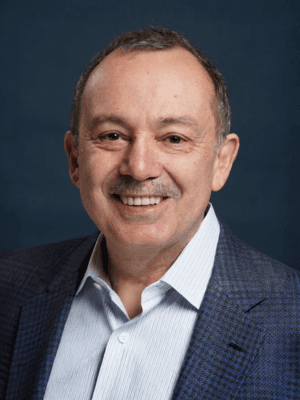
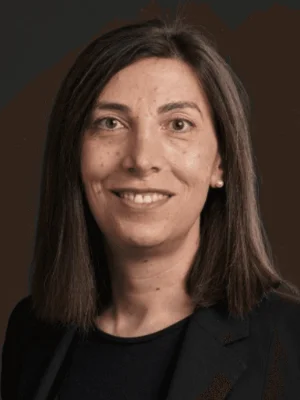
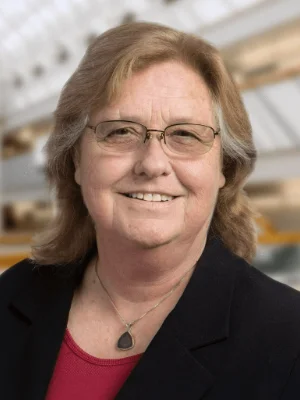
Mary Maxon

Caltech

Visiting Associate

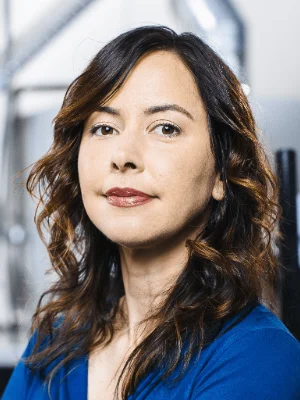
Dr. Mary Maxon is a Visiting Associate at Caltech’s Linde Center for Science, Society, and Policy. Previously she was Executive Director of the Biosciences Institute at Schmidt Sciences where she led a new effort to seed innovation in synthetic biology and the bioeconomy. Dr. Maxon has worked in the private sector, both in the biotechnology and pharmaceutical industries, as well as the public sector, highlighted by her tenure as the Assistant Director for Biological Research at the White House Office of Science and Technology Policy where she was the principal author of the Obama Administration’s National Bioeconomy Blueprint. She is a member of the International Advisory Council on Global Bioeconomy, a member of the Engineering Biology Research Consortium Board of Directors, and a member of the Carnegie Science Board of Trustees. Dr. Maxon serves as a biotechnology subject matter expert for Eric Schmidt, a Commissioner on the National Security Commission on Emerging Biotechnology.

Sessions Featuring

Mary

This Year

Breakout Session

4:30 PM

-

5:15 PM

Biomanufacturing

Mind the Gap: Survival Guides for the Valleys of Death in Biomanufacturing

Industrial biotech faces repeated “valleys of death” between laboratory success and commercial manufacturing, driven by a combination of technological uncertainty, scale-dependent constraints, and (mis)alignment between engineering reality and investment expectations. Promising technologies often fail not because the science is wrong, but because scale-up trajectories are built on insufficient data, optimistic assumptions, and decision-making based on the 1st product specifications from the lab that do not translate to industrial conditions. This panel returns to fundamentals, drawing on real-world experience from piloting, process engineering, and early industrialization to examine where and why scale-up breaks down. Experts will discuss how important the scale-up journey is to align technology performance with investor expectations, support sound business cases, and turn the industrial biotech toolbox into a more robust, scalable, and profitable manufacturing platform.
Breakout Session

4:30 PM

-

5:15 PM

Biomanufacturing

Mind the Gap: Survival Guides for the Valleys of Death in Biomanufacturing

Industrial biotech faces repeated “valleys of death” between laboratory success and commercial manufacturing, driven by a combination of technological uncertainty, scale-dependent constraints, and (mis)alignment between engineering reality and investment expectations. Promising technologies often fail not because the science is wrong, but because scale-up trajectories are built on insufficient data, optimistic assumptions, and decision-making based on the 1st product specifications from the lab that do not translate to industrial conditions. This panel returns to fundamentals, drawing on real-world experience from piloting, process engineering, and early industrialization to examine where and why scale-up breaks down. Experts will discuss how important the scale-up journey is to align technology performance with investor expectations, support sound business cases, and turn the industrial biotech toolbox into a more robust, scalable, and profitable manufacturing platform.

TBD

Session lineup still growing

Featuring

Speaker Coming Soon

Fireside Chat

12:00 AM

-

8:30 AM

Human Health

From Cells to Patients: Solving the Scale Mismatch in Virtual Biology

Drug discovery often measures biology at the cell level while interventions work at the tissue, organ, or whole-patient scale. This mismatch can make accurate cell-level predictions irrelevant in the clinic. This session dives into strategies to bridge that gap: multiscale modeling that nests single-cell dynamics within organ-level simulations, spatial transcriptomics that preserve context, and surrogate models that translate cell-level outputs into clinical biomarkers. Speakers will ask: how do we ensure virtual biology reflects not just what cells do in isolation, but how biology behaves in the real complexity of patients?

Featuring

Speaker Coming Soon

Previous Speakers Include