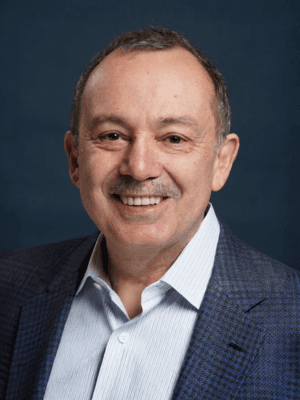
SynBioBeta Speaker
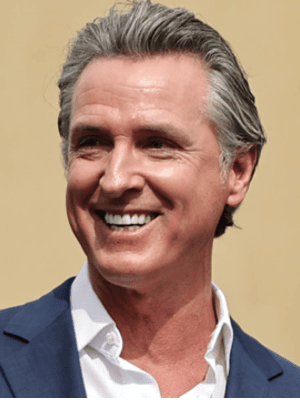
Steve Weiss
Grey Heron
CEO & Co-founder
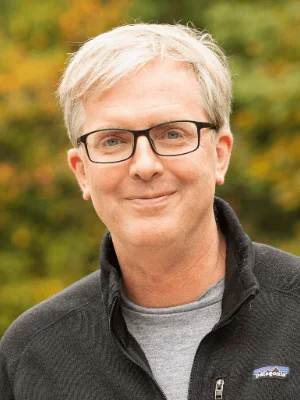
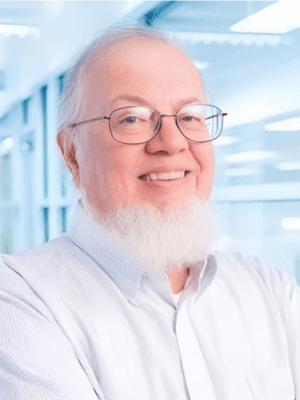
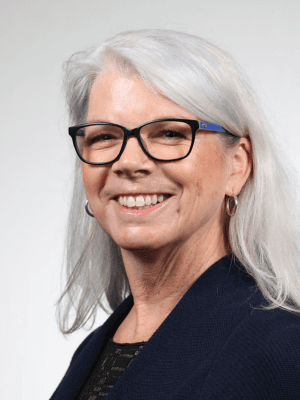
Steve Weiss is co-founder of Grey Heron, a management and strategic marketing consulting firm. Since 1993, the firm has helped executives and investors at over 150 companies build value and become leaders in their sector, through strategy, fundraising, positioning and partnerships. Fields include climatetech, food, advanced materials, and cloud/SaaS/AI. Within renewable chemicals, materials and fuels, Steve has helped build Future Origins, Genomatica (aka Geno), Oberon Fuels, Galy, Cellugy, Biosphere, Sortera, DAB.bio, NovoNutrients and Liquid Light (acquired by Avantium), and is a proud member of the Due Diligence Wolfpack (watch our sessions on plastics and packaging, carbon capture, use and sequestration, and pivots). Contact Steve at weiss@greyheron.com; see Steve’s LinkedIn profile at www.linkedin.com/in/stevenmarkweiss.


Sessions Featuring
Steve
This Year
•
-
Planetary Health
The Feedstock Revolution: Powering the Future of Biomanufacturing
The next leap in biomanufacturing won’t come from better organisms alone; it will come from better inputs. In this session, Erg Bio explores how rethinking feedstocks is unlocking new pathways to scalable, cost-effective, and sustainable production. Feedstocks that could transcend supply chain issues, those that could enable production at any location and on demand! From alternative carbon sources to waste-derived inputs, advances in feedstock innovation will reshape the emerging trillion-dollar bioeconomy. By aligning biology with abundant, low-cost raw materials, the industry can move beyond traditional constraints and build more resilient supply chains, powering a new generation of biomanufacturing at a global scale.

•
-
Planetary Health
The Feedstock Revolution: Powering the Future of Biomanufacturing
The next leap in biomanufacturing won’t come from better organisms alone; it will come from better inputs. In this session, Erg Bio explores how rethinking feedstocks is unlocking new pathways to scalable, cost-effective, and sustainable production. Feedstocks that could transcend supply chain issues, those that could enable production at any location and on demand! From alternative carbon sources to waste-derived inputs, advances in feedstock innovation will reshape the emerging trillion-dollar bioeconomy. By aligning biology with abundant, low-cost raw materials, the industry can move beyond traditional constraints and build more resilient supply chains, powering a new generation of biomanufacturing at a global scale.
•
-
Biomanufacturing
Mind the Gap: Survival Guides for the Valleys of Death in Biomanufacturing
Industrial biotech faces repeated “valleys of death” between laboratory success and commercial manufacturing, driven by a combination of technological uncertainty, scale-dependent constraints, and (mis)alignment between engineering reality and investment expectations. Promising technologies often fail not because the science is wrong, but because scale-up trajectories are built on insufficient data, optimistic assumptions, and decision-making based on the 1st product specifications from the lab that do not translate to industrial conditions. This panel returns to fundamentals, drawing on real-world experience from piloting, process engineering, and early industrialization to examine where and why scale-up breaks down. Experts will discuss how important the scale-up journey is to align technology performance with investor expectations, support sound business cases, and turn the industrial biotech toolbox into a more robust, scalable, and profitable manufacturing platform.
Featuring
Steve Weiss
Grey Heron
CEO & Co-founder
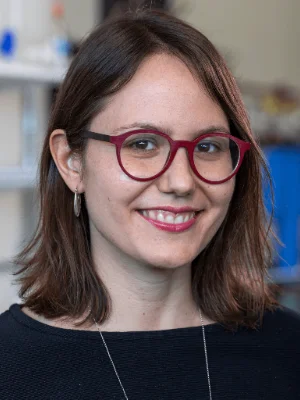
Inja Radman
New Culture
Co-founder & CSO
Engineering Animal-free cheese
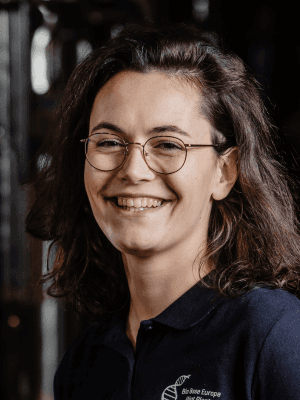
Esthèle Goure
Bio Base Europe Pilot Plant
BD Manager
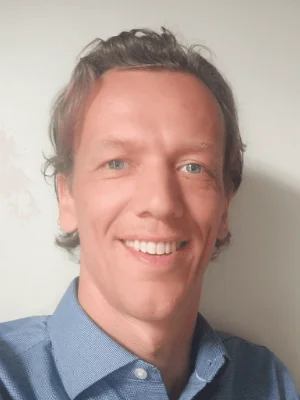
Bart Haverkorn
The EVERY Company
CTO
Precision fermentation scale-up leader turning proteins into ingredients
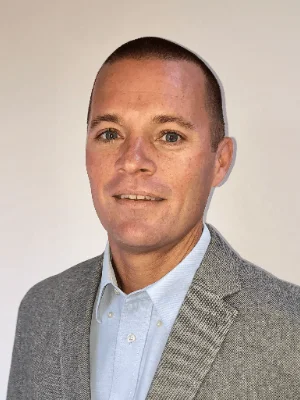
Nick Ohler
Oobli
COO
Mary Maxon
Caltech
Visiting Associate
•
-
Biomanufacturing
Mind the Gap: Survival Guides for the Valleys of Death in Biomanufacturing
Industrial biotech faces repeated “valleys of death” between laboratory success and commercial manufacturing, driven by a combination of technological uncertainty, scale-dependent constraints, and (mis)alignment between engineering reality and investment expectations. Promising technologies often fail not because the science is wrong, but because scale-up trajectories are built on insufficient data, optimistic assumptions, and decision-making based on the 1st product specifications from the lab that do not translate to industrial conditions. This panel returns to fundamentals, drawing on real-world experience from piloting, process engineering, and early industrialization to examine where and why scale-up breaks down. Experts will discuss how important the scale-up journey is to align technology performance with investor expectations, support sound business cases, and turn the industrial biotech toolbox into a more robust, scalable, and profitable manufacturing platform.
Featuring
Steve Weiss
Grey Heron
CEO & Co-founder
Inja Radman
New Culture
Co-founder & CSO
Engineering Animal-free cheese
Esthèle Goure
Bio Base Europe Pilot Plant
BD Manager
Bart Haverkorn
The EVERY Company
CTO
Precision fermentation scale-up leader turning proteins into ingredients
Nick Ohler
Oobli
COO
Mary Maxon
Caltech
Visiting Associate
Session lineup still growing
Featuring
Speaker Coming Soon
•
-
Human Health
From Cells to Patients: Solving the Scale Mismatch in Virtual Biology
Drug discovery often measures biology at the cell level while interventions work at the tissue, organ, or whole-patient scale. This mismatch can make accurate cell-level predictions irrelevant in the clinic. This session dives into strategies to bridge that gap: multiscale modeling that nests single-cell dynamics within organ-level simulations, spatial transcriptomics that preserve context, and surrogate models that translate cell-level outputs into clinical biomarkers. Speakers will ask: how do we ensure virtual biology reflects not just what cells do in isolation, but how biology behaves in the real complexity of patients?
Featuring
Speaker Coming Soon