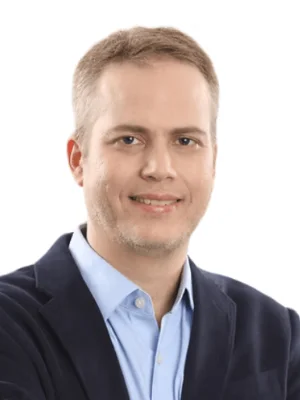
SynBioBeta Speaker
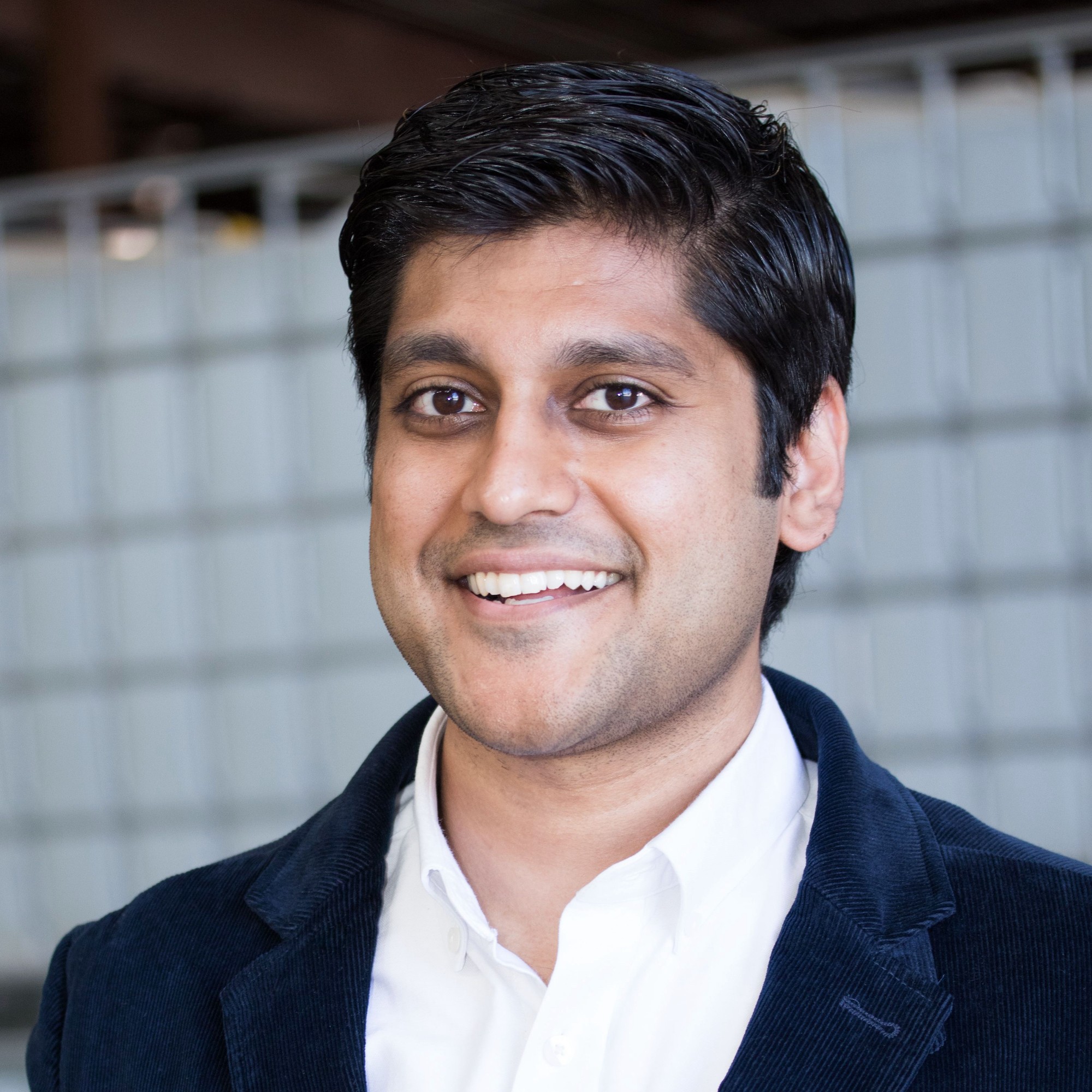
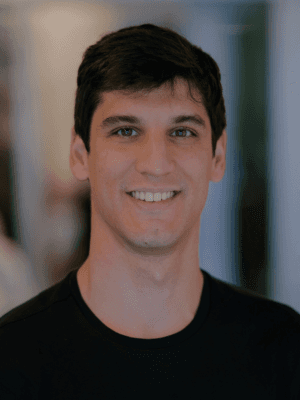
Micha Breakstone
Cellular Intelligence
Co-founder & CEO
Micha Breakstone is the Co-Founder and CEO of Cellular Intelligence (CI), an AI-native TechBio company building a universal foundation model of cell signaling to understand, predict, and ultimately control cellular behavior. Backed by over $60 million from investors including Khosla Ventures, CZI, SciFi VC, and AMD Ventures, CI is combining large scale data generation with cutting-edge machine learning to help turn biology into an engineering discipline. Micha is a repeat AI entrepreneur who previously co-founded and served as President of Chorus.ai, acquired by ZoomInfo for $575 million, and earlier sold his NLP business unit to Intel. He now leads a world-class founding team spanning Harvard, MIT, and the University of Washington, working to make cellular engineering more predictive, programmable, and scalable. Micha holds a Ph.D. in Cognitive Science and a Master’s in Mathematics, and is an active ecosystem builder who has mentored over 130 startups and invested in over 40, playing a pivotal role in shaping several AI unicorns.


Sessions Featuring
Micha
This Year
•
-
AIxBIO
Engineering Cell Fate: A Foundation Model to Transform Biology into an Engineering Discipline
AlphaFold cracked the code of protein structure. The next major frontier is decoding the dynamic behavior of the living cell itself. A fundamental challenge in modern biology is that of precise, engineered cellular control. Cells possess their own language for communicating with each other -- cell signaling -- which directs core biological processes like development and is frequently dysregulated in disease. Remarkably, biology achieves this complexity using a surprisingly concise vocabulary: only around 20 fundamental molecular signaling pathways have been identified to date. It is the combinations and orders in which they are used that underlies how such a small number of pathways can give rise to the staggering diversity of human cell types and states. In principle, because these pathways are readily manipulated by small molecules, they provide a potent mechanism through which we could control cellular decision-making. However, despite decades of effort, we have not yet deciphered the grammar of this language. Today, the effects of a given signal are largely determined through an empirical, trial-and-error process -- due to two compounding challenges: combinatorial complexity and context dependence. This talk outlines Cellular Intelligence's solution: the construction of the first Universal Virtual Cell-Signaling Model, a platform intended to compute how any cell state will change in response to external signals. By combining the paradigm of developmental biology -- nature's own proving ground -- with our proprietary multiplexing platform, we transform cell signaling from an empirical art into an engineering discipline built for therapeutic design. We aim to unlock high-impact applications: from guided cell therapies that replace lost tissues, to context-specific drug response prediction, to new ways of modeling disease as signaling network failures. Our goal is to understand, predict, and ultimately control cellular behavior.
Featuring
Micha Breakstone
Cellular Intelligence
Co-founder & CEO
•
-
AIxBIO
Engineering Cell Fate: A Foundation Model to Transform Biology into an Engineering Discipline
AlphaFold cracked the code of protein structure. The next major frontier is decoding the dynamic behavior of the living cell itself. A fundamental challenge in modern biology is that of precise, engineered cellular control. Cells possess their own language for communicating with each other -- cell signaling -- which directs core biological processes like development and is frequently dysregulated in disease. Remarkably, biology achieves this complexity using a surprisingly concise vocabulary: only around 20 fundamental molecular signaling pathways have been identified to date. It is the combinations and orders in which they are used that underlies how such a small number of pathways can give rise to the staggering diversity of human cell types and states. In principle, because these pathways are readily manipulated by small molecules, they provide a potent mechanism through which we could control cellular decision-making. However, despite decades of effort, we have not yet deciphered the grammar of this language. Today, the effects of a given signal are largely determined through an empirical, trial-and-error process -- due to two compounding challenges: combinatorial complexity and context dependence. This talk outlines Cellular Intelligence's solution: the construction of the first Universal Virtual Cell-Signaling Model, a platform intended to compute how any cell state will change in response to external signals. By combining the paradigm of developmental biology -- nature's own proving ground -- with our proprietary multiplexing platform, we transform cell signaling from an empirical art into an engineering discipline built for therapeutic design. We aim to unlock high-impact applications: from guided cell therapies that replace lost tissues, to context-specific drug response prediction, to new ways of modeling disease as signaling network failures. Our goal is to understand, predict, and ultimately control cellular behavior.
Featuring
Micha Breakstone
Cellular Intelligence
Co-founder & CEO
•
-
AIxBIO
Where Does Biology Compute? From Molecular Signals to Clinical Reality
As we move toward the “virtual cell” and ultimately the “virtual organism,” the AIxBIO ecosystem faces a fundamental challenge: where does biology actually compute? While our ability to measure molecular events has advanced dramatically, predicting how those signals translate into emergent, system-level outcomes remains a core bottleneck in programmable biology. This session brings together leaders across AI, synthetic biology, and medicine to explore the computational bottleneck, mapping where predictive power breaks down from molecules to cells to organisms. It will examine how to measure emergence at scale by generating causal, time-resolved, perturbation-rich datasets across diverse biological contexts, and how to close the reality gap with in vivo feedback, using next-generation sensors and real-world data to continuously calibrate and validate models in living systems.
Featuring
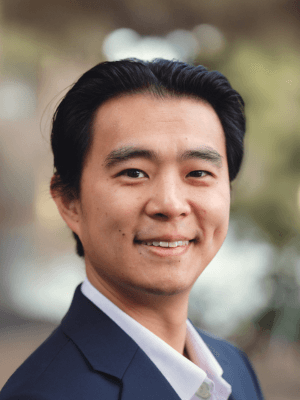
Johnny Yu
Tahoe Therapeutics
CSO & Co-founder
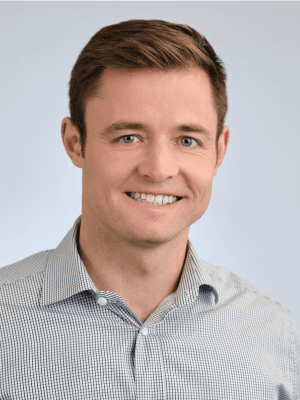
Gleb Kuznetsov
Manifold Bio
Co-founder & CEO
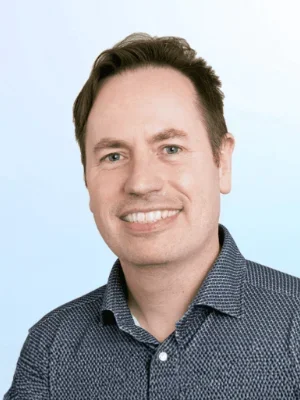
Kim Branson
GlaxoSmithKline
SVP, Global Head
Drug-discovery AI architect turning data into medicines.
Micha Breakstone
Cellular Intelligence
Co-founder & CEO
Fabio Boniolo
Polyphron
CSO & Co-founder
•
-
AIxBIO
Where Does Biology Compute? From Molecular Signals to Clinical Reality
As we move toward the “virtual cell” and ultimately the “virtual organism,” the AIxBIO ecosystem faces a fundamental challenge: where does biology actually compute? While our ability to measure molecular events has advanced dramatically, predicting how those signals translate into emergent, system-level outcomes remains a core bottleneck in programmable biology. This session brings together leaders across AI, synthetic biology, and medicine to explore the computational bottleneck, mapping where predictive power breaks down from molecules to cells to organisms. It will examine how to measure emergence at scale by generating causal, time-resolved, perturbation-rich datasets across diverse biological contexts, and how to close the reality gap with in vivo feedback, using next-generation sensors and real-world data to continuously calibrate and validate models in living systems.
Featuring
Johnny Yu
Tahoe Therapeutics
CSO & Co-founder
Gleb Kuznetsov
Manifold Bio
Co-founder & CEO
Kim Branson
GlaxoSmithKline
SVP, Global Head
Drug-discovery AI architect turning data into medicines.
Micha Breakstone
Cellular Intelligence
Co-founder & CEO
Fabio Boniolo
Polyphron
CSO & Co-founder
Session lineup still growing
Featuring
Speaker Coming Soon
•
-
Human Health
From Cells to Patients: Solving the Scale Mismatch in Virtual Biology
Drug discovery often measures biology at the cell level while interventions work at the tissue, organ, or whole-patient scale. This mismatch can make accurate cell-level predictions irrelevant in the clinic. This session dives into strategies to bridge that gap: multiscale modeling that nests single-cell dynamics within organ-level simulations, spatial transcriptomics that preserve context, and surrogate models that translate cell-level outputs into clinical biomarkers. Speakers will ask: how do we ensure virtual biology reflects not just what cells do in isolation, but how biology behaves in the real complexity of patients?
Featuring
Speaker Coming Soon