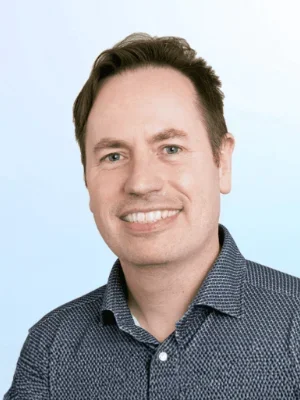
SynBioBeta Speaker
Kim Branson
GlaxoSmithKline
SVP, Global Head
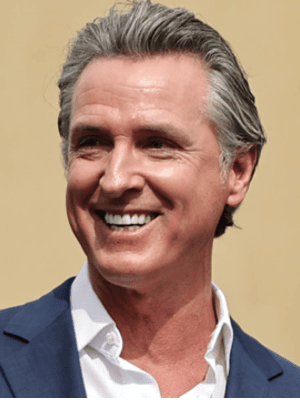
Dr. Kim Branson is Senior Vice President and the Global Head of Artificial Intelligence & Machine Learning at GSK, where he leads a global team developing and applying AI methods that accelerate drug discovery and clinical development across GSKPrior to joining GSK in 2019, he served as Head of AI for Genentech and is a serial entrepreneur having previously co-founded multiple successful startups with exits including Twitter and Apple Dr. Branson earned degrees from the University of Adelaide, completed his PhD at the University of Melbourne, and undertook post-doctoral training at Stanford University establishing a deep technical foundation at the intersection of machine learning, structural biology, medicine and drug discovery.


Sessions Featuring
Kim
This Year
•
-
Human Health
From Cells to Patients: Solving the Scale Mismatch in Virtual Biology
Drug discovery often measures biology at the cell level, while therapies must ultimately work across tissues, organs, and whole patients. This scale mismatch means that even highly accurate cellular predictions can fail to translate in the clinic. This session explores strategies to bridge that gap. How do we connect single-cell dynamics to organ-level physiology and patient outcomes? How do we preserve biological context while scaling models? And how do we ensure that virtual biology does not stop at simulation, but informs real therapeutic decisions? Speakers will discuss multiscale modeling that links molecular and cellular systems to higher-order biology; spatial and high-dimensional phenotypic data that retain context; and integrated computational–experimental loops that translate cellular signals into clinically meaningful biomarkers. Together, we ask: how do we ensure virtual biology reflects not just what cells do in isolation, but how biology behaves in the full complexity of patients?
Featuring
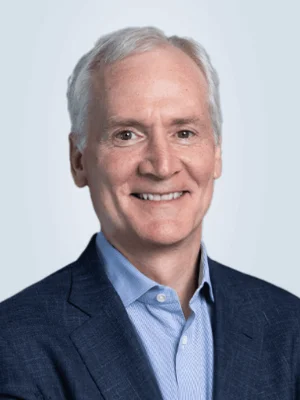
Marc Tessier-Lavigne
Xaira
Chairman & CEO
Neuroscience pioneer and former Stanford president building AI biotech.
Kim Branson
GlaxoSmithKline
SVP, Global Head
Drug-discovery AI architect turning data into medicines.
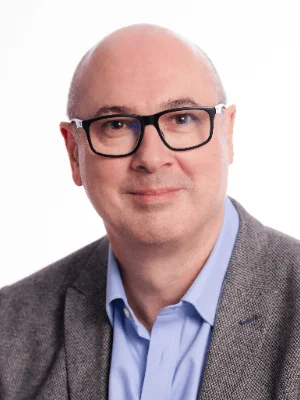
David Hallett
Recursion
CSO
Veteran “drug hunter” leading Recursion’s industrialized, AI-driven discovery.
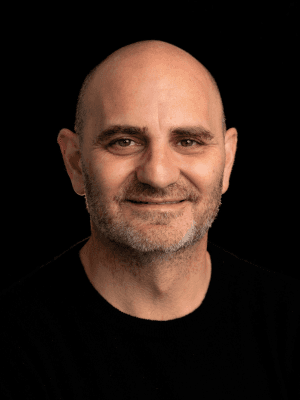
Ron Alfa
NOETIK Inc.
Co-Founder & CEO
Physician-scientist and veteran building AI cancer therapeutics.
Stacie Calad-Thomson
NVIDIA
BD, Life Sciences
•
-
Human Health
From Cells to Patients: Solving the Scale Mismatch in Virtual Biology
Drug discovery often measures biology at the cell level, while therapies must ultimately work across tissues, organs, and whole patients. This scale mismatch means that even highly accurate cellular predictions can fail to translate in the clinic. This session explores strategies to bridge that gap. How do we connect single-cell dynamics to organ-level physiology and patient outcomes? How do we preserve biological context while scaling models? And how do we ensure that virtual biology does not stop at simulation, but informs real therapeutic decisions? Speakers will discuss multiscale modeling that links molecular and cellular systems to higher-order biology; spatial and high-dimensional phenotypic data that retain context; and integrated computational–experimental loops that translate cellular signals into clinically meaningful biomarkers. Together, we ask: how do we ensure virtual biology reflects not just what cells do in isolation, but how biology behaves in the full complexity of patients?
Featuring
Marc Tessier-Lavigne
Xaira
Chairman & CEO
Neuroscience pioneer and former Stanford president building AI biotech.
Kim Branson
GlaxoSmithKline
SVP, Global Head
Drug-discovery AI architect turning data into medicines.
David Hallett
Recursion
CSO
Veteran “drug hunter” leading Recursion’s industrialized, AI-driven discovery.
Ron Alfa
NOETIK Inc.
Co-Founder & CEO
Physician-scientist and veteran building AI cancer therapeutics.
Stacie Calad-Thomson
NVIDIA
BD, Life Sciences
•
-
AIxBIO
Where Does Biology Compute? From Molecular Signals to Clinical Reality
As we move toward the “virtual cell” and ultimately the “virtual organism,” the AIxBIO ecosystem faces a fundamental challenge: where does biology actually compute? While our ability to measure molecular events has advanced dramatically, predicting how those signals translate into emergent, system-level outcomes remains a core bottleneck in programmable biology. This session brings together leaders across AI, synthetic biology, and medicine to explore the computational bottleneck, mapping where predictive power breaks down from molecules to cells to organisms. It will examine how to measure emergence at scale by generating causal, time-resolved, perturbation-rich datasets across diverse biological contexts, and how to close the reality gap with in vivo feedback, using next-generation sensors and real-world data to continuously calibrate and validate models in living systems.
Featuring
Johnny Yu
Tahoe Therapeutics
CSO & Co-founder
Gleb Kuznetsov
Manifold Bio
Co-founder & CEO
Kim Branson
GlaxoSmithKline
SVP, Global Head
Drug-discovery AI architect turning data into medicines.
Micha Breakstone
Cellular Intelligence
Co-founder & CEO
Fabio Boniolo
Polyphron
CSO & Co-founder
•
-
AIxBIO
Where Does Biology Compute? From Molecular Signals to Clinical Reality
As we move toward the “virtual cell” and ultimately the “virtual organism,” the AIxBIO ecosystem faces a fundamental challenge: where does biology actually compute? While our ability to measure molecular events has advanced dramatically, predicting how those signals translate into emergent, system-level outcomes remains a core bottleneck in programmable biology. This session brings together leaders across AI, synthetic biology, and medicine to explore the computational bottleneck, mapping where predictive power breaks down from molecules to cells to organisms. It will examine how to measure emergence at scale by generating causal, time-resolved, perturbation-rich datasets across diverse biological contexts, and how to close the reality gap with in vivo feedback, using next-generation sensors and real-world data to continuously calibrate and validate models in living systems.
Featuring
Johnny Yu
Tahoe Therapeutics
CSO & Co-founder
Gleb Kuznetsov
Manifold Bio
Co-founder & CEO
Kim Branson
GlaxoSmithKline
SVP, Global Head
Drug-discovery AI architect turning data into medicines.
Micha Breakstone
Cellular Intelligence
Co-founder & CEO
Fabio Boniolo
Polyphron
CSO & Co-founder
Session lineup still growing
Featuring
Speaker Coming Soon
•
-
Human Health
From Cells to Patients: Solving the Scale Mismatch in Virtual Biology
Drug discovery often measures biology at the cell level while interventions work at the tissue, organ, or whole-patient scale. This mismatch can make accurate cell-level predictions irrelevant in the clinic. This session dives into strategies to bridge that gap: multiscale modeling that nests single-cell dynamics within organ-level simulations, spatial transcriptomics that preserve context, and surrogate models that translate cell-level outputs into clinical biomarkers. Speakers will ask: how do we ensure virtual biology reflects not just what cells do in isolation, but how biology behaves in the real complexity of patients?
Featuring
Speaker Coming Soon