SynBioBeta Speaker
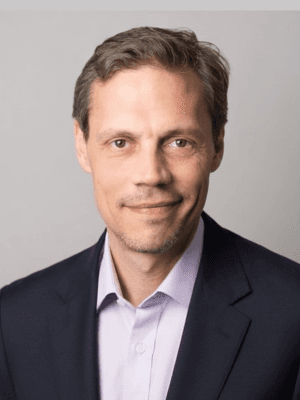
Antonio Regalado
MIT Technology Review
Senior Editor Biomedicine
Antonio is the senior editor for biomedicine for MIT Technology Review, where he writes about how technology is changing medicine and biomedical research. Before joining MIT Technology Review in July 2011, he lived in São Paulo, Brazil, where he wrote about science, technology, and politics in Latin America for Science and other publications. From 2000 to 2006, he was the science reporter at the Wall Street Journal.


Sessions Featuring
Antonio
This Year
•
-
Longevity
Engineering Longevity: Reprogramming the Foundations of Aging
Aging is increasingly understood as a gradual loss of biological stability. DNA accumulates damage, protein homeostasis collapses, and cells drift away from youthful identities as regulatory networks lose their balance over time. These changes ripple across tissues and organs, driving many of the diseases associated with aging. Today, new tools in synthetic biology, artificial intelligence, and gene editing are revealing how these systems might be stabilized, repaired, or even reset. Researchers are engineering enhanced DNA repair mechanisms inspired by long-lived species, using AI to map the trajectories of cellular aging and uncover rejuvenating interventions, and developing therapies that restore protein metabolism to protect vulnerable tissues such as the brain. This session explores how scientists are moving beyond simply slowing aging to engineering the biological systems that maintain cellular integrity. By targeting the underlying mechanisms that govern genome stability, proteostasis, and cellular identity, researchers are laying the groundwork for a new generation of longevity therapeutics designed to restore function and resilience across the lifespan.
Featuring
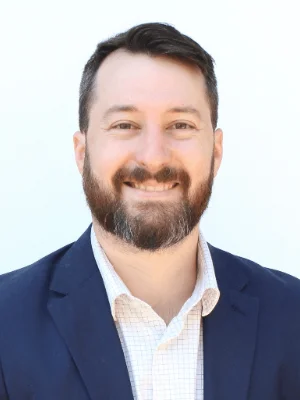
Christopher Bradley
Matter Bio
CEO
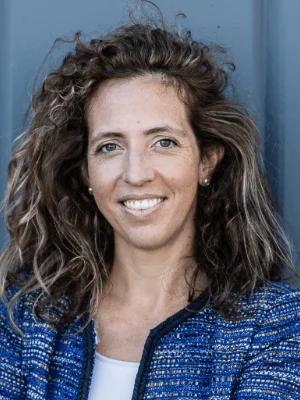
Benedetta Di Robilant
ProMIND Therapeutics
Co-founder & CEO
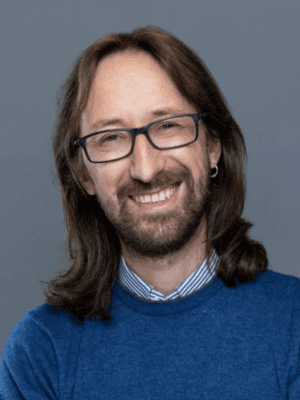
Simone Bianco
Altos Labs
VP, Physics, Molecular & Hybrid Modeling
Antonio Regalado
MIT Technology Review
Senior Editor Biomedicine
•
-
Longevity
Engineering Longevity: Reprogramming the Foundations of Aging
Aging is increasingly understood as a gradual loss of biological stability. DNA accumulates damage, protein homeostasis collapses, and cells drift away from youthful identities as regulatory networks lose their balance over time. These changes ripple across tissues and organs, driving many of the diseases associated with aging. Today, new tools in synthetic biology, artificial intelligence, and gene editing are revealing how these systems might be stabilized, repaired, or even reset. Researchers are engineering enhanced DNA repair mechanisms inspired by long-lived species, using AI to map the trajectories of cellular aging and uncover rejuvenating interventions, and developing therapies that restore protein metabolism to protect vulnerable tissues such as the brain. This session explores how scientists are moving beyond simply slowing aging to engineering the biological systems that maintain cellular integrity. By targeting the underlying mechanisms that govern genome stability, proteostasis, and cellular identity, researchers are laying the groundwork for a new generation of longevity therapeutics designed to restore function and resilience across the lifespan.
Featuring
Christopher Bradley
Matter Bio
CEO
Benedetta Di Robilant
ProMIND Therapeutics
Co-founder & CEO
Simone Bianco
Altos Labs
VP, Physics, Molecular & Hybrid Modeling
Antonio Regalado
MIT Technology Review
Senior Editor Biomedicine
•
-
Human Health
Reconstructing the Body: Can Biological Replacement Reverse Aging and Extend Lifespan?
Despite major advances in the biology of aging, there are still no interventions that clearly slow or reverse aging in humans. In contrast, modern medicine already depends on replacement to restore lost function, from artificial joints and cardiac devices to organ transplants and stem cell therapies. This session examines how a similar framework could be applied to aging: rather than repairing deteriorated cells and tissues, scientists and companies are exploring ways to replace them with newly generated, biologically young equivalents. The discussion will highlight emerging capabilities in engineered cell sources, scalable tissue fabrication, and programmable biology (instead of "integration") strategies that are redefining what can be rebuilt and replaced. New approaches are beginning to address long-standing challenges such as age-related signaling environments, vascularization, and even circuit compatibility in parts of the brain. Together, these advances point toward a future where rejuvenation is achieved through deliberate biological reconstruction. The session asks: How far can replacement take us, and could rebuilding youthful parts become a central path to extending healthy lifespan?
Featuring
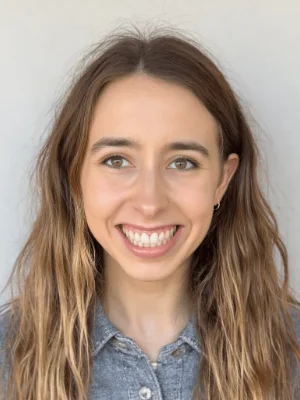
Sierra Lore
Buck Institute
Doctoral Student
Researcher of somatic mutation in aging (immune genome instability)
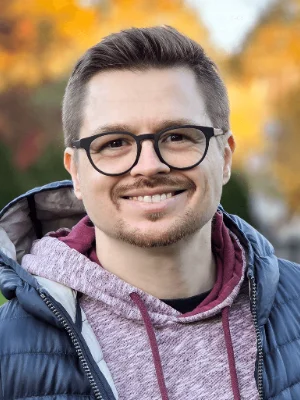
Sergiy Velychko
Soxogen
Founder & CEO
Antonio Regalado
MIT Technology Review
Senior Editor Biomedicine
•
-
Human Health
Reconstructing the Body: Can Biological Replacement Reverse Aging and Extend Lifespan?
Despite major advances in the biology of aging, there are still no interventions that clearly slow or reverse aging in humans. In contrast, modern medicine already depends on replacement to restore lost function, from artificial joints and cardiac devices to organ transplants and stem cell therapies. This session examines how a similar framework could be applied to aging: rather than repairing deteriorated cells and tissues, scientists and companies are exploring ways to replace them with newly generated, biologically young equivalents. The discussion will highlight emerging capabilities in engineered cell sources, scalable tissue fabrication, and programmable biology (instead of "integration") strategies that are redefining what can be rebuilt and replaced. New approaches are beginning to address long-standing challenges such as age-related signaling environments, vascularization, and even circuit compatibility in parts of the brain. Together, these advances point toward a future where rejuvenation is achieved through deliberate biological reconstruction. The session asks: How far can replacement take us, and could rebuilding youthful parts become a central path to extending healthy lifespan?
Featuring
Sierra Lore
Buck Institute
Doctoral Student
Researcher of somatic mutation in aging (immune genome instability)
Sergiy Velychko
Soxogen
Founder & CEO
Antonio Regalado
MIT Technology Review
Senior Editor Biomedicine
Session lineup still growing
Featuring
Speaker Coming Soon
•
-
Human Health
From Cells to Patients: Solving the Scale Mismatch in Virtual Biology
Drug discovery often measures biology at the cell level while interventions work at the tissue, organ, or whole-patient scale. This mismatch can make accurate cell-level predictions irrelevant in the clinic. This session dives into strategies to bridge that gap: multiscale modeling that nests single-cell dynamics within organ-level simulations, spatial transcriptomics that preserve context, and surrogate models that translate cell-level outputs into clinical biomarkers. Speakers will ask: how do we ensure virtual biology reflects not just what cells do in isolation, but how biology behaves in the real complexity of patients?
Featuring
Speaker Coming Soon