SynBioBeta Speaker
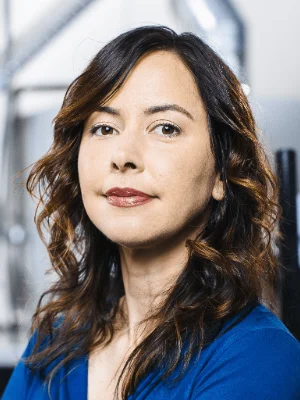
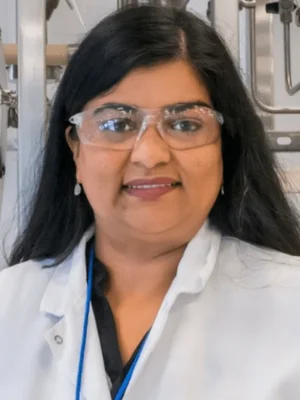
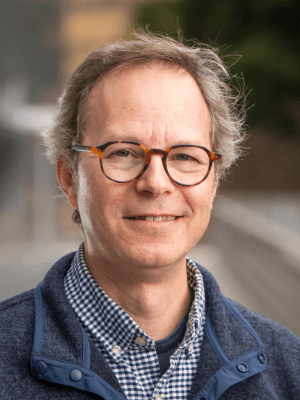
Deepti Tanjore
LBNL
Director, ABPDU
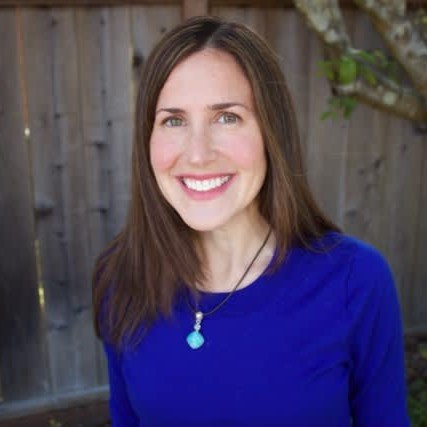
Deepti Tanjore is Director of the ABPDU and Head of the Department, Process Engineering and Analytics at Berkeley Lab. She interfaces with several scientists from industry, academia, and start-ups in strategizing and resolving scale-up challenges for their synthetic biology-based technologies. Her research focuses on developing self-driving bioreactor capabilities by modeling the impact of bioprocess conditions on microbial heterogeneity and developing in-line analytical tools for real-time adaptation of process development. She has a PhD from Penn State University in Biological Engineering, BTech from Andhra University in Chemical Engineering, and an MBA from Haas School of Business.


Sessions Featuring
Deepti
This Year
•
-
Tools & Tech
Your Cells Are Talking, Are You Listening? Measuring Physiology at Industrial Scale
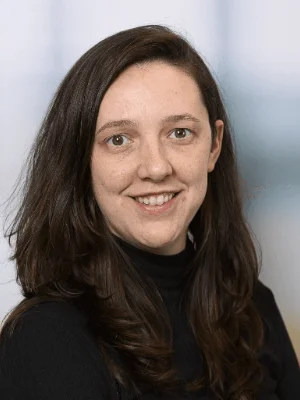
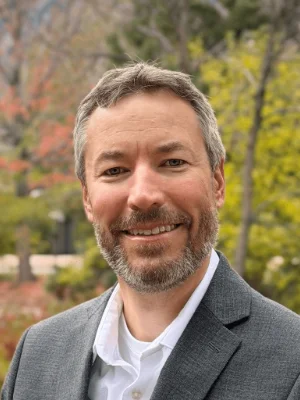
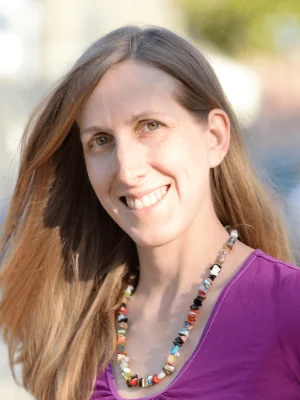
Standard bioreactors often lack the instrumentation required to rapidly monitor cell physiology, leaving critical gaps in our understanding of scale-up dynamics. This session presents active projects from the Schmidt Sciences’ Sensors for Biomanufacturing Program designed to address this challenge through novel sensing modalities. Spanning from near real-time intracellular measurements to non-invasive off-gas fingerprinting, the panel brings together technology developers and industrial bioprocess experts to discuss the translation of these tools from the lab to the plant floor. Together, we will critically evaluate the utility of high-dimensional metabolic data and explore the engineering requirements for integrating physics-based sensors and machine learning into existing biomanufacturing workflows.

•
-
Tools & Tech
Your Cells Are Talking, Are You Listening? Measuring Physiology at Industrial Scale
Standard bioreactors often lack the instrumentation required to rapidly monitor cell physiology, leaving critical gaps in our understanding of scale-up dynamics. This session presents active projects from the Schmidt Sciences’ Sensors for Biomanufacturing Program designed to address this challenge through novel sensing modalities. Spanning from near real-time intracellular measurements to non-invasive off-gas fingerprinting, the panel brings together technology developers and industrial bioprocess experts to discuss the translation of these tools from the lab to the plant floor. Together, we will critically evaluate the utility of high-dimensional metabolic data and explore the engineering requirements for integrating physics-based sensors and machine learning into existing biomanufacturing workflows.
•
-
Biomanufacturing
Berkeley Lab Provides the Foundation for Biomanufacturing-specific AI
Berkeley Lab develops new automation approaches to produce the large amounts of high-quality data that AI needs to solve significant problems in biology and enable new biomanufacturing capabilities. The Lab uses HTP approaches to generate AI-ready data and leverages that data in AI models to design microbial pathways, engineer host systems, optimize media formulations, generate functional plasmid origins, engineer plant transcriptional regulation, and predict solvent properties. The Lab's process development unit aims to generate complex biological data needed for virtual cell and other models by algorithm development companies.
•
-
Biomanufacturing
Berkeley Lab Provides the Foundation for Biomanufacturing-specific AI
Berkeley Lab develops new automation approaches to produce the large amounts of high-quality data that AI needs to solve significant problems in biology and enable new biomanufacturing capabilities. The Lab uses HTP approaches to generate AI-ready data and leverages that data in AI models to design microbial pathways, engineer host systems, optimize media formulations, generate functional plasmid origins, engineer plant transcriptional regulation, and predict solvent properties. The Lab's process development unit aims to generate complex biological data needed for virtual cell and other models by algorithm development companies.
Session lineup still growing
Featuring
Speaker Coming Soon
•
-
Human Health
From Cells to Patients: Solving the Scale Mismatch in Virtual Biology
Drug discovery often measures biology at the cell level while interventions work at the tissue, organ, or whole-patient scale. This mismatch can make accurate cell-level predictions irrelevant in the clinic. This session dives into strategies to bridge that gap: multiscale modeling that nests single-cell dynamics within organ-level simulations, spatial transcriptomics that preserve context, and surrogate models that translate cell-level outputs into clinical biomarkers. Speakers will ask: how do we ensure virtual biology reflects not just what cells do in isolation, but how biology behaves in the real complexity of patients?
Featuring
Speaker Coming Soon