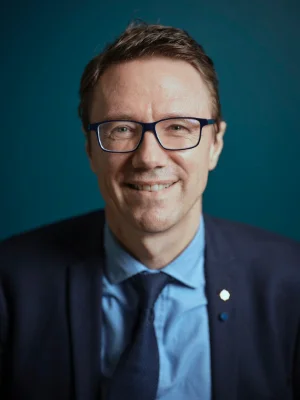
SynBioBeta Speaker
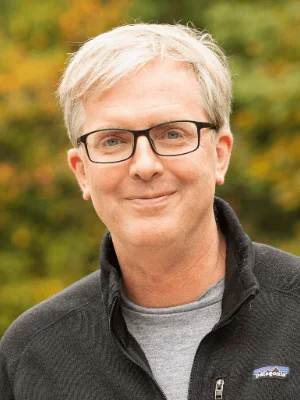
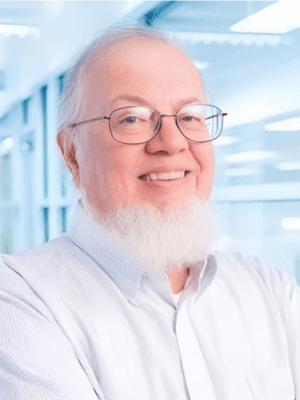
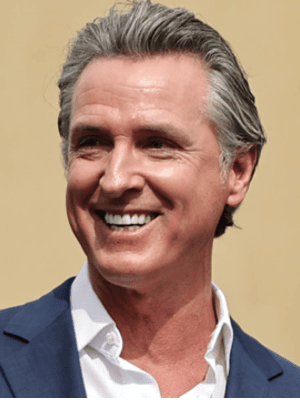
Jens Nielsen
BioInnovation Inst.
CEO
MSc in Chemical Engineering, PhD (1989) in Biochemical Engineering and dr.techn. (1995) from the Danish Technical University (DTU). Honorable dr.med. from University of Gothenburg. Fulbright visiting professor at MIT in 1995-1996. Professor at DTU in 1998. In 2008 he was recruited as Professor to Chalmers University of Technology, Sweden. In 2015 he was founding Head of the Department of Life Sciences, which now encompasses more than 250 people. Jens Nielsen was also a co-founder of the Novo Nordisk Foundation Center for Biosustainability that now has more than 300 people affiliated, for which he served as CSO 2013-2018. From 2019 CEO of the BioInnovation Institute in Denmark, which is a new institute financed by USD500M that fosters translational research and support new spin-out companies in life sciences. He has trained more than 280 scientists in his research group and published >900 publications that have been cited more than 140,000 times (current H-factor 169). Inventor of >50 patents and founder of six biotech companies. Has received numerous awards, including the ENI Award, the Eric and Sheila Samson Prime Minister Prize for Transportation Fuels, the Novozymes Prize, and the Gold Medal from the Royal Swedish Academy of Engineering Sciences. Member of 13 academies, including NAS, NAE, NAM, Chinese Academy of Engineering, EMBO and Royal Swedish Academy of Science.
SynBioBeta 2026 Tickets are Live
Confirmed Speakers
Sessions Featuring
Jens
This Year
•
-
AIxBIO
Programmable Metabolism: From Predictive Models to Agentic AI in Metabolic Engineering
Metabolic engineering is entering a new phase of programmability, evolving from mechanistic models toward AI-driven systems that can design, test, and refine biology with increasing autonomy. Early efforts to combine genome-scale modeling with machine learning began to improve genotype to phenotype prediction, hinting at a more predictive and designable biology. Today, that paradigm is advancing into a new layer. Agentic AI systems are beginning to orchestrate the full design, build, test, learn cycle. These platforms integrate experimental data, automation, and decision-making into continuous closed loop workflows, enabling faster iteration and more intelligent exploration of biological space. This session explores the next frontier of metabolic engineering, examining long standing bottlenecks such as limited data, combinatorial design complexity, and slow iteration cycles, and how AI native, end to end platforms are transforming pathway design, strain optimization, and scalable biomanufacturing.
Get a Ticket
•
-
AIxBIO
Programmable Metabolism: From Predictive Models to Agentic AI in Metabolic Engineering
Metabolic engineering is entering a new phase of programmability, evolving from mechanistic models toward AI-driven systems that can design, test, and refine biology with increasing autonomy. Early efforts to combine genome-scale modeling with machine learning began to improve genotype to phenotype prediction, hinting at a more predictive and designable biology. Today, that paradigm is advancing into a new layer. Agentic AI systems are beginning to orchestrate the full design, build, test, learn cycle. These platforms integrate experimental data, automation, and decision-making into continuous closed loop workflows, enabling faster iteration and more intelligent exploration of biological space. This session explores the next frontier of metabolic engineering, examining long standing bottlenecks such as limited data, combinatorial design complexity, and slow iteration cycles, and how AI native, end to end platforms are transforming pathway design, strain optimization, and scalable biomanufacturing.
Get a Ticket
Session lineup still growing
Get a Ticket
Featuring
Speaker Coming Soon
•
-
Human Health
From Cells to Patients: Solving the Scale Mismatch in Virtual Biology
Drug discovery often measures biology at the cell level while interventions work at the tissue, organ, or whole-patient scale. This mismatch can make accurate cell-level predictions irrelevant in the clinic. This session dives into strategies to bridge that gap: multiscale modeling that nests single-cell dynamics within organ-level simulations, spatial transcriptomics that preserve context, and surrogate models that translate cell-level outputs into clinical biomarkers. Speakers will ask: how do we ensure virtual biology reflects not just what cells do in isolation, but how biology behaves in the real complexity of patients?
Get a Ticket
Featuring
Speaker Coming Soon