SynBioBeta Speaker
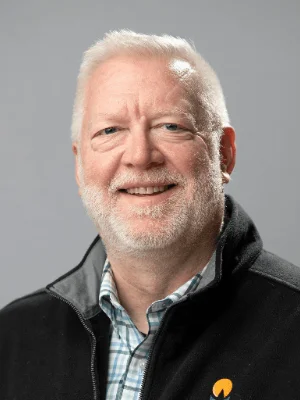
Michael Gay
UW CDR
CDR Tech Transfer
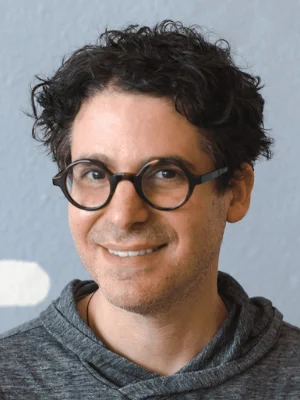
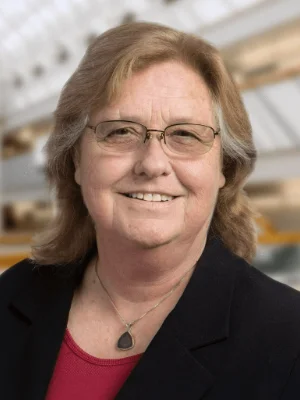
Michael P. Gay, CEcD, is a passionate leader driving sustainability, innovation and entrepreneurship at the University of Wisconsin’s Center for Dairy Research (CDR) with a focus on fostering strategic partnerships, finding new technologies and unlocking funding partnerships for the dairy industry. Michael collaborates with industry leaders, startups, researchers, and technologists to propel dairy innovation. His expertise inside the dairy supply chain lies in advancing the circular bioeconomy, emphasizing carbon-neutral, climate-smart, and sustainable initiatives and innovations. Through the CDR's groundbreaking $73M pilot plant and US EDA funded ABID accelerator, Michael is helping transform dairy by-products through bio-fermentation scale up into cutting-edge solutions such as platform chemicals, biobased and biodegradable packaging, natural food ingredients, and green chemicals as alternatives to petrochemicals. Bringing over 35 years of business and economic development experience, Michael has held leadership roles including Chief of Business Development for Invest Puerto Rico, Acting CEO of Madison Region Economic Partnership (MadREP), Director of the Center for New Ventures at UW-Platteville, Manager of Business Development for the City of Madison, and Team Leader and Office Manager at MSA Professional Services, Inc. Michael is an internationally Certified Economic Developer (CEcD) by the IEDC, has a MS from University of Wisconsin-Madison, did his thesis research at the Universidad Javeriana Pontificia in Bogota, and has a BS from the University of Wisconsin-Green Bay.
SynBioBeta 2026 Tickets are Live
Confirmed Speakers
Sessions Featuring
Michael
This Year
•
-
Planetary Health
From Feedstock to Fork: De-Risking Bio-Based Foods at Industrial Scale
Bio-based food innovation rarely fails in the lab. It fails in the transition to scale. Between pilot success and commercial launch lie the hardest problems in food: reliable feedstocks, waste stream integration, regulatory approval, capital intensity, and infrastructure built for yesterday’s products. This session brings together leaders across law, industrial food systems, waste valorization, and next-generation proteins to examine what it actually takes to move biological food innovations from concept to shelf. Panelists will explore where risk truly accumulates in bio-based food development, how incumbents and startups navigate scale differently, and why waste streams, compliance strategy, and supply chain design often matter more than the underlying biology. The result is a grounded conversation about what survives real-world constraints, not just what sounds compelling on paper.
Get a Ticket
•
-
Planetary Health
From Feedstock to Fork: De-Risking Bio-Based Foods at Industrial Scale
Bio-based food innovation rarely fails in the lab. It fails in the transition to scale. Between pilot success and commercial launch lie the hardest problems in food: reliable feedstocks, waste stream integration, regulatory approval, capital intensity, and infrastructure built for yesterday’s products. This session brings together leaders across law, industrial food systems, waste valorization, and next-generation proteins to examine what it actually takes to move biological food innovations from concept to shelf. Panelists will explore where risk truly accumulates in bio-based food development, how incumbents and startups navigate scale differently, and why waste streams, compliance strategy, and supply chain design often matter more than the underlying biology. The result is a grounded conversation about what survives real-world constraints, not just what sounds compelling on paper.
Get a Ticket
Session lineup still growing
Get a Ticket
Featuring
Speaker Coming Soon
•
-
Human Health
From Cells to Patients: Solving the Scale Mismatch in Virtual Biology
Drug discovery often measures biology at the cell level while interventions work at the tissue, organ, or whole-patient scale. This mismatch can make accurate cell-level predictions irrelevant in the clinic. This session dives into strategies to bridge that gap: multiscale modeling that nests single-cell dynamics within organ-level simulations, spatial transcriptomics that preserve context, and surrogate models that translate cell-level outputs into clinical biomarkers. Speakers will ask: how do we ensure virtual biology reflects not just what cells do in isolation, but how biology behaves in the real complexity of patients?
Get a Ticket
Featuring
Speaker Coming Soon