SynBioBeta Speaker
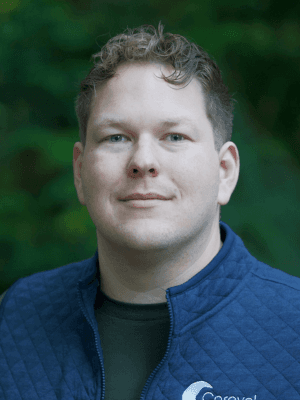
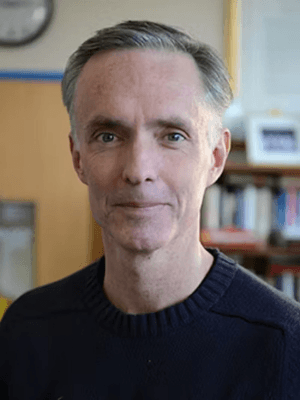
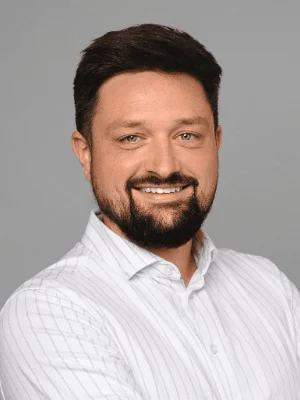
Matthew Thompson
Biomatter
VP - Industrial Biotech
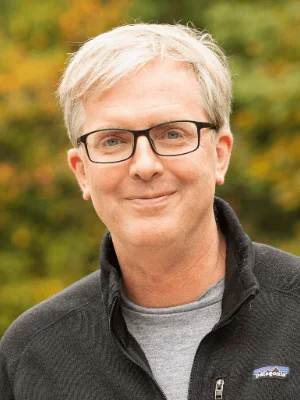
Matthew is VP of Industrial Biotech at Biomatter, trained in process chemistry, he holds a PhD from the University of Manchester and, since 2018, has taken on multiple technical and commercial leadership roles.As VP of Industrial Biotech at Biomatter, Matthew leverages his unique blend of technical expertise and business acumen to drive the company's sustainable growth as a key player in enzyme development. he has a unique blend of technical expertise and business acumen which he uses to steer Biomatter's growth as a key player in enzyme development.Before joining Biomatter he served as VP of Enzyme Development and Innovation at EnginZyme, where he established the company’s enzyme engineering platform. With over a decade of experience in enzyme development and process engineering, he has overseen the creation of bio-based chemical production processes from concept to pilot scale and beyond ranging from alternative sugars, mRNA raw materials, to edible oils and other applications.
SynBioBeta 2026 Tickets are Live
Confirmed Speakers
Sessions Featuring
Matthew
This Year
•
-
AIxBIO
Designing Enzymes Without Compromise. Powered by Intelligent Architecture™
Biology will be the center of the next industrial revolution, representing a $4 trillion economic opportunity. Yet, this value remains overwhelmingly unrealised for one fundamental reason: nature never intended to power industrial manufacturing. Biology was optimized for survival, not for the high-efficiency processes required to transform the global economy. For too long, the industry has relied on incremental improvements, essentially duct-taping enzymes and calling them industrial. At Biomatter, we believe that complete freedom to design any enzyme is the only way to realize the full potential of biomanufacturing. By combining Generative AI with rigorous physics engines, our Intelligent Architecture™ platform allows us to step outside the bounds of natural selection and build enzymes from the bottom up. We are turning the "previously impossible" into routine. From liberating enzymes of their cofactor dependencies for mRNA raw materials to designing lactases that reject the trade-off between lactose removal and high GOS fiber formation, we are proving that biology’s limits are negotiable. Join us to see how we are building the enzymes nature couldn't.
Get a Ticket
•
-
AIxBIO
Designing Enzymes Without Compromise. Powered by Intelligent Architecture™
Biology will be the center of the next industrial revolution, representing a $4 trillion economic opportunity. Yet, this value remains overwhelmingly unrealised for one fundamental reason: nature never intended to power industrial manufacturing. Biology was optimized for survival, not for the high-efficiency processes required to transform the global economy. For too long, the industry has relied on incremental improvements, essentially duct-taping enzymes and calling them industrial. At Biomatter, we believe that complete freedom to design any enzyme is the only way to realize the full potential of biomanufacturing. By combining Generative AI with rigorous physics engines, our Intelligent Architecture™ platform allows us to step outside the bounds of natural selection and build enzymes from the bottom up. We are turning the "previously impossible" into routine. From liberating enzymes of their cofactor dependencies for mRNA raw materials to designing lactases that reject the trade-off between lactose removal and high GOS fiber formation, we are proving that biology’s limits are negotiable. Join us to see how we are building the enzymes nature couldn't.
Get a Ticket
Session lineup still growing
Get a Ticket
Featuring
Speaker Coming Soon
•
-
Human Health
From Cells to Patients: Solving the Scale Mismatch in Virtual Biology
Drug discovery often measures biology at the cell level while interventions work at the tissue, organ, or whole-patient scale. This mismatch can make accurate cell-level predictions irrelevant in the clinic. This session dives into strategies to bridge that gap: multiscale modeling that nests single-cell dynamics within organ-level simulations, spatial transcriptomics that preserve context, and surrogate models that translate cell-level outputs into clinical biomarkers. Speakers will ask: how do we ensure virtual biology reflects not just what cells do in isolation, but how biology behaves in the real complexity of patients?
Get a Ticket
Featuring
Speaker Coming Soon