Γ

SynBioBeta Speaker

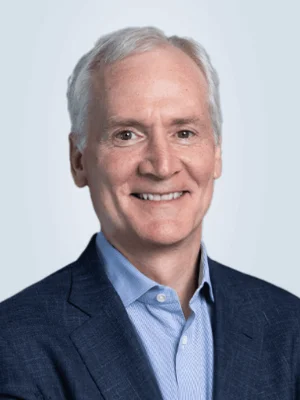
Marc Tessier-Lavigne

Xaira

Chairman & CEO

Marc Tessier-Lavigne is co-founder, Chairman & CEO of Xaira Therapeutics. Previously, he held executive positions in the private sector at Genentech, where he was executive vice president for research and chief scientific officer, and in the academic sector, where he served as president of The Rockefeller University and then of Stanford University, where he remains professor of Biology (on leave). He also served previously on the faculty of the University of California, San Francisco, and was an investigator with the Howard Hughes Medical Institute. A Rhodes Scholar, Dr. Tessier-Lavigne has been a leader in understanding mechanisms that direct the wiring of the brain, and has helped elucidate mechanisms of neurodegeneration. He is the recipient of numerous scientific awards, including the 2020 Gruber Neuroscience Prize, and has been elected to multiple scientific societies, including the US National Academy of Sciences and US National Academy of Medicine; he is also an Officer of the Order of Canada, one of that country’s highest honors. Dr. Tessier-Lavigne has co-founded two neuroscience startups, Renovis and Denali, and served on the boards of Agios, Regeneron, Pfizer, Juno and Denali.

SynBioBeta 2026 Tickets are Live

Confirmed Speakers

Sessions Featuring

Marc

This Year

Main Stage Panel

11:00 AM

-

11:30 AM

Human Health

From Cells to Patients: Solving the Scale Mismatch in Virtual Biology

Drug discovery often measures biology at the cell level, while therapies must ultimately work across tissues, organs, and whole patients. This scale mismatch means that even highly accurate cellular predictions can fail to translate in the clinic. This session explores strategies to bridge that gap. How do we connect single-cell dynamics to organ-level physiology and patient outcomes? How do we preserve biological context while scaling models? And how do we ensure that virtual biology does not stop at simulation, but informs real therapeutic decisions? Speakers will discuss multiscale modeling that links molecular and cellular systems to higher-order biology; spatial and high-dimensional phenotypic data that retain context; and integrated computational–experimental loops that translate cellular signals into clinically meaningful biomarkers. Together, we ask: how do we ensure virtual biology reflects not just what cells do in isolation, but how biology behaves in the full complexity of patients?
Get a Ticket

Main Stage Panel

11:00 AM

-

11:30 AM

Human Health

From Cells to Patients: Solving the Scale Mismatch in Virtual Biology

Drug discovery often measures biology at the cell level, while therapies must ultimately work across tissues, organs, and whole patients. This scale mismatch means that even highly accurate cellular predictions can fail to translate in the clinic. This session explores strategies to bridge that gap. How do we connect single-cell dynamics to organ-level physiology and patient outcomes? How do we preserve biological context while scaling models? And how do we ensure that virtual biology does not stop at simulation, but informs real therapeutic decisions? Speakers will discuss multiscale modeling that links molecular and cellular systems to higher-order biology; spatial and high-dimensional phenotypic data that retain context; and integrated computational–experimental loops that translate cellular signals into clinically meaningful biomarkers. Together, we ask: how do we ensure virtual biology reflects not just what cells do in isolation, but how biology behaves in the full complexity of patients?

Get a Ticket

TBD

Session lineup still growing

Get a Ticket

Featuring

Speaker Coming Soon

Fireside Chat

12:00 AM

-

8:30 AM

Human Health

From Cells to Patients: Solving the Scale Mismatch in Virtual Biology

Drug discovery often measures biology at the cell level while interventions work at the tissue, organ, or whole-patient scale. This mismatch can make accurate cell-level predictions irrelevant in the clinic. This session dives into strategies to bridge that gap: multiscale modeling that nests single-cell dynamics within organ-level simulations, spatial transcriptomics that preserve context, and surrogate models that translate cell-level outputs into clinical biomarkers. Speakers will ask: how do we ensure virtual biology reflects not just what cells do in isolation, but how biology behaves in the real complexity of patients?

Get a Ticket

Featuring

Speaker Coming Soon

Previous Speakers Include