Γ

SynBioBeta Speaker

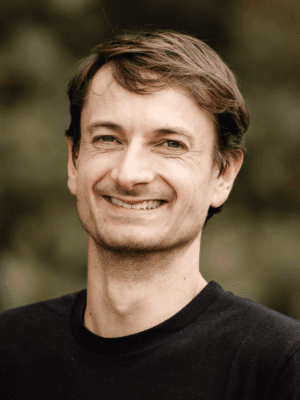
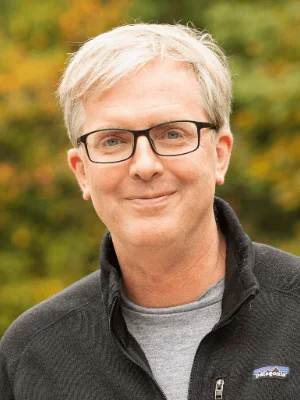
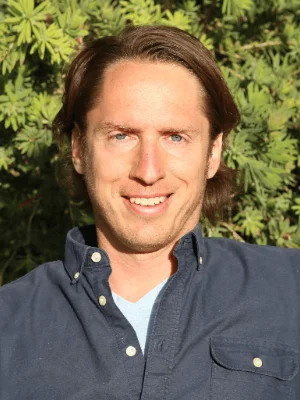
Eric Sundstrom

LBNL

Staff Scientist

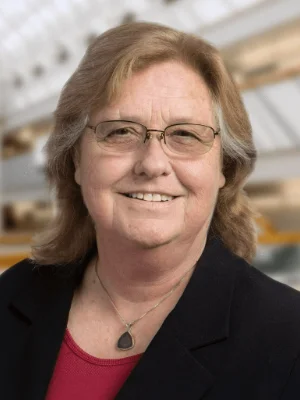
Dr. Eric Sundstrom is a Staff Scientist at Lawrence Berkeley National Laboratory, where he leads the fermentation program at the Advanced Biofuels and Bioproducts Process Development Unit. His research program focuses on de-risking novel biomanufacturing technologies, and on developing enabling technologies to reduce production costs and accelerate deployment of bioproducts at scale. He received his Ph.D. in Environmental Engineering from Stanford University, where he developed microbial community-based approaches for bioconversion of waste methane into renewable bioplastics, and holds B.Eng. and B.S. degrees from Rice University in Environmental Engineering.

SynBioBeta 2026 Tickets are Live

Confirmed Speakers

Sessions Featuring

Eric

This Year

Breakout Session

3:30 PM

-

4:15 PM

Biomanufacturing

Beyond Batch: What Will Unlock the Next Generation of Fermentation?

Conventional batch fermentation has long been the backbone of industrial biotechnology — but a new wave of platforms is challenging that paradigm. From continuous and gas fermentation to novel feedstock integration, emerging approaches promise greater efficiency, flexibility, and scalability. So what's actually holding them back, and what will it take to move them forward? This panel brings together practitioners and innovators working at the frontier of alternative fermentation systems to explore the enablers, accelerators, and real-world lessons shaping the path ahead. Rather than debating which technology "wins," we'll examine the shared challenges across platforms: navigating the pilot-to-commercial scale-up journey, working with non-traditional feedstocks, and building the infrastructure and partnerships that turn promising science into viable processes. Whether you're deep in the lab or making investment and deployment decisions, this conversation will surface concrete insights on what's needed — technically, operationally, and systemically — to unlock the next generation of fermentation.
Get a Ticket

Breakout Session

3:30 PM

-

4:15 PM

Biomanufacturing

Beyond Batch: What Will Unlock the Next Generation of Fermentation?

Conventional batch fermentation has long been the backbone of industrial biotechnology — but a new wave of platforms is challenging that paradigm. From continuous and gas fermentation to novel feedstock integration, emerging approaches promise greater efficiency, flexibility, and scalability. So what's actually holding them back, and what will it take to move them forward? This panel brings together practitioners and innovators working at the frontier of alternative fermentation systems to explore the enablers, accelerators, and real-world lessons shaping the path ahead. Rather than debating which technology "wins," we'll examine the shared challenges across platforms: navigating the pilot-to-commercial scale-up journey, working with non-traditional feedstocks, and building the infrastructure and partnerships that turn promising science into viable processes. Whether you're deep in the lab or making investment and deployment decisions, this conversation will surface concrete insights on what's needed — technically, operationally, and systemically — to unlock the next generation of fermentation.

Get a Ticket

TBD

Session lineup still growing

Get a Ticket

Featuring

Speaker Coming Soon

Fireside Chat

12:00 AM

-

8:30 AM

Human Health

From Cells to Patients: Solving the Scale Mismatch in Virtual Biology

Drug discovery often measures biology at the cell level while interventions work at the tissue, organ, or whole-patient scale. This mismatch can make accurate cell-level predictions irrelevant in the clinic. This session dives into strategies to bridge that gap: multiscale modeling that nests single-cell dynamics within organ-level simulations, spatial transcriptomics that preserve context, and surrogate models that translate cell-level outputs into clinical biomarkers. Speakers will ask: how do we ensure virtual biology reflects not just what cells do in isolation, but how biology behaves in the real complexity of patients?

Get a Ticket

Featuring

Speaker Coming Soon

Previous Speakers Include