Γ

AI-powered therapeutics, precision medicine, and longevity. The founders, the pharma leaders, and the investors.

AI-powered therapeutics, precision medicine, and longevity. The founders, the pharma leaders, and the investors.

SynBioBeta 2026. May 4-7, San Jose, California
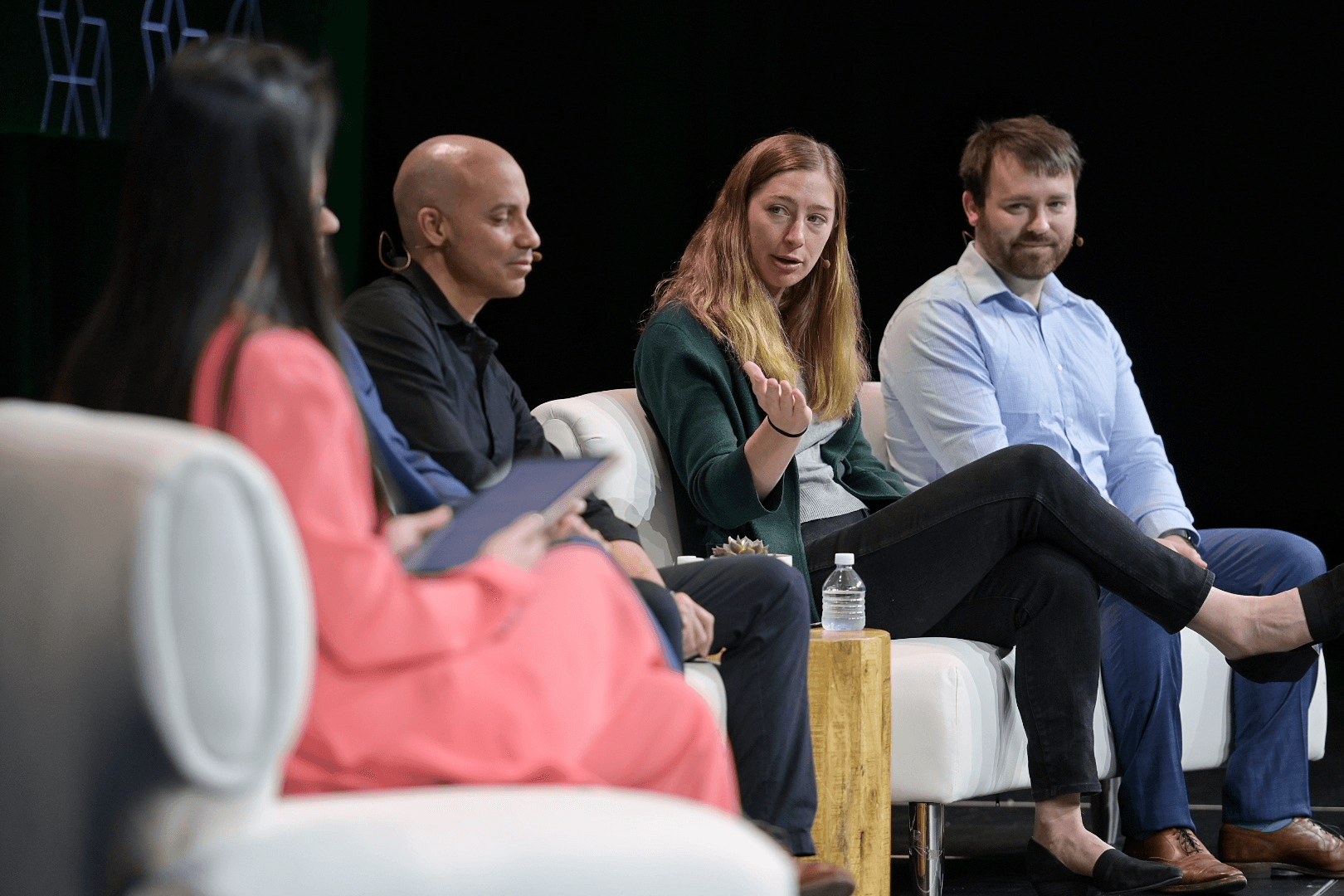
AI is compressing drug discovery timelines. Cell therapies are moving from boutique treatments to scalable manufacturing. Longevity research is producing its first clinical-stage interventions. The founders building these companies and the pharma leaders evaluating them are both at SynBioBeta this May. So are the investors funding them and the government agencies backing the research.

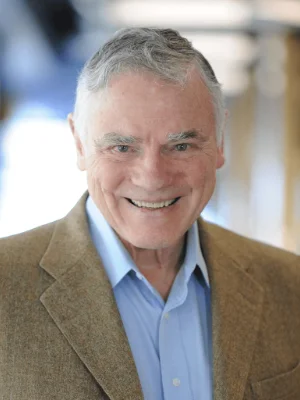
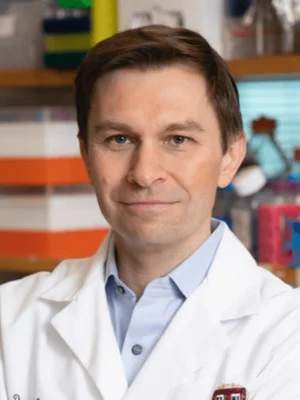
What you'll find in this part of the program: Xaira, GSK, Noetik, and Recursion on virtual biology and bridging the gap between cell-level predictions and real patient outcomes. Jacob Glanville and Tim Friede on programmable immunity and the path from 200+ snake bites to engineered universal antivenom. J&J and Eli Lilly on how startups become pharma-ready and how external innovation teams evaluate partnerships. Latent Labs, Strand, and Sanofi on AI-designed RNA medicines and molecular therapeutics. Boltz, Novo Nordisk, and UCSF on modeling protein dynamics in motion. David Sinclair, Leroy Hood, Jeanne Loring, and ARPA-H on longevity, tissue replacement, and the biology of aging.

The Startup Founders to Meet, Fund and Partner with.
Who’s Coming to do Business at SynBioBeta?

“SynBioBeta is a who’s who of AI and biology.
This is where the future is being built, so don't miss it”

Eric Schmidt

Former CEO

"For every single fund at Boom Capital, one of our best companies has come directly from SynBioBeta. I met Mammoth Bio at SynBioBeta, and I met Nabla Bio at SynBioBeta."

Celestine Schnugg

Founder

"Nabla was accelerated into existence because of SynBioBeta. I met Seth Bannon from 50 Years, Cee Cee Schnugg from Boom Capital, and others from Y Combinator there, and those same people seeded Nabla. The vibe, leverage, and energy at SynBioBeta are unreal."

Surge Biswas

Founder

"Our Series A came together because of a little bit of SynBioBeta magic. I’ve been attending for a decade and it’s been inspiring to watch the field evolve from a lot of hopes and dreams to real products and applications."

Jacob Glanville

Founder & CEO

"I met Algen at SynBioBeta and later invested in the company. It’s exactly the kind of connection that makes the community so valuable."

Bill Tai

Co-founder

An extraordinary and extraordinarily important conference, the only conference where I feel I learn a lot. SynBioBeta is my tribe!

Martine Rothblatt

Founder & CEO

"I first met Centivax at SynBioBeta - and then led their Series A."

Steve Jurvetson

Co-Founder

The 1:1 Partnering App lets you see who's attending and set up meetings before you arrive.

If you're building therapeutics, evaluating what AI-native startups can do for your pipeline, investing in health, or tracking how fast this field is moving, this is a concentrated few days for it.

Sessions Will Include

1

Breakout Session

4:30 PM

-

5:15 PM

Human Health

Reconstructing the Body: Can Biological Replacement Reverse Aging and Extend Lifespan?
Despite major advances in the biology of aging, there are still no interventions that clearly slow or reverse aging in humans. In contrast, modern medicine already depends on replacement to restore lost function, from artificial joints and cardiac devices to organ transplants and stem cell therapies. This session examines how a similar framework could be applied to aging: rather than repairing deteriorated cells and tissues, scientists and companies are exploring ways to replace them with newly generated, biologically young equivalents. The discussion will highlight emerging capabilities in engineered cell sources, scalable tissue fabrication, and programmable biology (instead of "integration") strategies that are redefining what can be rebuilt and replaced. New approaches are beginning to address long-standing challenges such as age-related signaling environments, vascularization, and even circuit compatibility in parts of the brain. Together, these advances point toward a future where rejuvenation is achieved through deliberate biological reconstruction. The session asks: How far can replacement take us, and could rebuilding youthful parts become a central path to extending healthy lifespan?

1

Breakout Session

4:30 PM

-

5:15 PM

Human Health

Reconstructing the Body: Can Biological Replacement Reverse Aging and Extend Lifespan?

Despite major advances in the biology of aging, there are still no interventions that clearly slow or reverse aging in humans. In contrast, modern medicine already depends on replacement to restore lost function, from artificial joints and cardiac devices to organ transplants and stem cell therapies. This session examines how a similar framework could be applied to aging: rather than repairing deteriorated cells and tissues, scientists and companies are exploring ways to replace them with newly generated, biologically young equivalents. The discussion will highlight emerging capabilities in engineered cell sources, scalable tissue fabrication, and programmable biology (instead of "integration") strategies that are redefining what can be rebuilt and replaced. New approaches are beginning to address long-standing challenges such as age-related signaling environments, vascularization, and even circuit compatibility in parts of the brain. Together, these advances point toward a future where rejuvenation is achieved through deliberate biological reconstruction. The session asks: How far can replacement take us, and could rebuilding youthful parts become a central path to extending healthy lifespan?

2

Fireside Chat

8:35 AM

-

8:50 AM

Human Health

Programmable Immunity: Engineering the Universal Antivenom

For over a century, antivenoms have relied on serum extraction from animals — a process that’s costly, inconsistent, and limited to specific snake species. Today, advances in synthetic biology and antibody engineering are pointing toward a different future: a universal antivenom capable of neutralizing toxins across the world’s deadliest snakes. This session dives into the science and story behind this breakthrough — from the man who endured more than 200 bites to generate a unique immune response, to the researchers using those antibodies to design broad-spectrum, recombinant therapies. Together, they’re charting the path from survival experiment to programmable immunity.

2

Fireside Chat

8:35 AM

-

8:50 AM

Human Health

Programmable Immunity: Engineering the Universal Antivenom

For over a century, antivenoms have relied on serum extraction from animals — a process that’s costly, inconsistent, and limited to specific snake species. Today, advances in synthetic biology and antibody engineering are pointing toward a different future: a universal antivenom capable of neutralizing toxins across the world’s deadliest snakes. This session dives into the science and story behind this breakthrough — from the man who endured more than 200 bites to generate a unique immune response, to the researchers using those antibodies to design broad-spectrum, recombinant therapies. Together, they’re charting the path from survival experiment to programmable immunity.

3

Breakout Session

3:30 PM

-

4:15 PM

Human Health

Editing Inheritance: Is Human Germline Engineering Back?

Once viewed as reckless experimentation, germline gene editing is re-emerging as a serious scientific frontier. With base and prime editing now able to correct single-letter mutations with remarkable precision, researchers are beginning to demonstrate embryo edits that could one day eliminate devastating inherited diseases. The stakes, however, are profound: these are permanent, heritable changes passed to every future generation. This session examines the cutting edge of germline engineering—how far the science has advanced since CRISPR’s clumsy early days, what challenges remain around mosaicism and long-term safety, and where the ethical boundaries must be drawn. Should we consider germline editing only for rare, fatal conditions when no other reproductive options exist? Or is there a pathway to broader medical use under strict safeguards? Join leading scientists, ethicists, and policymakers as we debate whether rewriting inheritance is an act of compassion—or a step too far.

3

Breakout Session

3:30 PM

-

4:15 PM

Human Health

Editing Inheritance: Is Human Germline Engineering Back?

Once viewed as reckless experimentation, germline gene editing is re-emerging as a serious scientific frontier. With base and prime editing now able to correct single-letter mutations with remarkable precision, researchers are beginning to demonstrate embryo edits that could one day eliminate devastating inherited diseases. The stakes, however, are profound: these are permanent, heritable changes passed to every future generation. This session examines the cutting edge of germline engineering—how far the science has advanced since CRISPR’s clumsy early days, what challenges remain around mosaicism and long-term safety, and where the ethical boundaries must be drawn. Should we consider germline editing only for rare, fatal conditions when no other reproductive options exist? Or is there a pathway to broader medical use under strict safeguards? Join leading scientists, ethicists, and policymakers as we debate whether rewriting inheritance is an act of compassion—or a step too far.

4

Breakout Session

3:30 PM

-

4:15 PM

Human Health

Programmable T Cells: Engineering Living Immune Systems

T cells are evolving from targeted killers into fully programmable cellular systems. Advances in synthetic biology, AI-driven receptor design, and genome-scale datasets are enabling immune cells that not only recognize disease, but sense context, compute signals, adapt over time, and execute coordinated responses inside the body. This session brings together leaders across academia and industry to explore how next-generation CAR and TCR design, structural modeling, and large biological foundation models are reshaping immune engineering. Beyond receptor optimization, we will examine logic circuits, combinatorial sensing systems, control layers, and in vivo reprogramming strategies that transform T cells into dynamic therapeutic platforms. As immune cell engineering moves toward off-the-shelf products and in vivo editing approaches, we will address the deeper architectural questions: How do we design cells that avoid exhaustion, function within hostile tumor microenvironments, and maintain safety over time? What does it mean to treat T cells as living software systems? And how do we build programmable immune therapies that are scalable, durable, and globally accessible?

4

Breakout Session

3:30 PM

-

4:15 PM

Human Health

Programmable T Cells: Engineering Living Immune Systems

T cells are evolving from targeted killers into fully programmable cellular systems. Advances in synthetic biology, AI-driven receptor design, and genome-scale datasets are enabling immune cells that not only recognize disease, but sense context, compute signals, adapt over time, and execute coordinated responses inside the body. This session brings together leaders across academia and industry to explore how next-generation CAR and TCR design, structural modeling, and large biological foundation models are reshaping immune engineering. Beyond receptor optimization, we will examine logic circuits, combinatorial sensing systems, control layers, and in vivo reprogramming strategies that transform T cells into dynamic therapeutic platforms. As immune cell engineering moves toward off-the-shelf products and in vivo editing approaches, we will address the deeper architectural questions: How do we design cells that avoid exhaustion, function within hostile tumor microenvironments, and maintain safety over time? What does it mean to treat T cells as living software systems? And how do we build programmable immune therapies that are scalable, durable, and globally accessible?

5

Breakout Session

4:30 PM

-

5:15 PM

Human Health

Bridging Discovery and Delivery: Startup–Pharma Alliances for the AI Era

As biology becomes programmable and AI accelerates discovery, startups are generating breakthrough innovations at unprecedented speed. Yet translating these advances into real-world therapies still depends on effective collaboration with global pharmaceutical organizations. This session explores how the innovation ecosystem connects early-stage breakthroughs to scalable development, bringing together leaders from startup incubation, external innovation, and pharma strategy. Speakers will examine how AI-native biotech companies engage with pharma today: how startups become “pharma-ready,” how external innovation teams evaluate and structure partnerships, and what collaboration models are emerging as biology and computation converge. From early ecosystem support and venture building to strategic alliances and co-development pathways, the discussion will provide a practical look at how ideas move from discovery to patient impact in the AI era.

5

Breakout Session

4:30 PM

-

5:15 PM

Human Health

Bridging Discovery and Delivery: Startup–Pharma Alliances for the AI Era

As biology becomes programmable and AI accelerates discovery, startups are generating breakthrough innovations at unprecedented speed. Yet translating these advances into real-world therapies still depends on effective collaboration with global pharmaceutical organizations. This session explores how the innovation ecosystem connects early-stage breakthroughs to scalable development, bringing together leaders from startup incubation, external innovation, and pharma strategy. Speakers will examine how AI-native biotech companies engage with pharma today: how startups become “pharma-ready,” how external innovation teams evaluate and structure partnerships, and what collaboration models are emerging as biology and computation converge. From early ecosystem support and venture building to strategic alliances and co-development pathways, the discussion will provide a practical look at how ideas move from discovery to patient impact in the AI era.