Γ

SynBioBeta Speaker

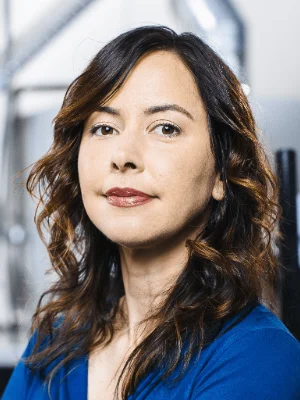
Elizabeth Kellogg

St. Jude CRH

PI, Kellogg Lab

My background in computational biology (David Baker) and structural biology using cryo-electron microscopy (Eva Nogales) results in a scientific approach that seeks to understand biology with a quantitative perspective, relying on biophysical approaches and protein design. Since my lab opened in 2019, we have worked to understand how transposons reshape genomes and how these can be repurposed as genome-editing tools. Our main focus is on programmable transposons; we seek to understand their diversity, regulation, and rules for reprogramming. In 2023 my lab moved from Cornell University (Ithaca, NY) to St. Jude Children’s Research Hospital (Memphis, TN).

Sessions Featuring

Elizabeth

This Year

Lightning Talk

11:30 AM

-

11:34 AM

Tools & Tech

Programmable DNA Integration with New-to-Nature tools using Computational Protein Design

Precise insertion of large DNA cargo at defined genomic sites, without inducing double-strand breaks, remains a major limitation of current genome-editing technologies. Here we address this challenge by using de novo protein design to create highly active, new-to-nature RNA-guided transposons. The resulting system, NovoCAST, is the simplest CRISPR-associated transposon (CAST) described to date. NovoCAST exhibits sharply defined integration profiles, up to 3 orders of magnitude increase in activity relative to native CASTs, and exceptionally high on-target specificity. Structural and biochemical analyses confirm that the designed proteins fold and function as intended. Finally, we demonstrate robust programmable genomic integration in human cells, underscoring the translational potential of this approach. Together, these results establish de novo protein design as a powerful strategy for building efficient, precise genome-integration systems and provide a foundation for the development of clinically relevant, programmable gene integration tools.

Lightning Talk

11:30 AM

-

11:34 AM

Tools & Tech

Programmable DNA Integration with New-to-Nature tools using Computational Protein Design

Precise insertion of large DNA cargo at defined genomic sites, without inducing double-strand breaks, remains a major limitation of current genome-editing technologies. Here we address this challenge by using de novo protein design to create highly active, new-to-nature RNA-guided transposons. The resulting system, NovoCAST, is the simplest CRISPR-associated transposon (CAST) described to date. NovoCAST exhibits sharply defined integration profiles, up to 3 orders of magnitude increase in activity relative to native CASTs, and exceptionally high on-target specificity. Structural and biochemical analyses confirm that the designed proteins fold and function as intended. Finally, we demonstrate robust programmable genomic integration in human cells, underscoring the translational potential of this approach. Together, these results establish de novo protein design as a powerful strategy for building efficient, precise genome-integration systems and provide a foundation for the development of clinically relevant, programmable gene integration tools.

TBD

Session lineup still growing

Featuring

Speaker Coming Soon

Fireside Chat

12:00 AM

-

8:30 AM

Human Health

From Cells to Patients: Solving the Scale Mismatch in Virtual Biology

Drug discovery often measures biology at the cell level while interventions work at the tissue, organ, or whole-patient scale. This mismatch can make accurate cell-level predictions irrelevant in the clinic. This session dives into strategies to bridge that gap: multiscale modeling that nests single-cell dynamics within organ-level simulations, spatial transcriptomics that preserve context, and surrogate models that translate cell-level outputs into clinical biomarkers. Speakers will ask: how do we ensure virtual biology reflects not just what cells do in isolation, but how biology behaves in the real complexity of patients?

Featuring

Speaker Coming Soon

Previous Speakers Include